
CURRENT AFFAIRS | 23 SEPTEMBER 2026
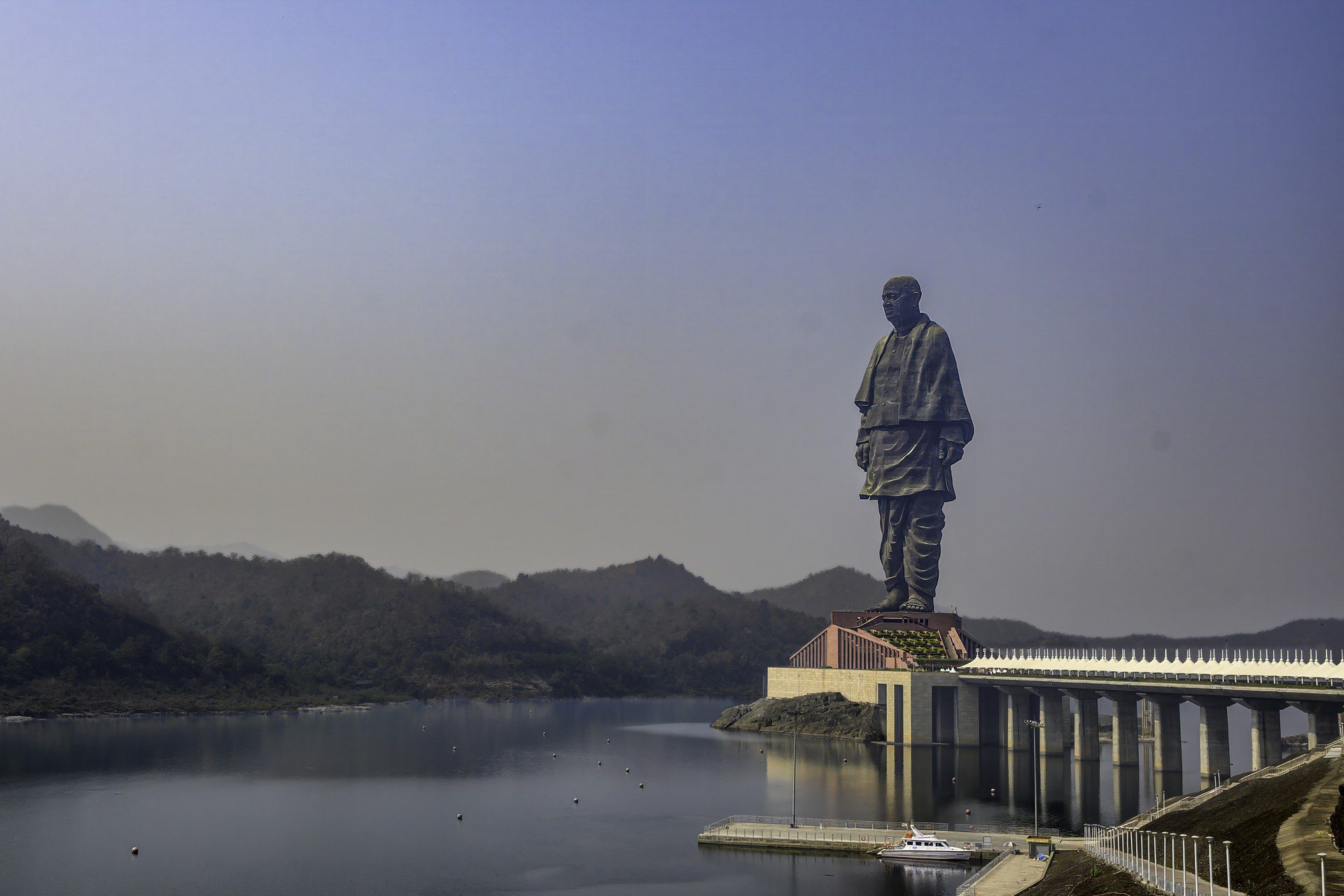
On 22 September 2026, President Droupadi Murmu presented the 72nd National Film Awards — the awards for the films of 2024 — at Ektanagar in the Narmada district of Gujarat. The Indian Express, reporting the ceremony on 23 September, records that the awards were given across over 40 categories in a special dome erected against the backdrop of the 182-metre statue of Sardar Vallabhbhai Patel. Akashvani News (newsonair.gov.in), the public broadcaster’s news service, puts the number of recipients honoured at the ceremony at 92.
The single most quoted honour of the evening was the Dadasaheb Phalke Award, the country’s highest film honour, conferred on the veteran actor Anant Nag, who has worked for over five decades principally in Kannada cinema. He was accompanied by his wife Gayatri. For an aspirant, however, the durable material here is institutional rather than celebratory: who gives these awards, under what statute the film industry is regulated, and how the Constitution treats the certification of films. Those are the facts that reappear in examination papers long after the winners’ list has faded.
What was awarded, and to whom
‘Article 370’ took the award for Best Feature Film; the Indian Express reports that the actor Yami Gautam and her filmmaker husband Aditya Dhar received it. Yami Gautam also took Best Actress in a Leading Role for the same film. The award for Best Actor in a Leading Role was shared: Mammootty for the Malayalam film Bramayugam and Kartik Aaryan for Chandu Champion. Best Direction went to Rajkumar Periasamy for the Tamil film Amaran. Among the awarded films, the Indian Express notes, were one on the life of Veer Savarkar in which Randeep Hooda plays the main protagonist, and one on the making of the Statue of Unity. Nag Ashwin’s Kalki 2898 AD was named Best Popular Film Providing Wholesome Entertainment.
These are reported results, set out descriptively. For examination purposes the controlling record is the official winners’ list published under the Ministry of Information and Broadcasting.
Background & Framework
The National Film Awards were instituted in 1954 as the State Awards for Films, following the recommendations of the Film Enquiry Committee constituted in 1949; the first awards were conferred on the films of 1953. They are administered under the Ministry of Information and Broadcasting. Between 1973 and 2022 the Directorate of Film Festivals (DFF) ran them; in 2022 the DFF was merged into the National Film Development Corporation (NFDC), along with the National Film Archive of India, the Films Division and the Children’s Film Society, India, and the NFDC is now the implementing body. The awards are organised in three sections — Feature Films, Non-Feature Films and Best Writing on Cinema — and the trophies are the Swarna Kamal (Golden Lotus) and the Rajat Kamal (Silver Lotus). The Dadasaheb Phalke Award, for lifetime contribution to Indian cinema, was instituted in 1969 and was first conferred on the actor Devika Rani. It is named after Dhundiraj Govind Phalke (1870–1944), called the father of Indian cinema, who directed and produced Raja Harishchandra (1913), regarded as India’s first full-length feature film.
The President’s message
Two themes in the President’s remarks are quotable in an essay or an interview. The first was representation. Noting that “many women were among the awardees”, she called for greater participation of women on the juries: “I would wish that every regional jury ensures the participation of women… In any field, only when the perspective of women is included does it create a vision for entire humanity.”
The second was the responsibility that follows influence. Observing that successful film artists and the roles they play are emulated by “crores of children and youth”, she appealed to them not to endorse substances harmful to health, saying, in the Indian Express’s rendering of her Hindi: “Star wahi hai jo roshni deta hai, star wahi hai jo roshni phailaaye” — stars are those that give and spread light. That remark is an argumentative gift: it states a proposition about voluntary restraint by private persons, which is a different thing from state regulation, and a legal-reasoning setter can build a whole passage on the distinction.
The President also mentioned Angen (‘Invisible’), directed by Ravi Raj Murmu of Jharkhand, as the first Santali film to win an award at this edition — a point of some weight given that the President is herself Santali, and a reminder that the National Film Awards carry a deliberate language-diversity mandate through their regional-language categories.
The CLAT Angle
The likely passage is not about who won. It is about Article 19(1)(a) and film. A typical set states the rule — every citizen has the right to freedom of speech and expression, subject only to reasonable restrictions under Article 19(2) on the eight enumerated grounds — and then asks you to apply it to a certification refusal, a demand for cuts, or a threat of protest against a release. Remember three moves. One: restrictions must fall within a listed ground; a restriction because a film is disliked, or because it is politically inconvenient, falls outside Article 19(2) altogether. Two: the connection between the expression and the mischief must be direct and proximate, not remote or conjectural. Three: pre-censorship of films has been held constitutionally permissible, which is why film occupies a special position compared with print. Note also the difference between a statutory restriction (the Cinematograph Act), an award (a discretionary honour, not a right), and a voluntary appeal of the kind the President made about endorsements — questions often turn on which of the three a fact pattern involves.
The statute behind the certificate
Films in India are regulated by the Cinematograph Act, 1952, under which the Central Board of Film Certification (CBFC) is constituted. The CBFC does not “approve” films in the abstract; it certifies them for public exhibition in categories — historically U (unrestricted), UA (unrestricted with parental guidance), A (restricted to adults) and S (restricted to a specialised profession or class of persons).
The Cinematograph (Amendment) Act, 2023 made three changes worth remembering. First, it addressed film piracy directly: a new Section 6AA prohibits the use of any audio-visual recording device to make or transmit a copy of a film in a licensed exhibition place, and Section 6AB prohibits the unauthorised exhibition or transmission of an infringing copy for profit. Contravention attracts imprisonment of not less than three months extending to three years, and a fine of not less than ₹3 lakh which may extend to five per cent of the audited gross production cost. Second, it introduced age-based sub-categories within UA — UA 7+, UA 13+ and UA 16+ — which operate as guidance to parents rather than as legal bars. Third, it made the validity of a certificate perpetual, replacing the earlier ten-year validity.
Two cases every aspirant should carry
K A Abbas v Union of India (1970) is the foundational authority. The filmmaker K A Abbas challenged the constitutionality of pre-censorship of films after his documentary A Tale of Four Cities was refused a ‘U’ certificate without cuts. The Supreme Court upheld pre-censorship as a permissible reasonable restriction under Article 19(2), reasoning that film as a medium combines sight, sound and motion and therefore has an impact distinct from the printed word — but it insisted that censorship must operate on precise, definite standards and not on arbitrary discretion. The case is the reason classification of films sits differently in constitutional law from classification of books.
S Rangarajan v P Jagjivan Ram (1989) supplies the counterweight. The Tamil film Ore Oru Gramathile had its ‘U’ certificate revoked by the Madras High Court after protests over its treatment of caste-based reservation. The Supreme Court restored the certificate, holding that expression cannot be suppressed merely because sections of society object or threaten agitation; the link between the expression and a breach of public order must be direct, proximate and real. Put together, the two cases mark the boundary: the State may certify films in advance, but it may not let a hostile audience decide what may be shown.
Key Facts
- Event: 72nd National Film Awards presented by President Droupadi Murmu on 22 September 2026 at Ektanagar, Narmada district, Gujarat.
- Year covered: the films of 2024; awards given across over 40 categories.
- Dadasaheb Phalke Award: veteran actor Anant Nag.
- Best Feature Film: ‘Article 370’, received by Yami Gautam and Aditya Dhar.
- Best Actor in a Leading Role: shared by Mammootty (Bramayugam) and Kartik Aaryan (Chandu Champion).
- Best Actress in a Leading Role: Yami Gautam for ‘Article 370’.
- Best Direction: Rajkumar Periasamy for Amaran.
- National Film Awards: instituted 1954 on the recommendation of the Film Enquiry Committee of 1949; administered under the Ministry of Information and Broadcasting; implemented by the NFDC since the 2022 merger of the Directorate of Film Festivals.
- Dadasaheb Phalke Award: instituted 1969; first recipient Devika Rani; named after the maker of Raja Harishchandra (1913).
- Trophies: Swarna Kamal (Golden Lotus) and Rajat Kamal (Silver Lotus).
- Governing statute: Cinematograph Act, 1952; the CBFC is constituted under it; amended by the Cinematograph (Amendment) Act, 2023.
- Venue: a special dome against the backdrop of the 182-metre Statue of Unity, the world’s tallest statue, dedicated to Sardar Vallabhbhai Patel and unveiled on 31 October 2018.
The venue is itself a GK question
Ektanagar — formerly Kevadia — in the Narmada district of Gujarat is the site of the Statue of Unity, at 182 metres the world’s tallest statue, unveiled on 31 October 2018, the birth anniversary of Sardar Vallabhbhai Patel. The sculptor was Ram V Sutar. It stands near the Sardar Sarovar Dam on the Narmada, which also carries Patel’s name. Patel, independent India’s first Deputy Prime Minister and Home Minister, is remembered above all for the integration of the princely states — more than 560 of them — into the Indian Union, a process conducted through Instruments of Accession and, where necessary, merger agreements. His birth anniversary is observed as Rashtriya Ekta Diwas (National Unity Day).
Holding a national awards ceremony away from the capital, at a monument to national integration, is itself the sort of detail a passage might use: not to test your opinion of the choice, but to see whether you noticed the link between venue, honour and the idea of Ek Bharat, Shreshtha Bharat.
Memory Hook / Mnemonic
Fix the four dates with “13 — 52 — 54 — 69”: Raja Harishchandra in 1913, the Cinematograph Act in 1952, the National Film Awards in 1954, the Dadasaheb Phalke Award in 1969. For the trophies, “gold for the best, silver for the rest” — Swarna Kamal at the top, Rajat Kamal below. For the two cases, “Abbas allows the censor; Rangarajan disallows the mob.” And for this edition: 72nd, for 2024, at the Statue of Unity, Phalke to Anant Nag.
Practice Quiz — 10 CLAT-Style Questions
Click an option to reveal the answer and explanation.