CURRENT AFFAIRS | 26 MAY 2026
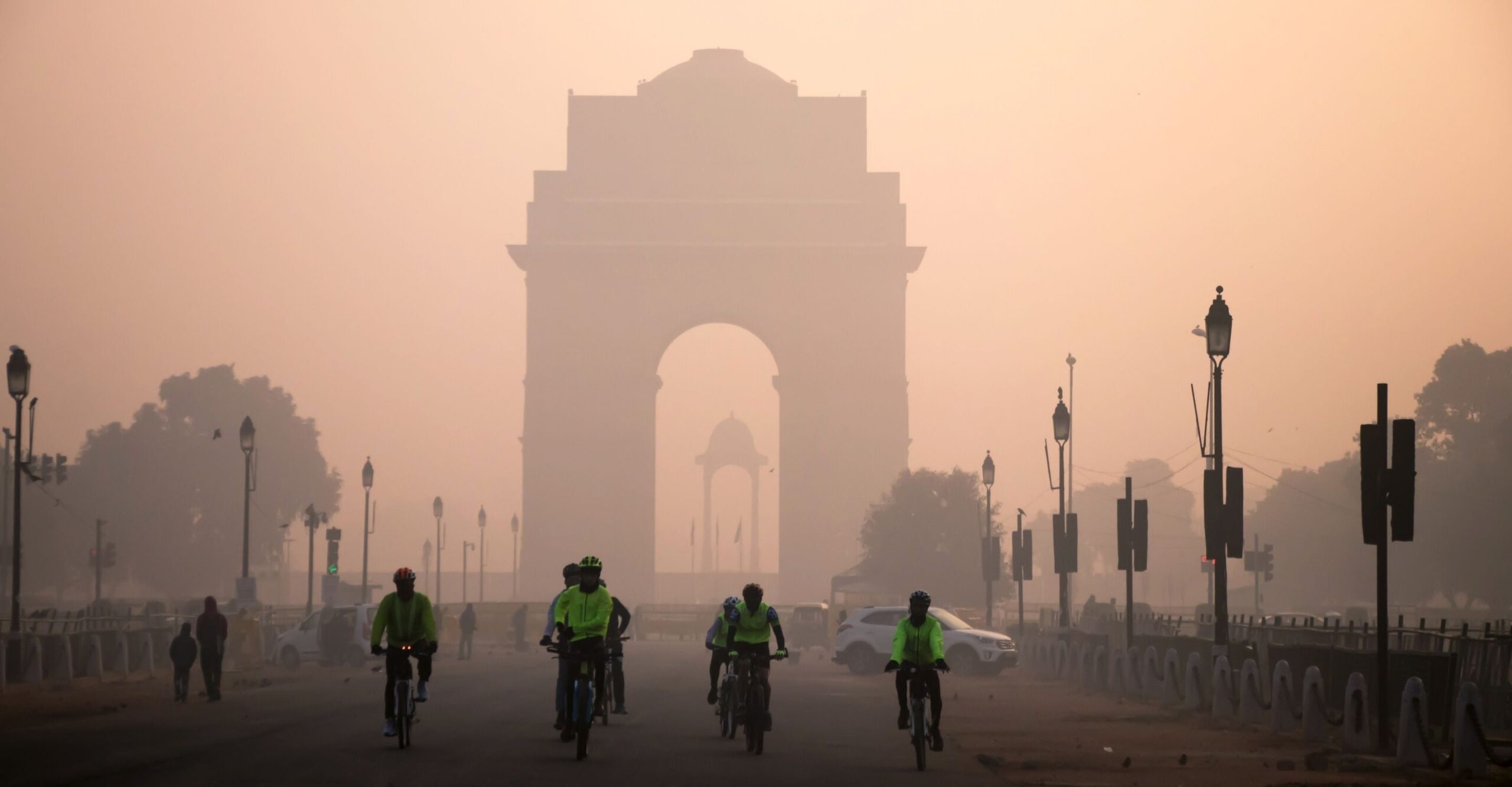
An Indian Express editorial has flagged that Delhi’s Mechanical Road Sweeping Machine (MRSM) fleet remains severely underutilised — even as dust accounts for ~41% of PM10 and ~38% of PM2.5 in the capital’s summer air. The piece calls for a coordinated dust-management strategy, foregrounding the legal and constitutional scaffolding around the right to clean air.
Constitutional & Statutory Framework
- Article 21 — Subhash Kumar v. State of Bihar (1991) — Right to pollution-free air and water is part of the right to life.
- Article 48A (DPSP) and Article 51A(g) (Fundamental Duty) — Direct the State and citizens to protect and improve the environment.
- Air (Prevention and Control of Pollution) Act, 1981 — Constituted Central and State Pollution Control Boards; declares ‘air pollution control areas’.
- Environment (Protection) Act, 1986 — Umbrella enabling legislation enacted post-Bhopal; empowers Centre to set emission standards.
- CAQM Act, 2021 — Created the Commission for Air Quality Management in NCR & Adjoining Areas; replaces EPCA.
- National Green Tribunal Act, 2010 — Created the NGT; principal bench in New Delhi.
CLAT 2027 Angle
- PM2.5 = particulate matter ≤2.5 μm; CPCB national standard: 40 μg/m³ (annual mean).
- PM10 = particulate matter ≤10 μm; CPCB national standard: 60 μg/m³ (annual mean).
- NCAP — National Clean Air Programme, launched 2019; target: 40% reduction in PM2.5 and PM10 levels by 2026 (revised from 2024).
- GRAP — Graded Response Action Plan, four stages activated by AQI bands; administered by CAQM.
- Landmark cases: M.C. Mehta v. Union of India (CNG conversion for Delhi public transport, 2001), Subhash Kumar v. Bihar (1991), Vellore Citizens’ Welfare Forum v. UoI (1996) — precautionary principle.
Key Facts
| Statute / Body / Programme | Year | Function / Significance |
|---|---|---|
| Air (P&C of Pollution) Act | 1981 | Set up CPCB and SPCBs; air pollution control areas. |
| Environment (Protection) Act | 1986 | Umbrella post-Bhopal environment law. |
| Subhash Kumar v. State of Bihar | 1991 | Clean air & water are part of Art. 21. |
| NGT Act | 2010 | Specialised environmental tribunal. |
| NCAP launched | 2019 | 40% PM reduction target by 2026. |
| CAQM Act | 2021 | Statutory body for NCR air quality. |
Mnemonic — ‘A-E-C-N-G governs Delhi’s air’
Air Act 1981 → Environment Act 1986 → CAQM Act 2021 → NCAP 2019 → GRAP (graded response). Cross-link to Art. 21 (Subhash Kumar) + Art. 48A + Art. 51A(g) — the constitutional-statutory loop on the right to clean air.
Save this for revision — air pollution is a CLAT favourite, especially in October-November set papers.
Practice Quiz — 10 CLAT-Style Questions
Click an option to reveal the answer and explanation.