

CURRENT AFFAIRS | 10 OCTOBER 2026
Bangladesh wants India to renew the Ganga Waters Treaty of 1996 before it expires on 12 December 2026. NDTV reported on Friday, 9 October 2026 that Dhaka is seeking a renewed water-sharing pact before the deadline, and Bangladesh’s news agency UNB reported the same day that the country wants a new or revised agreement rather than a simple roll-over. The treaty was signed on 12 December 1996 for a term of 30 years, and it decides how the waters of the Ganga are shared at the Farakka Barrage in the dry season.
On the Indian side, the Ministry of External Affairs (MEA) spokesperson Randhir Jaiswal said at the weekly briefing on 9 October that “all discussions regarding river-related matters and water-related matters happen within the ambit” of the Joint Rivers Commission (JRC), as reported by ANI. In other words, India’s position is that the renewal will be handled through the established bilateral mechanism.
What Bangladesh is asking for
According to UNB and Asianet Newsable (ANI), Bangladesh’s Water Resources Minister Shahiduddin Chowdhury Anee said Dhaka wants a new or revised Ganges treaty that guarantees its share of water, and that the agreement should be signed before 12 December 2026. His main demand is to bring back the “guarantee clause” that was part of the earlier 1977 agreement but is absent from the 1996 treaty. UNB explains that under the 1977 clause, if the flow at Farakka fell below the projected level in any 10-day period, the release to Bangladesh would not fall below 80% of its scheduled share. Bangladesh’s State Minister for Foreign Affairs said Dhaka’s committee was ready and awaiting India’s final response.
The demand reflects a basic geographical fact. India is the upper riparian state on the Ganga and Bangladesh the lower riparian. What is withdrawn upstream at Farakka directly affects how much reaches Bangladesh in the lean months, when the river is at its lowest and demand for irrigation, drinking water and navigation is highest.
Background & Framework
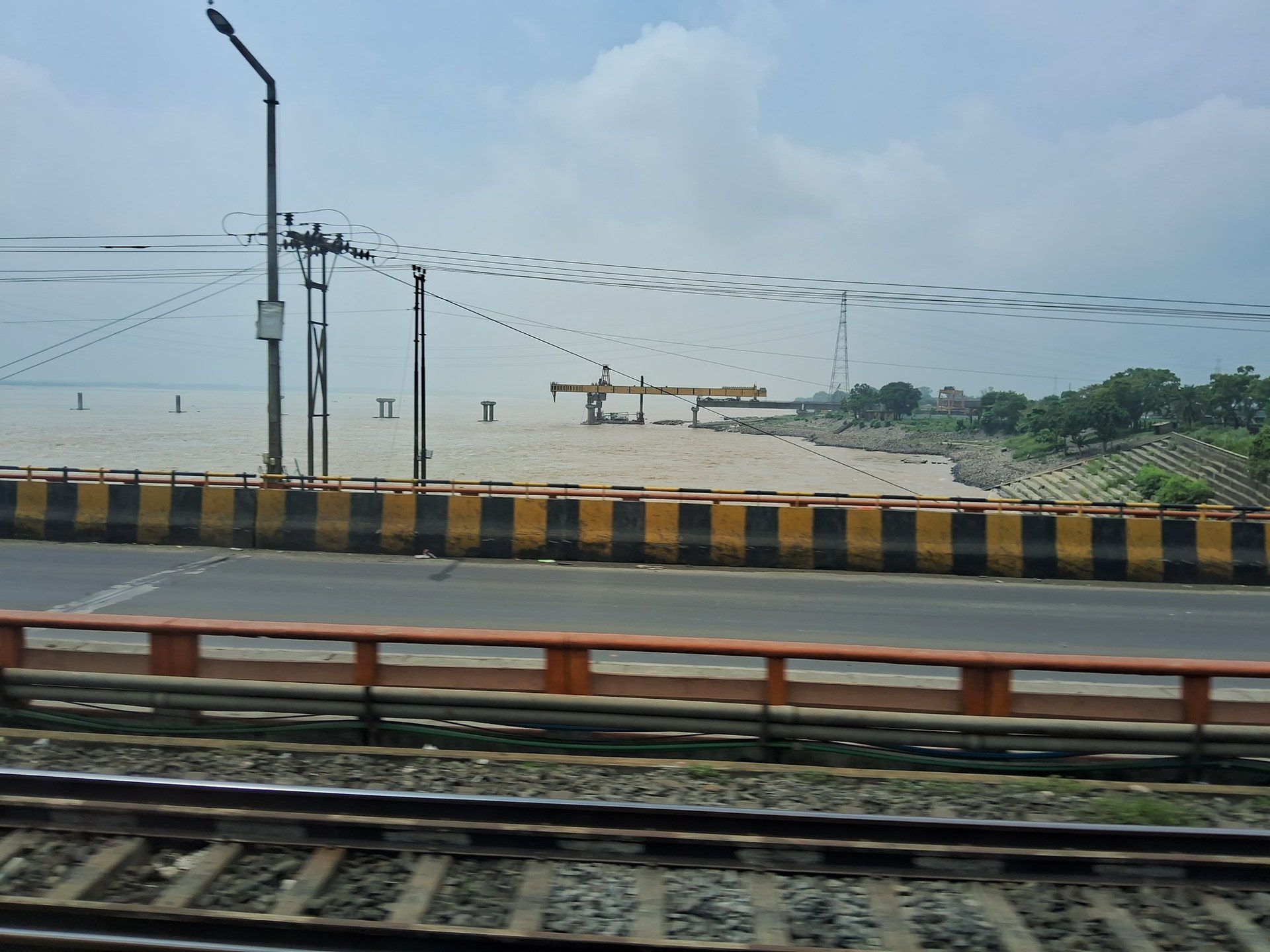
The Farakka Barrage stands across the Ganga in the Murshidabad district of West Bengal, close to the Bangladesh border. It became operational on 21 April 1975. Its purpose is to divert part of the Ganga’s flow through a feeder canal into the Bhagirathi–Hooghly to flush silt and keep the Kolkata port navigable. After entering Bangladesh, the Ganga is known as the Padma.
The 1996 treaty: signed in New Delhi on 12 December 1996 by Prime Ministers H.D. Deve Gowda of India and Sheikh Hasina of Bangladesh. It shares the flow at Farakka in 10-day periods during the dry season, 1 January to 31 May. Under its formula, when the flow is 70,000 cusecs or less, each side gets 50%; between 70,000 and 75,000 cusecs, Bangladesh gets 35,000 cusecs and India the balance. The treaty runs for 30 years and is renewable by mutual consent. Unlike the 1977 agreement, it has no guarantee clause for minimum releases.
The Joint Rivers Commission was set up in 1972 as the standing bilateral mechanism for shared rivers. India and Bangladesh share 54 rivers, and the Ganga is the only one covered by a 30-year water-sharing treaty.
Why the renewal matters
The treaty is often cited as a model of how two neighbours can settle a difficult water dispute by negotiation. Before 1996, sharing at Farakka was governed by short-term arrangements — a 1975 interim accord, the 1977 agreement with its guarantee clause, and later memoranda — and the issue was a recurring irritant. The 30-year treaty gave both sides predictability.
Three decades later, conditions have changed. Climate variability, sediment, rising demand in the upstream states and new ideas about ecological flows have all entered the debate. Bangladeshi experts quoted in the coverage argue for a revised treaty with stronger data sharing and a more active JRC. Indian states in the basin also have a stake, because water released downstream at Farakka is water not available upstream — which is why the Centre consults the riparian states on any river agreement, even though treaty-making is a Union power.
Another unresolved file is the Teesta. An interim water-sharing arrangement for the Teesta was negotiated around 2011 but was never signed. Any comprehensive settlement of river issues between the two countries is likely to bring the Teesta back into discussion.
The CLAT Angle
Questions on water treaties test three things: dates and parties, the institution involved, and the constitutional basis. Prepare these links:
- Ganga Waters Treaty (India–Bangladesh, 1996, 30 years, Farakka) vs Indus Waters Treaty (India–Pakistan, 1960, brokered by the World Bank) vs Mahakali Treaty (India–Nepal, 1996).
- Article 253 of the Constitution lets Parliament make laws to implement any treaty or agreement with another country, even on a State List subject such as water (Entry 17, State List).
- Article 262 deals with inter-State river disputes — not international ones. Do not confuse the two.
- Entry 14 of the Union List covers entering into treaties and agreements with foreign countries.
A reasoning passage might ask whether a lower riparian state has a right to a guaranteed minimum flow, or whether “equitable sharing” is enough. Identify the principle each side relies on before choosing an answer.
What happens on 12 December
The treaty itself provides that it can be renewed by mutual consent. Whether the two countries agree to extend it as it stands, revise it, or sign a new instrument is now the key question. Dhaka has made its position public; New Delhi has said the talks belong in the JRC. With about two months to go, the outcome will shape not only water sharing but the wider India–Bangladesh relationship.
Key Facts
- News: Bangladesh seeks renewal/revision of the Ganga Waters Treaty before 12 December 2026 (NDTV, UNB, 9 October 2026).
- Signed: 12 December 1996, New Delhi; PMs H.D. Deve Gowda and Sheikh Hasina.
- Term: 30 years, renewable by mutual consent.
- Sharing point: Farakka Barrage, Murshidabad, West Bengal; operational 21 April 1975.
- Season: 1 January – 31 May, in 10-day periods.
- Formula: 70,000 cusecs or less → 50:50; 70,000–75,000 cusecs → Bangladesh 35,000 cusecs.
- Bangladesh’s demand: restore the 1977 guarantee clause (not below 80% of scheduled share).
- India’s position (MEA, 9 Oct): river matters are discussed within the Joint Rivers Commission.
- JRC: set up in 1972; India and Bangladesh share 54 rivers.
- Ganga in Bangladesh: called the Padma; Teesta pact (2011) never signed.
Takeaway
The Ganga Waters Treaty is a rare example of a long-term water-sharing agreement in South Asia, and its expiry date — exactly 30 years after signing — makes it a natural exam question this year. Keep the chain clear: Farakka (1975) → 1977 agreement with guarantee → 1996 treaty without guarantee → renewal due 12 December 2026, through the JRC.
Memory Hook / Mnemonic
“12-12, 30 years, Farakka shares the tears.” Signed 12 December 1996, expires 12 December 2026. For the formula: “70 or less, split in two; 70 to 75, Dhaka gets 35.” And the rivers: “54 shared, 1 treatied, 1972 the JRC.”
Practice Quiz — 10 CLAT-Style Questions
Click an option to reveal the answer and explanation.






