CURRENT AFFAIRS | MAY 8, 2026
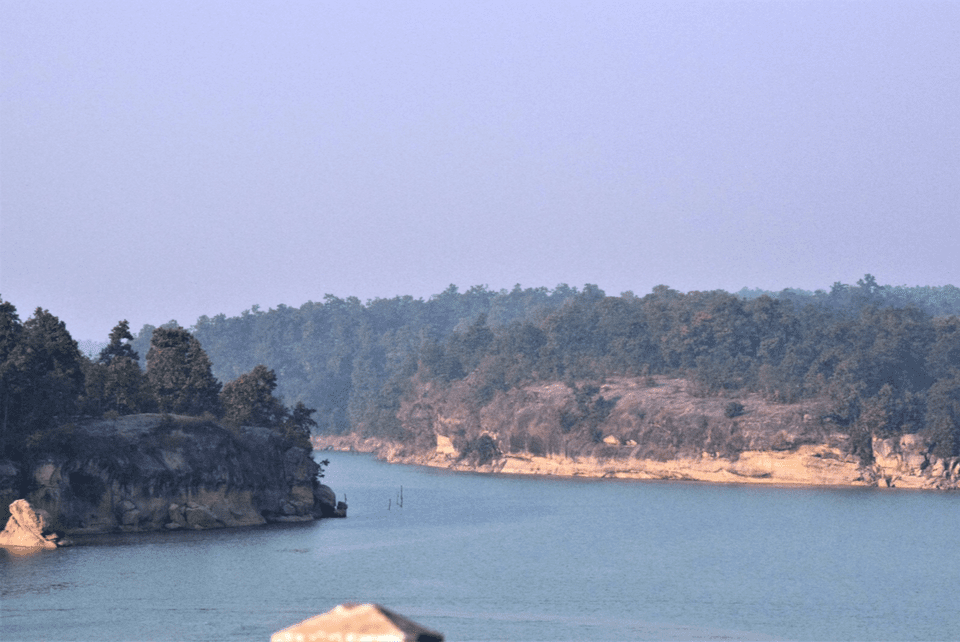
Rajasthan Vidyut Utpadan Nigam Limited (RVUNL) — Rajasthan’s state-owned power generation company — has applied for Forest Advisory Committee (FAC) clearance to fell 4.48 lakh trees in the Hasdeo Arand forest (Surguja district, Chhattisgarh) to expand the Parsa coal block. Hasdeo Arand is considered India’s densest coal-bearing forest — home to leopards, elephants, sloth bears (Schedule-I species) — and has been at the centre of a tribal rights movement for three years.
Article 21 — the SC has held that the right to a clean environment is part of the right to life. Article 48A (DPSP, added by 42nd Amendment 1976) directs the State to protect and improve the environment and safeguard forests and wildlife. Article 51A(g) (Fundamental Duty) requires every citizen to protect and improve the natural environment. Fifth Schedule (Art. 244) governs administration of Scheduled Areas — Hasdeo is in such an area. PESA Act 1996 extends Panchayat Raj to Scheduled Areas and requires mandatory Gram Sabha consent before any diversion of forest land or natural resources. Forest Rights Act 2006 recognises the rights of Scheduled Tribes and other traditional forest dwellers over their land and forest resources.
What Happened?
RVUNL needs to expand the Parsa coal block (East Chhattisgarh) to feed Rajasthan’s thermal power stations. The expansion requires felling 4.48 lakh trees in Hasdeo Arand — 841 hectares of dense forest. The company has applied to the FAC (Forest Advisory Committee under MoEFCC) for Stage-II forest clearance. Tribal communities and the Chhattisgarh Bachao Andolan (CBA) have been protesting for three years. Courts had previously stayed the clearance. RVUNL has proposed compensatory afforestation in the Hasdeo Dam and Bango Dam reservoir areas, but environmentalists argue these are degraded lands that cannot replace a biodiversity-rich primary forest.
Key Laws and Cases
- Forest Rights Act 2006: Formally, Scheduled Tribes and Other Traditional Forest Dwellers (Recognition of Forest Rights) Act — recognises community forest resource rights, individual land rights, and rights over traditional habitats.
- PESA Act 1996: Panchayats Extension to Scheduled Areas — Gram Sabha must give prior consent before diversion of community resources in Schedule V areas.
- Forest Conservation Act 1980: Requires central government approval (FAC + Stage I + Stage II clearances) before any non-forest use of forest land.
- T.N. Godavarman v Union of India (1995): SC held that FCA 1980 applies to all forests irrespective of classification — expanded the definition of forest beyond revenue records.
- Samatha v State of AP (1997): Tribal land in Scheduled Areas cannot be leased to non-tribals for mining.
- Orissa Mining Corporation v MoEF (2013): Niyamgiri case — Gram Sabha consent under PESA is mandatory before forest diversion in Scheduled Areas.
Hasdeo-type cases are a CLAT perennial — they test environment law, tribal rights, and constitutional schedules in a single passage. Key facts to lock in: (1) FAC functions under MoEFCC, not the Ministry of Tribal Affairs. (2) PESA Gram Sabha consent is mandatory — even state government cannot override it for Scheduled Area forests (Niyamgiri principle). (3) Fifth Schedule covers most tribal states (Jharkhand, Odisha, Chhattisgarh, MP, Gujarat, etc.) except Assam, Meghalaya, Tripura and Mizoram (Sixth Schedule). (4) Compensatory afforestation does not automatically replace primary forest rights — it is a mitigation measure. (5) Art. 51A(g) is a Fundamental Duty; Art. 48A is a DPSP — understand the difference in enforceability.
| Law/Case | Key Rule |
| Art. 21 | Clean environment = part of right to life |
| Art. 48A (DPSP) | State shall protect and improve environment |
| Art. 51A(g) (Duty) | Citizen shall protect natural environment |
| Fifth Schedule | Administration of Scheduled Areas (most tribal states) |
| PESA 1996 | Gram Sabha consent mandatory in Scheduled Areas |
| Forest Rights Act 2006 | Recognises tribal rights over forest land and resources |
| Niyamgiri (2013) | Gram Sabha consent overrides mining clearance in tribal areas |
| Hasdeo facts | 4.48 lakh trees; Surguja, CG; RVUNL (Rajasthan PSU); FAC pending |
Forest Rights Act 2006 — tribal land rights — Gram Sabha consent (PESA) mandatory in 5th Schedule areas — Protest by CBA 3 years strong — T.N. Godavarman = all forests protected regardless of classification — Niyamgiri = tribal self-determination wins. Remember: Schedule V (Fifth) = most tribal states; Schedule VI (Sixth) = Assam, Meghalaya, Tripura, Mizoram.
Practice Quiz — 10 CLAT-Style Questions
Click an option to reveal the answer and explanation.