VIDEO EXPLAINER | 14 OCTOBER 2026
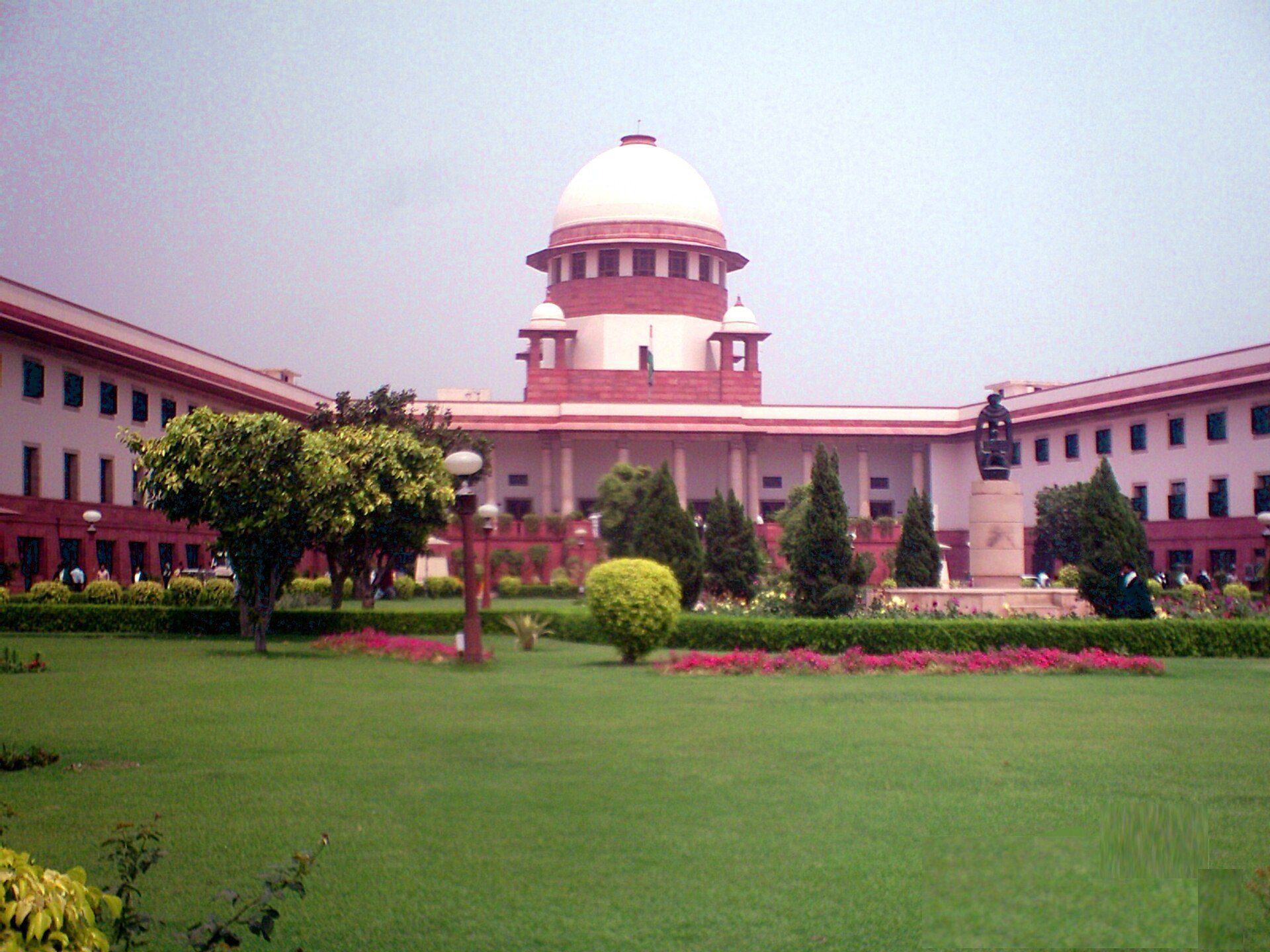
On 28 September 2026, the Supreme Court Collegium recommended three High Court Chief Justices for elevation to the Supreme Court: Justice Sunita Agarwal (Chief Justice, Gujarat High Court), Justice Devendra Kumar Upadhyaya (Chief Justice, Delhi High Court) and Justice Aparesh Kumar Singh (Chief Justice, Telangana High Court). The Centre cleared the names, and all three took oath on 6 October 2026, administered by Chief Justice of India Surya Kant. The Court now has 37 judges against a sanctioned strength of 38 (including the CJI). The appointments raise a question every law aspirant must answer precisely: who actually chooses the judges of India’s highest court, and how did that system come about?
1. What the Constitution says
Article 124(2) says every judge of the Supreme Court “shall be appointed by the President by warrant under his hand and seal after consultation with such of the Judges of the Supreme Court and of the High Courts” as the President may deem necessary, and that, for any judge other than the Chief Justice, “the Chief Justice of India shall always be consulted”. A Supreme Court judge holds office until 65. For High Courts, Article 217(1) requires consultation with the CJI, the Governor of the State and the Chief Justice of that High Court; High Court judges retire at 62. Article 222 lets the President transfer a judge from one High Court to another after consulting the CJI. Removal is deliberately hard: under Article 124(4), only by an order of the President after an address by each House of Parliament, supported by a majority of the total membership and two-thirds of those present and voting, on the ground of proved misbehaviour or incapacity.
The text never uses the word “collegium”. The entire debate turned on one word: what does “consultation” mean?
2. The three Judges Cases
First Judges Case (S.P. Gupta v. Union of India, 30 December 1981): a seven-judge bench held, by a 4:3 majority, that “consultation” does not mean concurrence. The President had to consult the CJI but was not bound by his view, so the final word rested with the executive.
Second Judges Case (Supreme Court Advocates-on-Record Association v. Union of India, 6 October 1993): a nine-judge bench, by 7:2, overruled S.P. Gupta. The opinion of the CJI was given primacy, but it was to be formed collectively, after consulting senior colleagues. The majority opinion was written by Justice J.S. Verma. This is where the collegium system was born.
Third Judges Case (In re Special Reference 1 of 1998, 28 October 1998): answering a Presidential reference under Article 143, a nine-judge bench (opinion by Justice S.P. Bharucha) said the collegium for Supreme Court appointments “should consist of the Chief Justice of India and the four seniormost puisne Judges”, and that their views should be in writing. After these judgments, the Union Law Ministry drew up the Memorandum of Procedure (MoP) on 30 June 1999.
3. NJAC: the attempt to replace the collegium
The Constitution (Ninety-ninth Amendment) Act, 2014 and the National Judicial Appointments Commission Act, 2014 created the NJAC (Article 124A). It had six members: the CJI (Chairperson), the two senior-most Supreme Court judges, the Union Minister in charge of Law and Justice, and two eminent persons nominated by a committee of the Prime Minister, the CJI and the Leader of Opposition in the Lok Sabha. Both laws came into force on 13 April 2015.
On 16 October 2015, in the Fourth Judges Case (Supreme Court Advocates-on-Record Association v. Union of India), a five-judge bench declared the 99th Amendment and the NJAC Act “unconstitutional and void” by 4:1, holding that the independence of the judiciary, including judicial primacy in appointments, is part of the basic structure. The pre-amendment “collegium system” was “declared to be operative”. Justice J. Chelameswar dissented and upheld the NJAC, writing that collegium proceedings were “absolutely opaque”.
4. How it works now
For the Supreme Court, the collegium is the CJI and the four senior-most judges. As listed in order of seniority on the Supreme Court’s website on 13 October 2026, it comprises CJI Surya Kant and Justices Vikram Nath, B.V. Nagarathna, M.M. Sundresh and P.S. Narasimha. For High Courts, the proposal begins with the High Court’s own collegium, its Chief Justice and two senior-most judges. The recommendation goes to the Union Government, which processes it under the MoP, and the President makes the appointment. By convention, the CJI is the senior-most judge of the Supreme Court considered fit to hold the office.
The Court’s strength is fixed by Parliament. The Supreme Court (Number of Judges) Amendment Act, 2026 raised it to 37 judges plus the CJI, a total of 38.
5. The debate in one line each
Independence: the 2015 majority held that judicial primacy in appointments protects the judiciary from executive influence. Transparency: the 2015 dissent argued that the process must be open and accountable.
Constitutional and legal framework
- Article 124(2): SC judges appointed by the President after consultation; the CJI is always consulted.
- Article 217: HC appointments; Article 222: HC transfers; Article 124(4): removal on proved misbehaviour or incapacity.
- Article 50: separation of the judiciary from the executive (DPSP).
- Article 143: Presidential reference (route of the 1998 opinion).
- Cases: S.P. Gupta (1981), SCAORA (1993), Special Reference 1 of 1998, SCAORA (2015).
- Laws: Constitution (99th Amendment) Act, 2014; NJAC Act, 2014; Supreme Court (Number of Judges) Act, 1956 as amended in 2026.
CLAT angle
- Legal reasoning: “consultation” vs “concurrence” is a classic interpretation question; know which case said what.
- Basic structure: a constitutional amendment can be struck down if it damages judicial independence (2015).
- Numbers: CJI + 4 (SC collegium), CJ + 2 (HC collegium), 4:3 (1981), 7:2 (1993), 4:1 (2015).
- Current affairs: sanctioned strength 38 including the CJI; three judges sworn in on 6 October 2026.
Key facts
| Fact | Detail |
|---|---|
| First Judges Case | S.P. Gupta, 30 Dec 1981, 4:3, executive primacy |
| Second Judges Case | SCAORA, 6 Oct 1993, 9 judges, 7:2, CJI primacy |
| Third Judges Case | Special Reference 1 of 1998 (Art 143), CJI + 4 senior-most |
| Memorandum of Procedure | Drawn up 30 June 1999 |
| NJAC | 99th Amendment + NJAC Act 2014; in force 13 Apr 2015 |
| Fourth Judges Case | 16 Oct 2015, 4:1, NJAC void; dissent: Justice J. Chelameswar |
| Current CJI | Justice Surya Kant |
| Sanctioned strength | 38 including the CJI (2026 Amendment Act) |
| Latest elevation | Recommended 28 Sep 2026; oath 6 Oct 2026 |
Mnemonic
“81 Sarkar, 93 CJI, 98 CJI + 4, 15 NJAC out”: 1981 gave the executive the last word, 1993 gave primacy to the CJI, 1998 fixed the collegium at CJI + 4, and 2015 struck down the NJAC.
Sources
Supreme Court Collegium statement dated 28 September 2026 (sci.gov.in); Supreme Court of India, list of sitting judges (sci.gov.in, accessed 13 October 2026); Constitution of India, Articles 50, 124, 143, 217 and 222; judgments in S.P. Gupta v. Union of India (1981), Supreme Court Advocates-on-Record Association v. Union of India (1993 and 2015) and In re Special Reference 1 of 1998; LiveLaw and Bar & Bench reports on the 6 October 2026 swearing-in and the Supreme Court (Number of Judges) Amendment Act, 2026.
Free in the CLAT Gurukul app
These notes (as a PDF lesson) and the 10-question CBT are in the app under Current Affairs → 14 Oct 2026. Get the app on Google Play or open app.clatgurukul.com.
Practice Quiz — 10 CLAT-Style Questions
Click an option to reveal the answer and explanation.