

CURRENT AFFAIRS | 10 OCTOBER 2026
On Thursday, 8 October 2026, the International Monetary Fund (IMF) and Pakistan reached a staff-level agreement that may unlock about $1.2 billion in fresh financing, as reported by The Hindu and the Anadolu news agency the same day. The money is not yet released: a staff-level agreement is only the first step, and the deal still needs the approval of the IMF Executive Board.
According to the reports, once the Board approves, Pakistan would receive about $1 billion under its Extended Fund Facility (EFF) and about $210 million under the Resilience and Sustainability Facility (RSF), the IMF’s climate-linked lending window. With these two disbursements, total financing released to Pakistan under the two arrangements would reach about $5.7 billion.
What exactly was agreed
The Lahore Times reported on 8 October that the agreement covers the fourth review of Pakistan’s $7 billion Extended Fund Facility and the third review of its $1.4 billion Resilience and Sustainability Facility. This sequence matches the previous round: in March 2026, the two sides had reached a staff-level agreement on the third EFF review and the second RSF review, which also carried a package of about $1.2 billion. The IMF mission was led by Iva Petrova, whose team held talks in Karachi and Islamabad before a wrap-up meeting with Pakistan’s Finance Ministry.
The IMF’s assessment, as carried in the reports, was that Pakistan had “preserved economic stability” despite the impact of conflict in the Middle East. Higher energy prices and supply disruptions weighed on the economy — much of Pakistan’s energy imports pass through the Strait of Hormuz. The key numbers reported were:
- Economic growth estimated at 3.6% for fiscal year 2026.
- Headline inflation easing to about 10.3% in September 2026, after peaking in May.
- Foreign exchange reserves of about $21.5 billion at the end of September.
The Fund also advised the State Bank of Pakistan to keep an appropriately tight monetary policy so that inflation returns durably to its target range. Among the conditions reported were a prompt wind-down of a costly and broadly targeted fuel subsidy, higher spending on health and education, and stronger public financial management.
Background & Framework
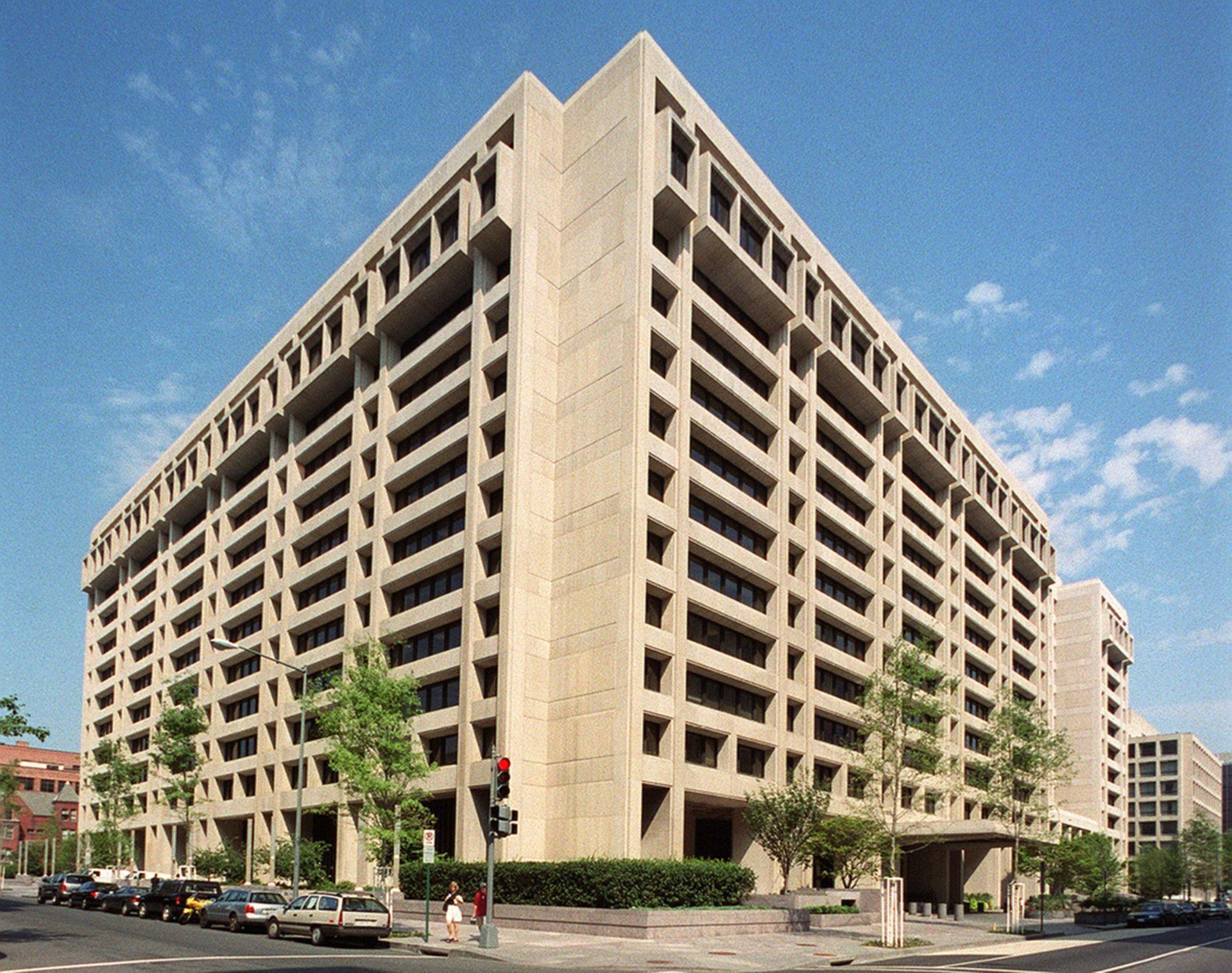
The IMF was conceived at the Bretton Woods Conference (New Hampshire, USA) in July 1944, along with the International Bank for Reconstruction and Development (IBRD) — the “Bretton Woods twins”. It is headquartered in Washington, D.C. and has 191 member countries. India is a founding member. Each member’s quota decides how much it contributes, how much it can borrow and its voting power. The IMF’s reserve asset is the Special Drawing Right (SDR), valued on a basket of five currencies: the US dollar, euro, Chinese renminbi, Japanese yen and pound sterling.
How an IMF loan moves: a staff mission negotiates with the country → a staff-level agreement is announced → the Executive Board approves the review → the tranche is disbursed. Programmes are released in instalments, each tied to a periodic review of whether the agreed conditions (“conditionality”) have been met.
The lending tools: the Stand-By Arrangement (SBA) is for short-term balance-of-payments problems; the Extended Fund Facility (EFF) gives medium-term support to countries with deeper structural problems, so it runs longer and is repaid over a longer period; the Resilience and Sustainability Facility (RSF), introduced in 2022, provides longer-term financing for structural challenges such as climate change, and is usually paired with a regular IMF programme.
Why a “staff-level” deal is not the finish line
Exam questions often test the difference between a staff-level agreement and Board approval. The IMF’s staff — economists who visit the country — can only agree on policies at their level. The decision to lend belongs to the Executive Board, which represents all member countries and votes in proportion to quotas. In practice, Board approval usually follows once the government completes any “prior actions” it has promised. Until then, the money remains a promise, not a payment. That is why every report on 8 October was careful to say the agreement “may unlock” or “could unlock” $1.2 billion.
The broader picture
Pakistan has turned to the IMF many times since joining the Fund, and its present programme is designed to rebuild reserves, narrow the fiscal deficit and move the economy away from repeated balance-of-payments crises. Each review is a test of whether the reforms are on track. A successful review also matters beyond the money: other lenders and investors often treat the IMF’s stamp as a signal of confidence.
The climate component is equally instructive. The RSF reflects a newer idea in global finance — that climate shocks are macroeconomic risks. A country hit repeatedly by floods or heatwaves faces larger deficits and higher debt, so the IMF now lends specifically to help members build resilience, alongside its traditional balance-of-payments support.
For India, IMF reviews of neighbouring economies are part of the regional economic picture. The IMF’s own role has also changed over the decades: created to supervise a system of fixed exchange rates, it now acts mainly as a lender of last resort for countries facing balance-of-payments stress, and as an adviser through its annual Article IV consultations with every member. The Lahore Times noted that this round also concluded Pakistan’s Article IV consultation for the year.
The CLAT Angle
CLAT GK passages on international organisations test institutional basics: where an organisation is headquartered, when and how it was created, how many members it has, and how it takes decisions. Expect questions such as:
- Which conference created the IMF and the World Bank? (Bretton Woods, 1944)
- Where is the IMF headquartered? (Washington, D.C.)
- Which IMF body must approve a staff-level agreement? (the Executive Board)
- Which facility is meant for climate resilience? (the RSF)
- Which currencies make up the SDR basket?
A reasoning-style passage could also ask you to distinguish a provisional agreement from a final decision — the same logic as a bill passed by one House versus an Act that has received assent. Read the verbs carefully: “may unlock” is not “has disbursed”.
Reading the numbers correctly
Three different figures appear in the coverage, and they should not be confused. $1.2 billion is the size of this tranche (about $1 billion EFF plus about $210 million RSF). $7 billion is the overall size of the EFF programme, and $1.4 billion is the size of the RSF. $5.7 billion is the cumulative amount released under both arrangements once this tranche is paid. A question that asks “how much may the 8 October agreement unlock?” has only one right answer: about $1.2 billion.
Key Facts
- Date: IMF–Pakistan staff-level agreement reported on 8 October 2026.
- Amount: may unlock about $1.2 billion, subject to IMF Executive Board approval.
- Split: about $1 billion under the EFF + about $210 million under the RSF.
- Reviews: fourth review of the $7 billion EFF; third review of the $1.4 billion RSF.
- Cumulative: total released under both arrangements to reach about $5.7 billion.
- Mission chief: Iva Petrova.
- Pakistan data: FY2026 growth 3.6%; September inflation about 10.3%; reserves about $21.5 billion.
- IMF: Bretton Woods Conference, July 1944; HQ Washington, D.C.; 191 members.
- SDR basket: US dollar, euro, renminbi, yen, pound sterling.
- SBA = short-term support; EFF = medium-term, structural; RSF (2022) = climate and resilience.
Takeaway
The 8 October agreement is a reminder of how conditional international lending works: money is released in tranches, each tranche follows a review, and each review needs two keys — the staff’s agreement and the Board’s approval. For an exam, anchor the story to the institution: IMF, Bretton Woods 1944, Washington D.C., 191 members, and the three facilities — SBA, EFF and RSF.
Memory Hook / Mnemonic
“Staff shakes hands, Board signs cheques.” For the money: “1 + 0.21 = 1.2 now; 5.7 in all; 7 is the whole EFF.” For the facilities: SBA = Short, EFF = Extended, RSF = Resilience (climate).
Practice Quiz — 10 CLAT-Style Questions
Click an option to reveal the answer and explanation.






