
CURRENT AFFAIRS | 23 JULY 2026
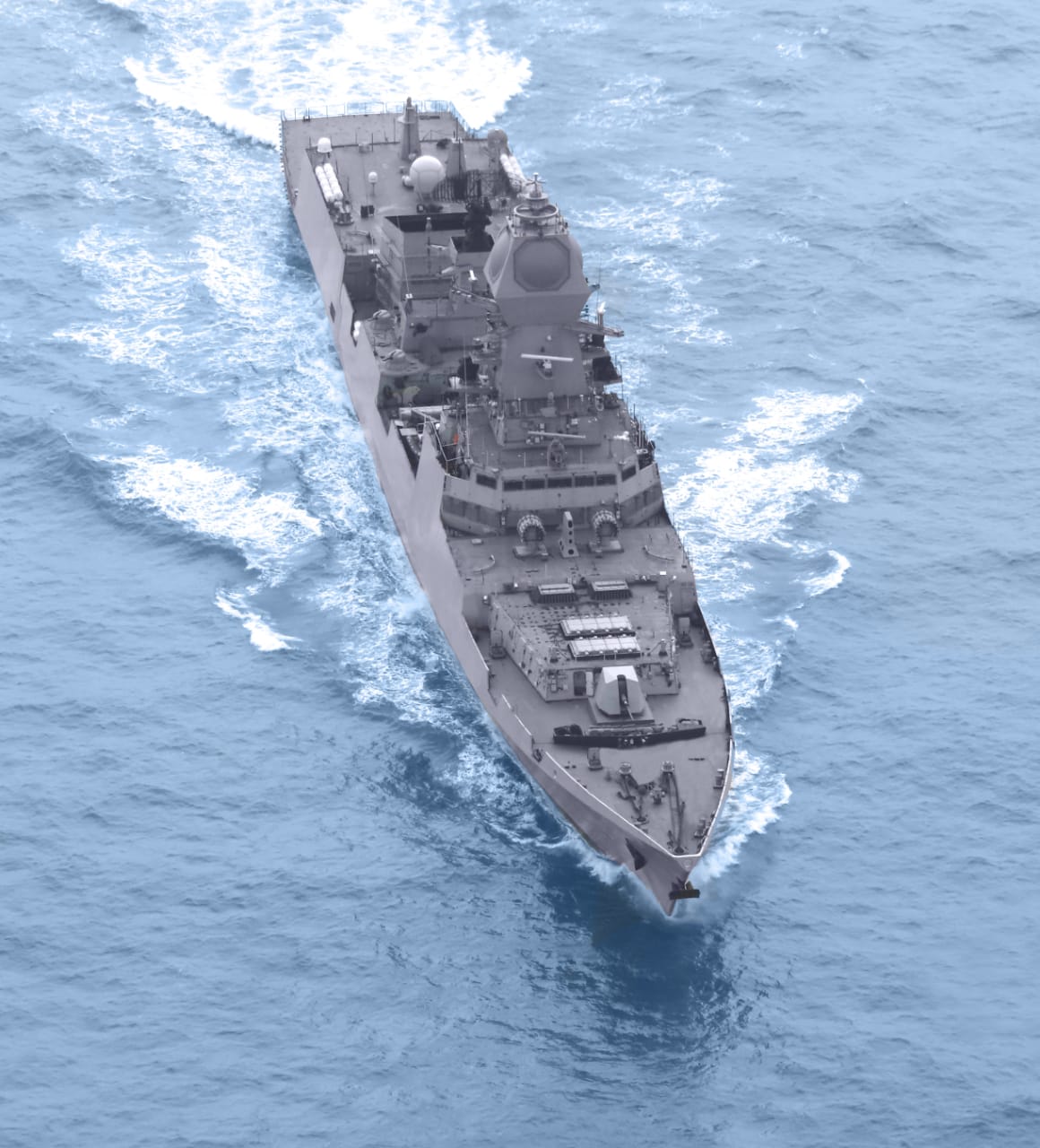
The commissioning of INS Malvan, an indigenously built anti-submarine warfare vessel, coincided with the Air Force chief’s blunt reminder that future wars cannot be fought by single services acting alone. Together they capture two intertwined national-security priorities: Atmanirbhar Bharat in shipbuilding and the drive towards “jointness” through integrated theatre commands under the Chief of Defence Staff. For CLAT 2027 aspirants, the story is a compact defence-GK topic that connects military modernisation, indigenisation and the institutional reform of India’s higher defence organisation.
| Vessel | INS Malvan |
| Type | Anti-Submarine Warfare Shallow Water Craft (ASW-SWC) |
| Series position | 2nd of eight ASW-SWCs |
| Indigenous content | Over 80% — built indigenously |
| Key message (IAF chief) | Future wars cannot be fought by individual services — jointness is essential |
| Reform vehicle | Integrated Theatre Commands under the CDS framework |
| CDS post created | 2019 (heads Department of Military Affairs) |
| Policy thrust | Atmanirbhar Bharat; maritime domain awareness |
INS Malvan and indigenous shipbuilding
INS Malvan is the second of a planned eight Anti-Submarine Warfare Shallow Water Craft — compact warships designed to detect and neutralise enemy submarines operating close to the coast, in the shallow littoral waters where larger vessels are less effective. Its standout feature is indigenisation: with over 80% indigenous content, the vessel embodies the Atmanirbhar Bharat goal of building strategic capability at home rather than importing it. Indian shipyards, including public-sector yards such as Cochin Shipyard Ltd, have progressively raised the domestic content of naval platforms, reducing dependence on foreign suppliers, saving foreign exchange, and building a sovereign defence-industrial base. Anti-submarine warfare is a priority because the Indian Ocean Region is contested and submarine activity — including from beyond the region — has grown, making coastal and littoral surveillance a core element of maritime domain awareness.
The case for “jointness”
Alongside the commissioning came a pointed strategic message from the Air Force chief: future wars cannot be fought by individual services operating in silos. This is the doctrine of jointness — the idea that the Army, Navy and Air Force must plan, train and fight as a single integrated force rather than three separate ones. Modern conflict is multi-domain: land, sea, air, space and cyber operations are interwoven, and a threat detected by one service may need to be countered by another within minutes. A submarine picked up by a naval vessel, for example, might best be prosecuted by maritime aircraft; an air threat may need to be met with layered defences drawn from all three services. Fighting as separate services wastes time, duplicates assets and creates seams an adversary can exploit. Jointness closes those seams.
Integrated theatre commands and the CDS
The institutional vehicle for jointness is the integrated theatre command. Instead of each service running its own commands, a theatre command places all the assets — army units, naval ships, air squadrons — in a given geographic theatre under a single commander with a unified operational plan. This is the model most major military powers follow. The reform is steered by the Chief of Defence Staff (CDS), a post created in 2019 to serve as the single-point military adviser to the government and to promote jointness. The CDS also heads the newly created Department of Military Affairs within the Ministry of Defence and is explicitly mandated to facilitate the restructuring of the services into theatre commands. Crucially, the CDS is a coordinator and reformer, not an operational commander of the individual services in peacetime — an important distinction for the exam.
Civilian control and the constitutional frame
India’s military reform unfolds within a firm constitutional principle: civilian supremacy over the armed forces. Under Article 53, executive power is vested in the President, who is the Supreme Commander of the armed forces, but this power is exercised on the advice of the elected government. Defence is a Union List subject, so the power to raise, maintain and command the forces lies exclusively with the Union. The creation of the CDS and the Department of Military Affairs did not dilute civilian control; it streamlined military advice to the civilian leadership. For a legal-reasoning passage, the crisp principle is that however integrated the military becomes, it remains subordinate to elected civilian authority — a hallmark of Indian constitutional democracy that distinguishes it from states where the military dominates policy.
Atmanirbhar Bharat and the bigger picture
INS Malvan and the jointness message are two faces of the same modernisation drive. Indigenous shipbuilding builds the hardware of self-reliance; theatreisation builds the software — the doctrine and command structures to use that hardware effectively. Both advance Atmanirbhar Bharat: one by manufacturing at home, the other by reorganising for efficient, integrated warfighting. For the CLAT 2027 candidate, the high-yield cluster is: INS Malvan as an indigenous ASW-SWC; jointness as the doctrine; integrated theatre commands as the structure; the CDS (2019) as the reformer; and civilian control under Article 53 as the constitutional guardrail. Master these and a single ship’s commissioning becomes a complete lesson in how India is reshaping its defence for the wars of the future.
Practice Quiz — 10 CLAT-Style Questions
Click an option to reveal the answer and explanation.