

CURRENT AFFAIRS | 10 OCTOBER 2026
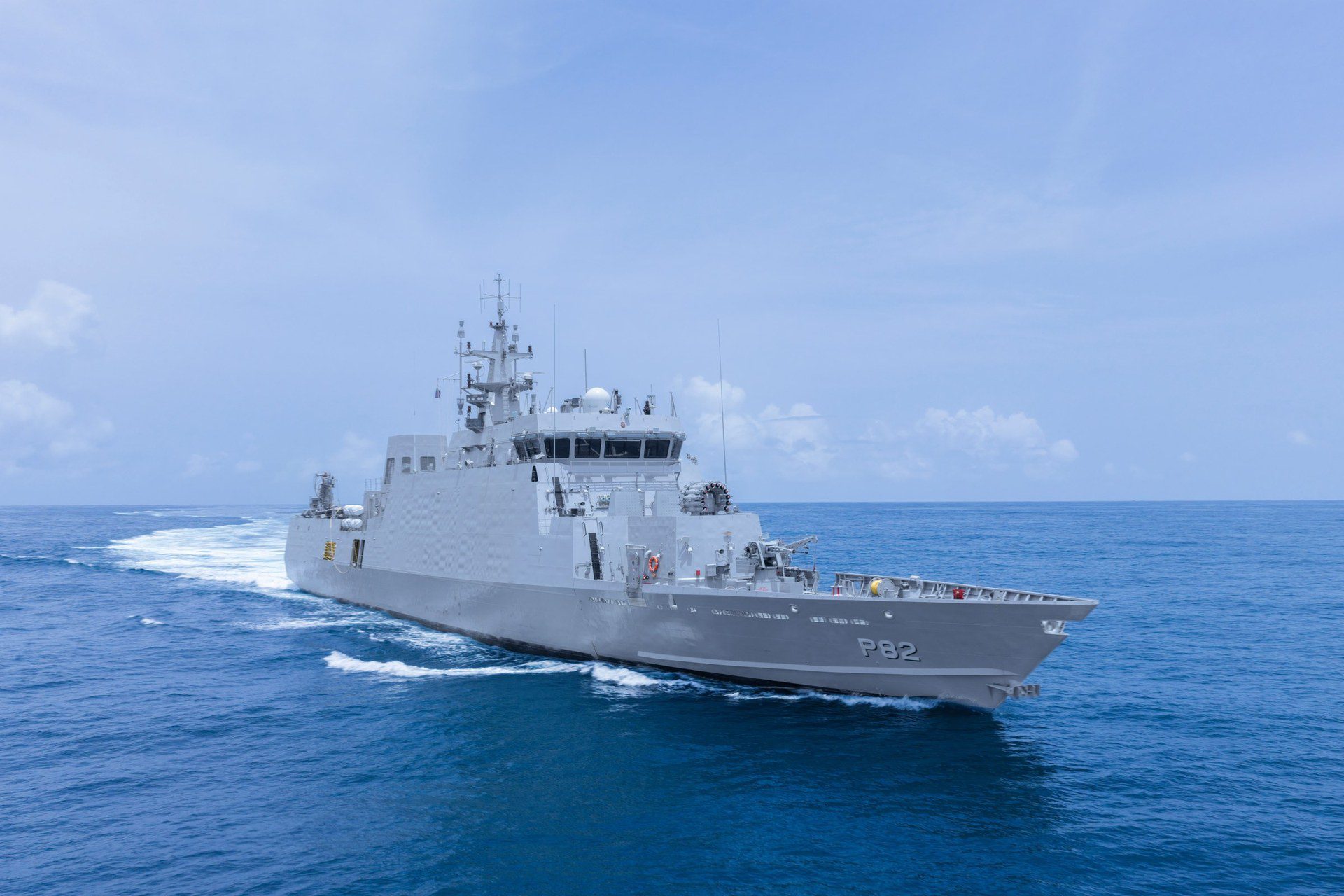
The Indian Navy is set to commission Mangrol, an indigenously built Anti-Submarine Warfare Shallow Water Craft (ASW-SWC), on Monday, 12 October 2026 at the Naval Dockyard, Mumbai. According to the Ministry of Defence release issued through the Press Information Bureau (PIB) on Friday, 9 October 2026, Mangrol is the third ASW-SWC built by Cochin Shipyard Limited (CSL), Kochi. The commissioning ceremony will be presided over by Vice Admiral Sanjay Vatsayan, Flag Officer Commanding-in-Chief, Western Naval Command.
The ship is small by the standards of destroyers and frigates, but its job is specific and important: to find and counter submarines in coastal and shallow waters, where larger warships face operational limitations. The release describes the induction as an important milestone in strengthening the Navy’s anti-submarine warfare capabilities and as a sign of India’s growing indigenous shipbuilding capability.
What the PIB release says
The Defence Ministry release sets out the main features of the craft. Mangrol has been built with over 80% indigenous content, and was constructed by CSL under the Government of India’s Make in India and Aatmanirbhar Bharat initiatives. The release calls it another important step towards self-reliance in defence shipbuilding, reflecting India’s capabilities in warship design, construction and the integration of advanced weapons and sensors.
The ceremony will be attended by senior naval and defence officials, representatives from the Ministry of Defence and Cochin Shipyard Limited, veterans, and representatives of indigenous weapons and sensor manufacturers — a reminder that a modern warship is the product of a whole domestic supply chain, not only of a shipyard.
Weapons and sensors
According to the release, Mangrol is equipped with:
- the Abhay Hull-Mounted Sonar, to detect underwater targets;
- lightweight torpedoes;
- an indigenous anti-submarine rocket launcher; and
- the Maareech Advanced Torpedo Decoy System, which helps protect the ship against incoming torpedoes.
Propulsion and roles
The craft is powered by three diesel engines with waterjet propulsion, which the release says gives it high manoeuvrability for operations in shallow waters. Beyond anti-submarine warfare, Mangrol can undertake underwater surveillance, Low-Intensity Maritime Operations (LIMO) and mine warfare-related tasks. It is designed to operate alongside maritime patrol aircraft, helicopters and other warships to detect and counter submarine threats, and its induction is expected to improve the Navy’s ability to protect ports, harbours and coastal approaches while supporting wider fleet operations.
Why the name “Mangrol”
The ship is named after Mangrol, a coastal town and prominent fishing harbour in the Junagadh district of Gujarat. The name is not new to the Navy. The release notes that the new ship carries forward the legacy of the erstwhile INS Mangrol (M85), a minesweeper that served the Indian Navy until 7 April 2004. Reusing the names of decommissioned ships is a long-standing naval tradition: it preserves the memory and battle honours of former warships and links new crews to their predecessors.
The link is neat in another way too. The old Mangrol was a mine-countermeasure vessel; the new Mangrol, though built for anti-submarine work, is also capable of mine warfare-related tasks — so the coastal-defence role travels with the name.
Background & Framework
Why shallow water is hard. Submarines are hardest to track close to the coast. Shallow water is noisy (waves, shipping, fishing traffic, the seabed itself), and sound behaves unpredictably, which makes sonar detection difficult. Large warships with deep draughts also cannot manoeuvre freely near harbours and in coastal approaches. A small, agile craft with a hull-mounted sonar, anti-submarine weapons and waterjet propulsion is built precisely for this gap.
Commissioning, explained. A ship is launched when its hull first enters the water, delivered when the builder hands it over after trials, and commissioned when it formally joins the Navy — the naval ensign is hoisted and the ship becomes “INS” (Indian Naval Ship). Commissioning, not launch, is the date that marks induction into service.
The institutions. The Indian Navy has three commands — Western (Mumbai), Eastern (Visakhapatnam) and Southern (Kochi). Mangrol’s ceremony at Mumbai is presided over by the Western Naval Command chief. Cochin Shipyard Limited, Kochi, is a public sector shipyard that also built India’s first indigenous aircraft carrier, INS Vikrant, commissioned in September 2022.
Policy frame. Make in India (launched 2014) and Aatmanirbhar Bharat (2020) underpin the push for indigenous defence production; the “over 80% indigenous content” figure is how such progress is usually measured.
Analysis: what Mangrol adds
Three points stand out. First, the threat is underwater and close to shore. The release itself speaks of “growing underwater threats in the evolving maritime security environment”. Ports and harbours are economic lifelines, and a single hostile submarine or mine near a port can disrupt trade and naval movement. A dedicated shallow-water anti-submarine craft fills a layer of defence that large warships and aircraft cannot fully cover on their own.
Second, teamwork is built in. The release stresses that Mangrol is meant to work with maritime patrol aircraft, helicopters and other warships. Modern anti-submarine warfare is a network: aircraft search wide areas, ships localise contacts with sonar, and weapons are delivered by whichever platform is best placed.
Third, indigenisation is the headline. Over 80% indigenous content, an Indian sonar (Abhay), an indigenous rocket launcher and an indigenous decoy system (Maareech) show that India is moving from building hulls to integrating home-grown weapons and sensors. That matters for cost, for repair and upgrade cycles, and for not depending on foreign suppliers in a crisis.
The CLAT Angle
Defence inductions are a staple of the CLAT current-affairs passage. Expect direct questions such as: Which shipyard built Mangrol? (Cochin Shipyard Limited, Kochi); What type of vessel is it? (Anti-Submarine Warfare Shallow Water Craft); Where will it be commissioned? (Naval Dockyard, Mumbai); and After which town is it named? (Mangrol, Junagadh district, Gujarat).
Watch for traps: Mangrol is the third ASW-SWC built by CSL, not the first; the earlier INS Mangrol (M85) was a minesweeper, not a submarine-hunter; the indigenous content is over 80%; and Abhay is the sonar while Maareech is the torpedo decoy system — options may swap the two. A reasoning-style question may also ask why shallow-water craft are needed when larger warships exist; the passage answer is that larger warships face operational limitations in coastal waters.
Static GK links
A few connected facts are worth revising alongside this story. The Indian Navy celebrates Navy Day on 4 December, marking Operation Trident during the 1971 war. Cochin Shipyard’s best-known project is INS Vikrant, India’s first indigenously designed and built aircraft carrier. The Navy’s three operational commands are headquartered at Mumbai, Visakhapatnam and Kochi. Terms such as “Low-Intensity Maritime Operations” (patrolling, anti-piracy and coastal security tasks short of full-scale combat) often appear in defence passages, so it helps to know what they mean.
Key Facts
- Ship: Mangrol — Anti-Submarine Warfare Shallow Water Craft (ASW-SWC).
- Commissioning: 12 October 2026, Naval Dockyard, Mumbai.
- Presiding officer: VAdm Sanjay Vatsayan, FOC-in-C, Western Naval Command.
- Builder: Cochin Shipyard Limited (CSL), Kochi — the third ASW-SWC built by CSL.
- Indigenous content: over 80% (Make in India, Aatmanirbhar Bharat).
- Sensors/weapons: Abhay Hull-Mounted Sonar, lightweight torpedoes, indigenous anti-submarine rocket launcher.
- Self-defence: Maareech Advanced Torpedo Decoy System.
- Propulsion: three diesel engines with waterjet propulsion.
- Other roles: underwater surveillance, Low-Intensity Maritime Operations, mine warfare-related tasks.
- Named after: Mangrol, a coastal town and fishing harbour in Junagadh district, Gujarat.
- Legacy: erstwhile INS Mangrol (M85), a minesweeper, served until 7 April 2004.
- Source: PIB (Ministry of Defence) release, 9 October 2026.
The bigger picture
Mangrol will not make headlines the way an aircraft carrier or a submarine does, but coastal anti-submarine defence is the kind of unglamorous capability that keeps ports open and fleets safe. Its induction shows two trends converging: a sharper naval focus on underwater threats near the coastline, and an Indian shipbuilding base that can now deliver small, sensor-heavy warships with most of their content made at home. For an aspirant, the story is a compact package of names, numbers and concepts — exactly the material CLAT GK passages are built from.
Memory Hook / Mnemonic
“Abhay listens, Maareech fools, Mangrol hunts the shallows.” Abhay = the sonar (it hears the submarine); Maareech = the torpedo decoy (named after the shape-shifting deer of the Ramayana that lured Rama away — it lures torpedoes away). Then remember “3-80-12”: CSL’s third ASW-SWC, over 80% indigenous, commissioned on 12 October at Mumbai.
Practice Quiz — 10 CLAT-Style Questions
Click an option to reveal the answer and explanation.






