DAILY NEWS WRAP | 23 OCTOBER 2026
What happened
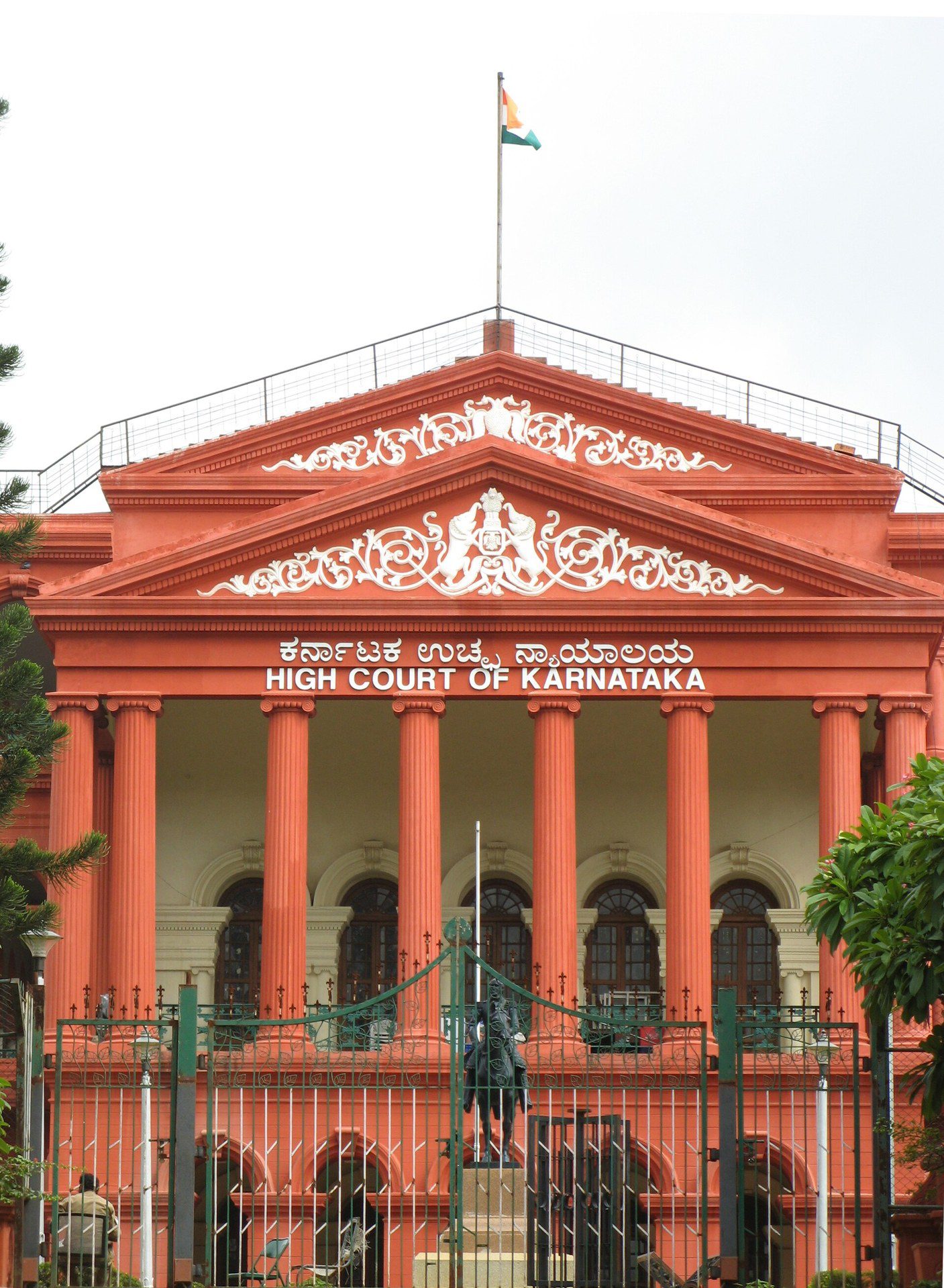
The Karnataka High Court has asked the Karnataka State Bar Council to evolve a mechanism to track and flag advocates who do not clear the All India Bar Examination (AIBE) within two years of provisional enrolment. The order was passed by Justice H.P. Sandesh in M. Prasanna Kumar v. State of Karnataka (Crl.P. 633/2020) and was reported on 19–20 October 2026.
In the same order, the court refused to quash the criminal case against an advocate, enrolled in 2011, who allegedly practised for about a decade without clearing the AIBE. The court held that criminal liability can arise under Section 45 of the Advocates Act, 1961, the provision that penalises persons who practise in courts when they are not entitled to do so.
What the AIBE is
The AIBE is conducted by the Bar Council of India (BCI) under its own rules, introduced in 2010. The BCI’s rule-making power comes from the Advocates Act, 1961. A law graduate is first enrolled on a provisional basis by a State Bar Council and must then pass the AIBE to receive the certificate of practice. The Karnataka order focuses on the gap in this system: advocates who are provisionally enrolled but never clear the exam may continue to appear in court unless someone tracks them.
The Supreme Court’s 2023 ruling
In 2023, a five-judge Constitution Bench of the Supreme Court upheld the validity of the AIBE in Bar Council of India v. Bonnie Foi Law College. The Bench overruled the earlier decision in V. Sudeer (1999), which had limited the BCI’s power to impose pre-enrolment conditions. After 2023, the BCI’s power to require a bar examination is settled law.
Why it matters
The case brings together three ideas that CLAT Legal Reasoning often tests: the role of regulatory bodies (the BCI and State Bar Councils), the difference between a professional qualification and criminal liability, and how a later, larger Bench can overrule an earlier precedent. It also shows a High Court using its jurisdiction to ask a statutory body to put a system in place rather than simply deciding the case in front of it.
- Provisional enrolment: enrolment with a State Bar Council pending the AIBE.
- Quash: to set aside criminal proceedings; the court refused to do so here.
- Constitution Bench: a Supreme Court Bench of five or more judges.
- AIBE conducted by the Bar Council of India; introduced in 2010.
- SC upheld AIBE in 2023 (BCI v. Bonnie Foi Law College), overruling V. Sudeer (1999).
- Karnataka HC: Justice H.P. Sandesh, M. Prasanna Kumar v. State of Karnataka.
- Section 45, Advocates Act 1961: criminal liability for illegal practice.
- Regulation of the legal profession is a recurring Legal Reasoning theme.
- Two years: the window to clear the AIBE after provisional enrolment.
- Advocates Act: 1961 · AIBE: 2010 · SC upheld: 2023.
Sources: LiveLaw (19 Oct 2026), Bar & Bench (19 Oct 2026), LawChakra, The Leaflet, Verdictum.
Free in the CLAT Gurukul app
These notes (as a PDF lesson) and the 10-question CBT are in the app under Current Affairs → 23 Oct 2026. Get the app on Google Play or open app.clatgurukul.com.
Practice Quiz — 10 CLAT-Style Questions
Click an option to reveal the answer and explanation.