

VIDEO EXPLAINER | 12 OCTOBER 2026
A powerful earthquake of magnitude 7.7, according to the United States Geological Survey (USGS), struck western Panama on 9 October 2026 at 12:56 pm local time, which was 11:26 pm in India. Its epicentre was about 12 km west-southwest of Pitaloza Arriba, at a shallow depth of 12.6 km. USGS estimates that about 4.6 million people felt moderate to severe shaking. The next day, Panama’s government declared a state of emergency, with damage reported in all 10 provinces. Panama sits on the Pacific Ring of Fire, yet this quake struck a part of the country where most of its past large earthquakes did not occur. Here is what happened and why.
What happened
The first estimate of the quake’s size was 8.0; it was revised to 7.6 and then to 7.7 (moment magnitude). Panama’s own Instituto de Geociencias, and the civil protection agency, put it at 7.5; USGS values are used here. A tsunami threat was issued for Central America’s Pacific coast and later lifted.
Strong aftershocks followed, including an M6.6 on the evening of 9 October (UTC) and an M6.0 on 10 October. According to the Associated Press (AP) and the Spanish agency EFE, seismologists recorded more than 100 aftershocks, including ones of magnitude 5.8, 5.5 and 5.2.
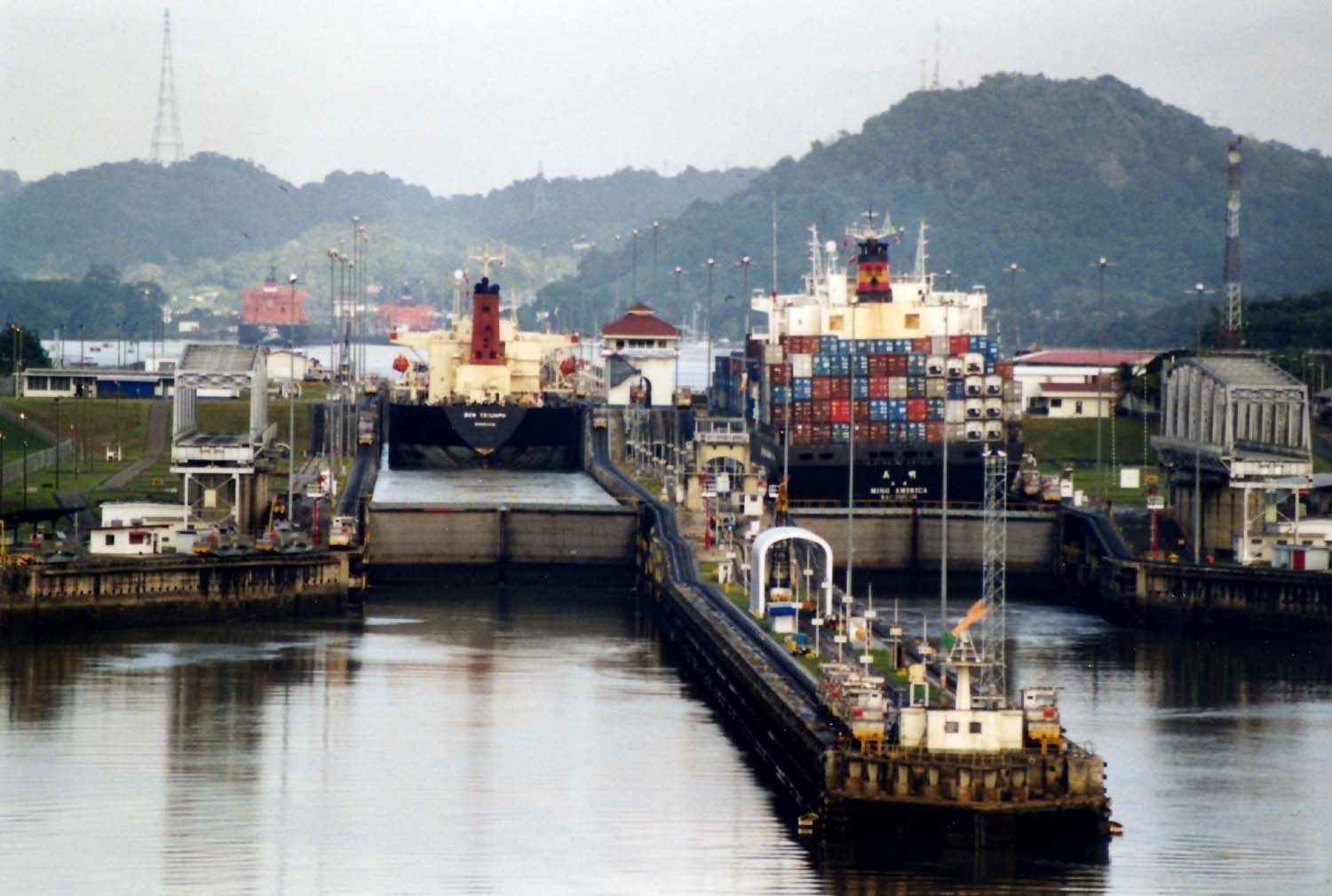
On 10 October, the government declared a state of emergency. EFE reported that it is a national emergency meant to channel up to US$100 million. According to AP’s report updated on 11 October, officials had not attributed any deaths to the quake, 27 people were injured, and damage was reported in all 10 provinces and two Indigenous territories. Civil Protection counted roughly 420 damaged homes and about the same number of public schools, along with hotels, churches and bridges; a colonial-era church in La Villa de Los Santos collapsed. The Panama Canal Authority said canal operations continued normally while technical teams inspected the facilities.
Why Panama shakes: four plates around a microplate
Panama sits on a small microplate. USGS describes it as surrounded by the Cocos and Nazca plates to the west and south, and the Caribbean and South American plates to the north and east. Earthquakes are frequent in the region, but most historical seismicity lies to the west, along the Panama Fracture Zone, the boundary between the Cocos and Nazca plates. USGS lists earlier large events in the area of M7.5 (July 1934) and M7.2 (July 1962).
What made this one different
USGS identifies the focal mechanism as left-lateral strike-slip: the blocks of rock slid past each other horizontally, not up and down. The quake was also shallow. A geophysicist at the US National Earthquake Information Center explained that in a shallow quake the energy is released right at the surface and has little time or distance to dissipate, which is why a shallow quake does more damage at the surface.
USGS’s PAGER system, revised on 10 October, issued a red alert for economic losses, estimating them at 1–20% of Panama’s GDP, and a yellow alert for fatalities, meaning some casualties are possible. Past events with a red economic alert have required a national or international response.
Magnitude versus intensity
Two terms are often confused. Magnitude measures the energy released at the source; this quake was 7.7 on the moment magnitude scale. Intensity measures the effect felt at a particular place and is recorded on the Modified Mercalli Intensity (MMI) scale. One earthquake has one magnitude but many intensities: USGS’s 4.6 million figure refers to people who felt intensity MMI V (moderate) to VIII (severe).
Institutional & scientific framework
- USGS: the source of the magnitude (7.7 Mww), depth (12.6 km), tectonic summary and the PAGER loss alerts.
- Ring of Fire: also called the Circum-Pacific Belt.
- Modified Mercalli scale: measures intensity (felt effect), not energy.
- India: under the seismic code in force, IS 1893 (Part 1):2016 of the Bureau of Indian Standards, India has seismic zones II to V, with Zone V the most severe.
CLAT angle
- GK: plates around Panama (Cocos, Nazca, Caribbean, South American) and the other name for the Ring of Fire.
- Concept: magnitude vs intensity, and why a shallow quake causes more surface damage.
- Fault types: strike-slip (horizontal) vs thrust or normal faults (vertical movement).
- India link: seismic zones II to V under IS 1893 (Part 1):2016.
- Passage questions may test careful reading: the agencies disagree on magnitude (7.7 vs 7.5).
| Fact | Detail |
|---|---|
| Date and time | 9 Oct 2026, 12:56 pm local (11:26 pm IST) |
| Magnitude (USGS) | 7.7 Mww |
| Depth (USGS) | 12.6 km |
| People shaken | About 4.6 million (MMI V to VIII) |
| Fault type | Left-lateral strike-slip |
| PAGER alert | Red for economic losses, 1–20% of GDP |
| Aftershocks | More than 100 (AP, EFE) |
| Casualties (AP, 11 Oct) | No deaths attributed; 27 injured |
| Emergency | State of emergency declared, 10 Oct |
Memory hook: “Coconut Nachos in the Caribbean, South”
Cocos and Nazca to the west and south, Caribbean and South American to the north and east: the four plates that box in the Panama microplate.
Sources
United States Geological Survey (event us6000u18k, tectonic summary and PAGER, 9–11 October 2026); Associated Press (10 October 2026, updated 11 October); EFE via La Prensa, Panama (10–11 October 2026); Business Standard / Bloomberg (10 October 2026); France24 (9 October 2026); Bureau of Indian Standards, IS 1893 (Part 1):2016.
Free in the CLAT Gurukul app
These notes (as a PDF lesson) and the 10-question CBT are in the app under Current Affairs → 12 Oct 2026. Get the app on Google Play or open app.clatgurukul.com.
Practice Quiz — 10 CLAT-Style Questions
Click an option to reveal the answer and explanation.






