CURRENT AFFAIRS | 23 JULY 2026
The Election Commission of India (ECI) has rolled out a Special Intensive Revision (SIR) of electoral rolls — a house-to-house drive to update the draft rolls before the next round of polls, with a firm deadline for filing enumeration forms. For CLAT aspirants, this is a textbook clash between two constitutional values: the purity of the electoral roll and the universality of adult franchise. The exercise sits squarely at the intersection of Article 324, Article 326 and the principles of natural justice — a combination that recurs in the legal-reasoning and GK sections year after year.
The ECI draws its authority from Article 324, which vests in it the superintendence, direction and control of the preparation of electoral rolls and the conduct of elections. The franchise itself is guaranteed by Article 326, which mandates that elections to the Lok Sabha and State Legislative Assemblies be held on the basis of universal adult suffrage — every citizen aged 18 and above has the right to vote. The mechanics of roll preparation are governed by the Representation of the People Act, 1950 (distinct from the 1951 Act, which regulates the conduct of elections). Crucially, in Lal Babu Hussein v. Electoral Registration Officer (1995), the Supreme Court held that a registered voter cannot be struck off the roll without notice and an opportunity of hearing — an application of the natural-justice maxim audi alteram partem.
Election law is one of the most reliably tested GK-plus-legal-reasoning zones in CLAT. The SIR story lets a single passage examine three things at once: the source of ECI power (Art 324), the content of the right (Art 326), and the procedural safeguard before deletion (natural justice). Expect legal-reasoning sets that give you a principle — “no voter may be deleted without a hearing” — and then a fact pattern where an officer removes names summarily, asking you to apply Lal Babu Hussein. GK MCQs will test the 1950 vs 1951 Act distinction and the age threshold (lowered from 21 to 18 by the 61st Amendment, 1988).
| Exercise | Special Intensive Revision (SIR) — house-to-house verification of rolls |
| Trigger to stay on roll | Filing the enumeration form by the ECI deadline |
| ECI’s power source | Article 324 (superintendence of elections) |
| Franchise guarantee | Article 326 — universal adult suffrage (18+) |
| Governing statute | Representation of the People Act, 1950 |
| Key case | Lal Babu Hussein v. ERO (1995) — notice + hearing before deletion |
“324 runs the show, 326 lets you go (vote), 1950 makes the list, and Lal Babu says: no name off without a twist — a hearing first!” Chant 3-2-4 / 3-2-6 to lock the pair: the higher-numbered Article (326) is the citizen’s right; the lower one (324) is the ECI’s power.
What exactly is the Special Intensive Revision?
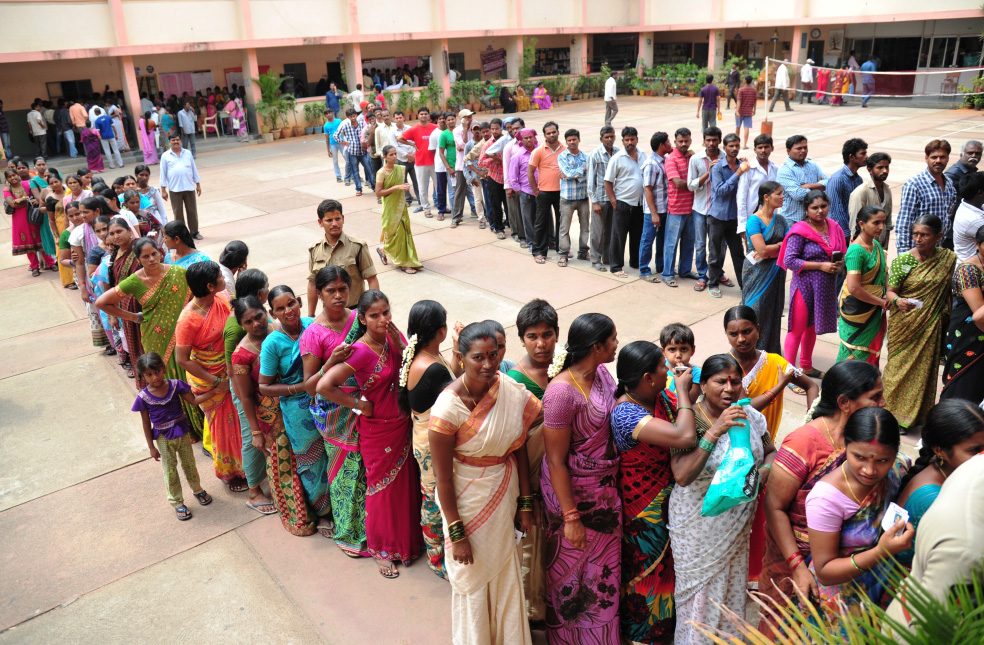
A routine “summary revision” of electoral rolls happens periodically before elections, largely on the basis of claims and objections filed by voters. A Special Intensive Revision is far more thorough: booth-level officers physically visit households, distribute enumeration forms, and rebuild the roll from the ground up. The stated objective is twofold — to delete ineligible entries (the deceased, those who have shifted, duplicate registrations) and to add every eligible citizen who has been left out. Because the exercise can result in large-scale deletions, the enumeration form becomes the practical passport to remaining on the draft roll: a voter who does not submit it risks non-inclusion and must then file a claim to be restored.
The tension: roll purity versus universal franchise
A clean electoral roll is a democratic good — bogus and duplicate entries invite fraud and dilute genuine votes. But an over-zealous purge is a democratic hazard, because wrongful deletion silently disenfranchises real citizens. The Constitution resolves this tension procedurally rather than by choosing one value over the other. Article 326’s promise of universal adult suffrage means the default is inclusion; any move to exclude must clear the bar of due process. This is why the ECI’s own manuals require that objections be adjudicated, that voters receive notice, and that deletions be reasoned — not mechanical.
Why the courts insist on a hearing
The Lal Babu Hussein ruling is the anchor precedent. There, names were sought to be deleted on suspicion that certain voters were not citizens. The Supreme Court held that the right to vote of a person already on the roll cannot be taken away without following the principles of natural justice — the affected voter must be told the grounds and given a chance to respond. The logic flows from Article 21’s expanding conception of “procedure established by law” and from the administrative-law rule that any decision affecting rights must be fair. For CLAT, the takeaway is crisp: deletion is a quasi-judicial act, not a clerical one.
How this fits the wider constitutional map
The ECI is a constitutional body — created directly by Article 324, not by ordinary statute — which gives its directions considerable weight. Its independence is reinforced by the security of tenure granted to the Chief Election Commissioner. When it conducts a revision, it acts under a blend of constitutional authority (Art 324), statutory scheme (the 1950 Act and the Registration of Electors Rules, 1960), and judge-made safeguards. Aspirants should remember that the age qualification of 18 was fixed by the 61st Constitutional Amendment (1988), which lowered it from 21 — a favourite one-line GK fact. Read together, the SIR episode is a compact civics lesson: robust rolls and universal franchise are not rivals but partners, held in balance by the discipline of due process.
Practice Quiz — 10 CLAT-Style Questions
Click an option to reveal the answer and explanation.