VIDEO EXPLAINER | 21 OCTOBER 2026
The Election Commission of India has three members: the Chief Election Commissioner (CEC), currently Gyanesh Kumar, and two Election Commissioners (ECs), currently Sukhbir Singh Sandhu and Vivek Joshi. All three sit on the same body and vote on the same decisions, yet the law protects them very differently. No CEC has ever been removed from office. The two other members have a far weaker shield. This explainer looks at that asymmetry, and at what the law says should happen when the three members disagree.
The CEC’s shield: Article 324(5)
The first proviso to Article 324(5) says the CEC “shall not be removed from his office except in like manner and on the like grounds as a Judge of the Supreme Court”. It adds that the CEC’s conditions of service cannot be varied to his disadvantage after his appointment.
The “like manner” is in Article 124(4). There are only two grounds: proved misbehaviour or incapacity. Each House of Parliament must pass an address, in the same session, supported by a majority of the total membership of that House and by at least two-thirds of the members present and voting. The address goes to the President, who orders the removal. The procedure is laid down by the Judges (Inquiry) Act, 1968: a notice signed by at least 100 Lok Sabha or 50 Rajya Sabha members, admission by the Speaker or Chairman, and an inquiry by a three-member committee before any vote.
The bar is so high that no Supreme Court judge has ever been removed by this route either. The one motion that reached a vote, against Justice V. Ramaswami, was defeated in the Lok Sabha in May 1993. In March 2026 the first notices seeking a CEC’s removal were given in both Houses; they were not admitted (see our earlier explainer, Removing a CEC: Four Gates).
The other two members: removable on one recommendation
The second proviso to Article 324(5) is much shorter. Any other Election Commissioner or a Regional Commissioner “shall not be removed from office except on the recommendation of the Chief Election Commissioner“. There is no parliamentary vote and no inquiry: the CEC’s recommendation is the required condition, and the President then acts on the advice of the government. The best-known instance came in January 2009, when the then CEC recommended the removal of an EC; the recommendation was not accepted.
In Anoop Baranwal v. Union of India (2 March 2023), a five-judge Constitution Bench was asked to give the ECs the same shield as the CEC. The majority declined, and left it to Parliament, acting in its constituent capacity (a constitutional amendment), to consider the question. Justice Ajay Rastogi, concurring, said equal protection would be desirable.
The 2023 Act kept the rule, changed the panel
The Chief Election Commissioner and other Election Commissioners (Appointment, Conditions of Service and Term of Office) Act, 2023 (No. 49 of 2023, assent 28 December 2023) repeats the Constitution on removal: under section 11(2) the CEC is removable only like a Supreme Court judge, and under section 11(3) the ECs only on the CEC’s recommendation.
What changed was the appointment panel. Baranwal had set an interim committee of the Prime Minister, the Leader of Opposition and the Chief Justice of India, to hold until Parliament made a law. Section 7 of the Act replaced it with the Prime Minister (chair), the Leader of Opposition in the Lok Sabha and a Union Cabinet Minister nominated by the Prime Minister. The Chief Justice is out; a Cabinet Minister is in.
The Act also has a protection clause. Section 16 says no court shall entertain or continue any civil or criminal proceedings against a person who is or was a CEC or EC for any act, thing or word done or spoken in the course of official duty.
When the three disagree
Disagreement is not a ground for removal. The only grounds are proved misbehaviour or incapacity. The Act instead tells the Commission how to decide. Section 18(2): all business shall, as far as possible, be transacted unanimously, and if the CEC and the ECs differ in opinion on any matter, it “shall be decided according to the opinion of the majority“. The same rule stood in the 1991 Act that the 2023 Act repealed. In T.N. Seshan v. Union of India (14 July 1995), a five-judge bench upheld the multi-member Commission and held that the CEC is not superior to the other Commissioners; the majority decides.
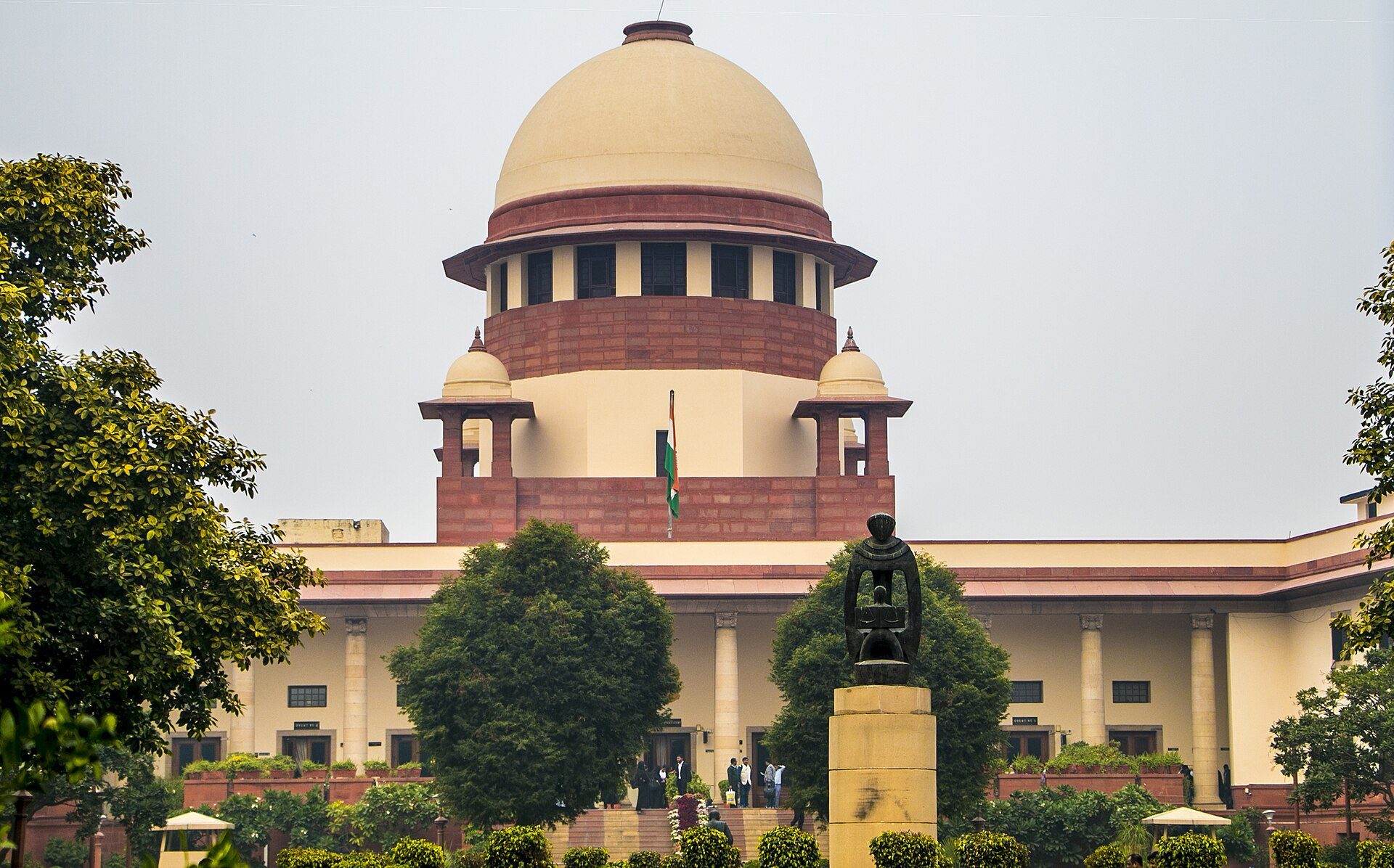
That is why the question is now before the Supreme Court. A bench led by the Chief Justice of India issued notice to the Election Commission and the Centre on petitions alleging that decisions were taken without the other two Commissioners. It refused interim orders, but said it would examine the decisions and annul any not taken in accordance with the law, that is, by unanimity or majority. It also indicated that it may examine the section 16 protection. The case is pending.
The video’s answer, in one line: inside the Commission, the answer to disagreement is a majority vote, not removal.
Constitutional and legal framework
- Article 324(5), first proviso: CEC removable only in like manner and on like grounds as a Supreme Court judge; service conditions not to be varied to his disadvantage.
- Article 324(5), second proviso: other ECs (and Regional Commissioners) removable only on the CEC’s recommendation.
- Article 124(4): proved misbehaviour or incapacity; address by each House with a majority of total membership and two-thirds of those present and voting.
- Judges (Inquiry) Act, 1968: notice (100 Lok Sabha / 50 Rajya Sabha members), admission, three-member inquiry committee.
- Act 49 of 2023: s.7 Selection Committee; s.9 six years or age 65; s.11 removal; s.16 protection from proceedings; s.18 unanimity, else majority.
- Cases: T.N. Seshan v. Union of India (1995); Anoop Baranwal v. Union of India (2023).
CLAT angle
- Legal Reasoning: a passage on Article 324(5) may ask whether a CEC can be removed for disagreeing with colleagues (no: only proved misbehaviour or incapacity).
- Application: two ECs outvote the CEC on a matter; under section 18(2) the majority view is the Commission’s decision.
- Polity GK: who sits on the Selection Committee under section 7, and who sat on the Baranwal interim committee.
- Comparison: the CEC’s shield is the same as a Supreme Court judge’s; an EC’s depends on the CEC’s recommendation.
- Vocabulary: the Constitution uses “impeachment” only for the President (Article 61); for judges and the CEC the term is removal.
Key facts
| Fact | Detail |
|---|---|
| Members of the Commission | Three: the CEC and two Election Commissioners |
| CEC removal | Art. 324(5), like a Supreme Court judge (Art. 124(4)) |
| EC removal | Only on the CEC’s recommendation (Art. 324(5); s.11(3) of the 2023 Act) |
| Grounds | Proved misbehaviour or incapacity |
| Special majority | Majority of total membership + two-thirds present and voting, in each House |
| CECs ever removed | None; no Supreme Court judge either |
| 2023 Act | No. 49 of 2023, assent 28 December 2023 |
| Selection Committee (s.7) | PM (chair), Leader of Opposition in Lok Sabha, a Cabinet Minister nominated by the PM |
| Disagreement (s.18(2)) | Unanimity as far as possible, else the majority opinion |
| Protection (s.16) | No civil or criminal proceedings for official acts, words or things done |
Memory hook: “One shield, two on a word, three vote”
One member (the CEC) has a judge-level shield; two members (the ECs) go on one word, the CEC’s recommendation; all three vote, and the majority decides (section 18).
Sources
Constitution of India, Articles 124 and 324; The Chief Election Commissioner and other Election Commissioners (Appointment, Conditions of Service and Term of Office) Act, 2023 (Gazette of India, 28 December 2023); Judges (Inquiry) Act, 1968; Supreme Court judgments in T.N. Seshan v. Union of India (1995) and Anoop Baranwal v. Union of India (2023); reports of the Supreme Court hearing (DT Next and The Pioneer, 5 October 2026); Organiser (15 October 2026) and Insights on India (25 September 2026) on removal of the CEC.
Free in the CLAT Gurukul app
These notes (as a PDF lesson) and the 10-question CBT are in the app under Current Affairs → 21 Oct 2026. Get the app on Google Play or open app.clatgurukul.com.
Practice Quiz — 10 CLAT-Style Questions
Click an option to reveal the answer and explanation.