CURRENT AFFAIRS | 20 APRIL 2026
CLAT GK + CONSTITUTIONAL LAW & RELEVANT AREA
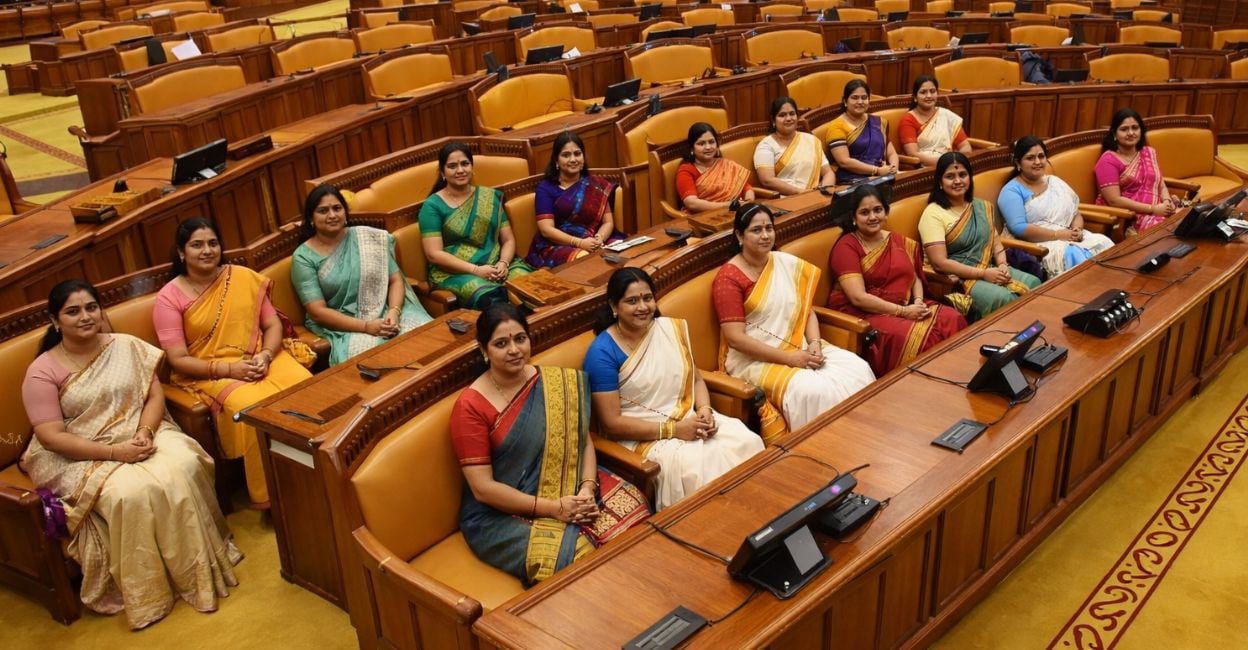
An Indian Express analysis (20 April 2026) shows that despite the 106th Constitutional Amendment 2023 (Nari Shakti Vandan Adhiniyam) promising 33% women’s reservation in the Lok Sabha and State Assemblies, actual candidate nominations by parties have barely budged in polls held since. Bengal Congress fielded 35 women (11.9% of candidates, up from 7.6% in 2021); TMC 52 of 294 (17.7%). TN DMK 19/176 (10.8%); AIADMK 19/172. Kerala Congress cut women candidates; BJP slashed from 38 to 33. Only Sikkim Congress jumped 16.7 percentage points; Odisha BJD stayed at 23.8%. BJP fielded zero women in Puducherry in 2026 and 2021.
Why it matters for CLAT: The 2023 women’s quota operationalises ONLY AFTER delimitation. Meanwhile, voluntary party ticket-giving data shows structural resistance — the classic ‘law on books vs law in action’ frame. Contrast Art 243D (33% women PRI quota since 73rd CAA 1992) which DID work — a structural vs discretionary tale.
Constitutional Framework
- Art 15(3) — enabling special provisions for women and children
- Art 243D(3) — 33% women reservation in Panchayati Raj (73rd CAA 1992) — operational
- Art 243T(3) — 33% women reservation in Municipalities (74th CAA 1992) — operational
- Art 330A + 332A — 33% LS + Assembly reservation for women (106th CAA 2023) — delayed trigger
- Delayed-trigger clause — ‘shall come into force after delimitation undertaken on basis of first census taken after commencement’
- K Krishna Murthy v UoI (2010) — upheld Art 243D
- Indira Sawhney (1992) — 50% reservation ceiling; women’s quota vertical vs horizontal debate
CLAT Angle — How This Gets Tested
- Assertion–Reason: (A) The 106th CAA 2023 is in force. (R) Women now enjoy 33% reservation in Lok Sabha. Answer: A is true, R is false — the 106th CAA is notified but the reservation itself kicks in only post-delimitation.
- Contrast structural (PRI quota, mandatory) vs discretionary (ticket allocation, party prerogative under RPA 1951) outcomes — 33% at panchayat, sub-12% at state assembly.
- Horizontal vs vertical reservation: women’s reservation under 106th CAA is horizontal (cuts across SC/ST/General) — remember Indira Sawhney and Saurav Yadav v UP (2020).
- Ticket allocation is NOT election law — it is party internal democracy under the Election Symbols Order; courts give parties wide latitude (Common Cause 1996).
Key Facts
| Law | 106th Constitutional Amendment Act 2023 (Nari Shakti Vandan Adhiniyam) |
| Quota | 33% of LS + State Assembly seats |
| Trigger | After delimitation post-first census after 2026 — NOT YET operational |
| Bengal Congress (2026) | 35 women / 11.9% (up from 7.6% in 2021) |
| Bengal TMC | 52 of 294 candidates = 17.7% |
| TN DMK | 19 of 176 = 10.8% |
| Kerala BJP | Cut from 38 (2021) to 33 women |
| PRI Women (Art 243D) | ~46% women elected representatives — over-achieving quota |
Mnemonic
TICKET — Two-thirds party control, India Congress cuts in Kerala, Candidate nominations lag, Krishna Murthy upheld 243D, Electoral quota deferred, TMC 17.7% best mainstream
Test Yourself — 10 MCQ Quiz
Practice Quiz — 10 CLAT-Style Questions
Click an option to reveal the answer and explanation.