

CURRENT AFFAIRS | 10 OCTOBER 2026
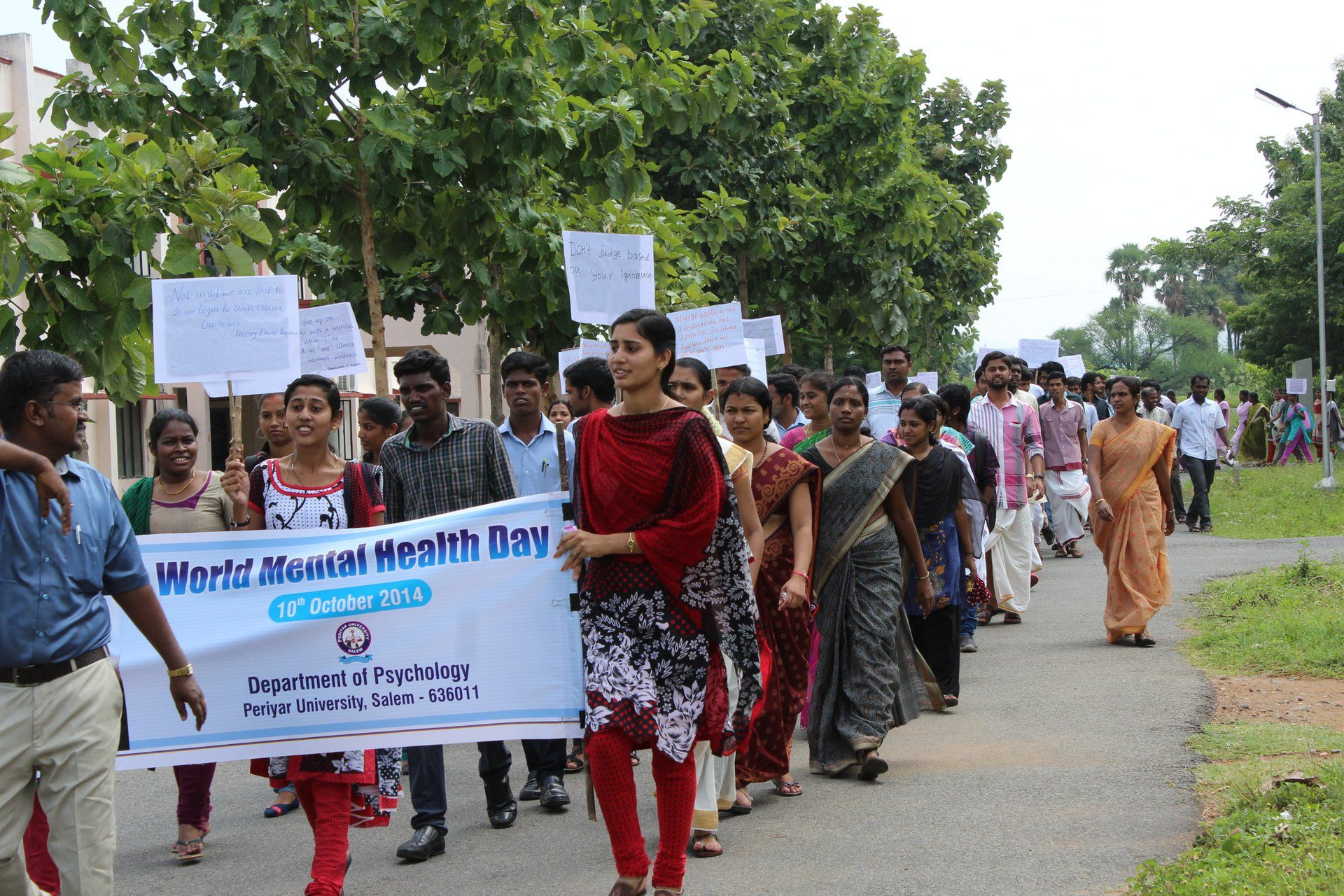
Saturday, 10 October 2026 is World Mental Health Day, an annual international day for mental health education, awareness and advocacy against stigma. The day was first observed in 1992 at the initiative of the World Federation for Mental Health (WFMH), and is supported by the World Health Organization (WHO). The global theme for 2026, listed on WHO’s campaign page, is “Lived experiences heard: real voices, real change”.
In India, the Union Ministry of Health and Family Welfare announced its observance of the day in a release issued through the Press Information Bureau (PIB) on Friday, 9 October 2026. The release reaffirms the Government’s commitment to making mental healthcare “accessible, affordable, inclusive and people-centred”, and puts the national tele-mental health programme, Tele-MANAS, at the centre of that effort.
The 2026 theme
According to the Health Ministry release, the theme “Lived experiences heard: real voices, real change” underscores the importance of listening to people with lived experience of mental health conditions and ensuring their voices help shape mental health policies and services. In plain terms, the theme asks policymakers to treat people who have lived with a condition not merely as patients, but as experts whose experience should inform how services are designed.
Tele-MANAS: the numbers in the PIB release
Tele-MANAS stands for Tele Mental Health Assistance and Networking Across States. It was launched on 10 October 2022 — itself a World Mental Health Day — and works through the national toll-free helpline 14416, offering free, confidential, round-the-clock counselling with multilingual support. The release gives these figures, as of October 2026:
- Tele-MANAS has received 47,75,644 calls (over 47.75 lakh) since its launch.
- There are 53 operational Tele-MANAS cells across all 36 States and Union Territories.
- An analysis of 13,35,275 recorded caller profiles shows women account for 43.78% (5,84,587) and men 54.18% (7,23,427) of callers.
- People aged 18–45 years account for 73.2% of recorded caller profiles.
Callers raise concerns ranging from emotional distress and anxiety to sleep disturbances and stress linked to examinations, workplaces and relationships. Beyond first-level counselling, the service links callers to specialised mental health professionals and referral services in the wider public health system. The release stresses its value for people in rural, remote and underserved areas, where specialist care may be far away.
MANN Jaagriti and the wider system
As part of World Mental Health Day 2026, the Ministry is taking forward MANN Jaagriti, described as a structured community awareness and engagement initiative to strengthen mental health literacy, reduce stigma and encourage timely help-seeking. Rather than one-day events, it aims at sustained engagement through schools, colleges, workplaces and health facilities, involving educators, families, caregivers, civil society and persons with lived experience.
The release also places Tele-MANAS within a larger structure:
- the National Mental Health Programme (NMHP);
- the District Mental Health Programme (DMHP), sanctioned for 767 districts, with support under the National Health Mission — covering outpatient care, counselling, medicines, follow-up, outreach and district-level inpatient care; and
- mental health services integrated into the Comprehensive Primary Health Care package at over 1.83 lakh Ayushman Arogya Mandirs, where primary teams screen, support and refer.
Together, the Ministry says, these form a continuum from community awareness to primary care, district services and digital counselling.
Constitutional / Legal Framework
Article 21. The Supreme Court has read the right to health into the right to life under Article 21; mental health is part of that guarantee. Public health is also a State List subject, which is why national programmes like the DMHP run through the States with central support.
Mental Healthcare Act, 2017. Assented to on 7 April 2017 and in force from 29 May 2018, it replaced the Mental Health Act, 1987. It adopts a rights-based approach: it gives every person a right to access mental healthcare from services run or funded by the government, allows advance directives and the appointment of a nominated representative, and protects dignity and confidentiality.
Section 115. The Act provides that a person who attempts suicide shall be presumed, unless proved otherwise, to have severe stress and shall not be tried and punished under Section 309 of the Indian Penal Code; the government is obliged to provide care and rehabilitation. This effectively decriminalised attempted suicide. The IPC has since been replaced by the Bharatiya Nyaya Sanhita, 2023.
Programmes. The National Mental Health Programme was launched in 1982; the District Mental Health Programme is its district-level arm.
Analysis: access, stigma and the student link
The release’s figures tell a two-part story. The first is access. India has long had too few psychiatrists and psychologists, concentrated in cities. A phone-based service with 53 cells covering all States and UTs removes distance as a barrier for first contact. The second is stigma. Confidential calls let people seek help without being seen walking into a clinic — and the release notes that the service is helping address the hesitation associated with seeking help.
The caller data matter too. That nearly three in four profiled callers are aged 18–45, and that exam stress is among the concerns listed, makes this directly relevant to students. Equally, the fact that women are 43.78% of profiled callers suggests telephone counselling is reaching people who may face barriers to visiting a facility. The 2026 theme ties these strands together: services improve when people who use them are heard.
The CLAT Angle
GK: Expect “Important Days” questions — date (10 October), first observed (1992), initiator (WFMH), 2026 theme, and the Tele-MANAS helpline number (14416) and launch date (10 October 2022).
Legal Reasoning: Section 115 of the Mental Healthcare Act, 2017 is a classic passage hook. A question may describe a person who survives a suicide attempt and ask whether prosecution under Section 309 IPC would succeed. Applying the principle — a presumption of severe stress, no trial or punishment unless that presumption is rebutted — the answer leans against prosecution. Note the word “presumed”: it is a rebuttable presumption, a nuance examiners like to test.
Traps: do not confuse the 2017 Act with the 1987 Act it replaced; NMHP (1982) with DMHP (district arm); or 14416 (Tele-MANAS) with other helplines.
Key Facts
- World Mental Health Day: 10 October every year; first observed in 1992.
- Initiated by: World Federation for Mental Health (WFMH); supported by WHO.
- 2026 theme: “Lived experiences heard: real voices, real change”.
- Tele-MANAS: Tele Mental Health Assistance and Networking Across States; launched 10 October 2022.
- Helpline: 14416 — toll-free, free, confidential, 24×7, multilingual.
- Calls since launch: 47,75,644 (over 47.75 lakh), as of October 2026.
- Cells: 53, across all 36 States and UTs.
- Callers: women 43.78%, men 54.18%; age 18–45 = 73.2% (of 13,35,275 profiles).
- New initiative: MANN Jaagriti — community awareness and anti-stigma drive.
- DMHP: sanctioned for 767 districts; mental health services in over 1.83 lakh Ayushman Arogya Mandirs.
- Law: Mental Healthcare Act, 2017 (in force 29 May 2018); Section 115 — presumption of severe stress in attempted suicide.
- Source: PIB (Ministry of Health and Family Welfare) release, 9 October 2026.
The bigger picture
Mental health policy in India has moved, within a decade, from a custodial 1987 law to a rights-based 2017 Act, and from hospital-centred care towards phone lines, district teams and primary health centres. The 2026 theme pushes the next step: designing services with, not just for, the people who use them. For a CLAT aspirant, the topic combines an Important Day, a government scheme with hard numbers, and a statutory provision that lends itself to legal reasoning.
Memory Hook / Mnemonic
“10-10, dial 1-4-4-1-6.” World Mental Health Day is 10/10, Tele-MANAS was launched on 10/10/2022, and its helpline is 14416. For the history: “82 programme, 92 day, 17 Act” — NMHP 1982, first Mental Health Day 1992, Mental Healthcare Act 2017 — and “115 = stress, not crime” for attempted suicide.
Practice Quiz — 10 CLAT-Style Questions
Click an option to reveal the answer and explanation.






