

CURRENT AFFAIRS | 12 OCTOBER 2026
India’s private sector is expected to invest around ₹7.5 lakh crore in nuclear power and could contribute 30 GW towards the national target of 100 GW of nuclear capacity by 2047, according to Atomic Energy Commission (AEC) Chairman Ajit Kumar Mohanty. He made the remarks in an exclusive interview with PTI, reported by The Hindu and The Economic Times on Sunday, 11 October 2026. Mohanty is also Secretary of the Department of Atomic Energy (DAE).
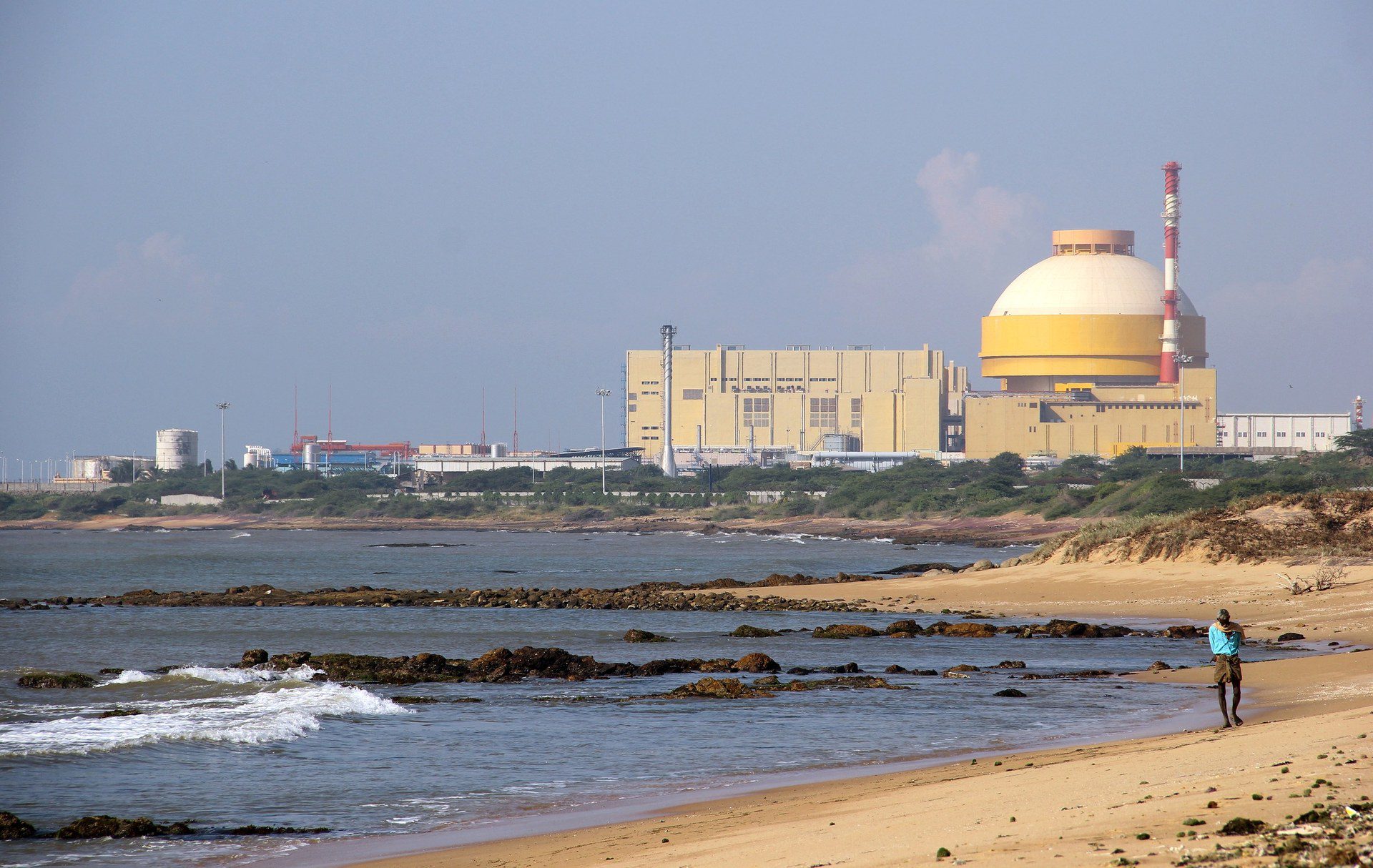
The starting point is modest. India currently has about 9 GW of installed nuclear power capacity. The public sector undertaking Nuclear Power Corporation of India Ltd (NPCIL) operates 24 reactors with a combined capacity of about 9 GW, and another 17 reactors with around 13 GW are at various stages of implementation, according to The Hindu’s report of the interview.
What the AEC chief said
The key points of the interview, as reported by The Hindu (PTI):
- Private entry: “We think private players should also enter the nuclear business and that is why new legislation was enacted,” Mohanty said.
- Timeline: he expects “a couple of private sector players to run reactors” five years from now, with about 30 GW coming from them by 2047.
- Cost: it costs around ₹25 crore to generate 1 MW of nuclear capacity, he said.
- Construction time: nuclear projects typically take five to seven years to build, depending on technology, approvals and construction.
- Partnerships: private companies are assessing reactor technologies, fuel supply, land and possible joint ventures with NPCIL and foreign technology providers.
A quick cross-check shows the numbers hang together: 30 GW is 30,000 MW, and at about ₹25 crore per MW that comes to roughly ₹7.5 lakh crore — the investment figure Mohanty gave.
The law that opened the door
Mohanty said the enactment of the Sustainable Harnessing and Advancement of Nuclear Energy for Transforming India (SHANTI) Act in December 2025 marked a major policy shift. In his words, as reported, it opened the nuclear sector to broader participation by public and private entities while retaining sovereign control over sensitive activities. Business newspapers including Moneycontrol and The Financial Express reported at the time that the new law consolidates civil nuclear legislation and replaces the Atomic Energy Act, 1962 and the Civil Liability for Nuclear Damage Act, 2010.
Constitutional / Legal Framework
Union subject: “Atomic energy and mineral resources necessary for its production” is a subject in the Union List of the Seventh Schedule, so only Parliament legislates on it.
Old framework: the Atomic Energy Act, 1962 reserved nuclear power generation essentially for the Union government and its companies, such as NPCIL. The Civil Liability for Nuclear Damage Act, 2010 dealt with compensation for nuclear accidents and the liability of operators and suppliers.
New framework: the SHANTI Act (December 2025) allows broader participation, including private entities, while the state keeps control over sensitive activities, according to the AEC chairman.
Institutions: the Atomic Energy Commission sets nuclear policy; the Department of Atomic Energy works under the Prime Minister; NPCIL is the government enterprise under the DAE that runs the country’s nuclear power reactors.
Small modular reactors
Alongside large plants, Mohanty said India is exploring small modular reactors (SMRs) “to cater to specialised electricity requirements, particularly in energy-intensive industries”. Steel and cement plants need large, reliable supplies of power. An SMR could meet the captive needs of a single facility or a group of industrial units, depending on design, regulation and the commercial model. Smaller reactors could widen the use of nuclear power and give industry another option for dependable, low-carbon electricity.
The three-stage programme
India’s long-term nuclear strategy is the three-stage nuclear power programme, designed to make use of the country’s large thorium resources. Mohanty explained the stages as follows:
- Stage 1 — uranium-fuelled reactors. They generate electricity and also produce plutonium-239, which can be recovered by reprocessing spent fuel.
- Stage 2 — fast breeder reactors. These use the recovered plutonium and are designed to produce additional fissile material and prepare for the use of thorium.
- Stage 3 — thorium. Thorium cannot be used directly as reactor fuel; it must first be converted into a fissile material. This stage aims to build a fuel cycle based on domestic resources.
India’s thorium is found in monazite-bearing beach sands; Mohanty mentioned coastal states including Odisha and Andhra Pradesh, and said “India houses 25% of the global thorium reserve”. The Hindu’s report also notes that the indigenously designed Prototype Fast Breeder Reactor (PFBR) at Kalpakkam, Tamil Nadu, attained first criticality in April 2026 — the start of a sustained chain reaction and a milestone for Stage 2. The three-stage plan is associated with Homi J. Bhabha, the founder of India’s nuclear programme.
Analysis: why private capital, and what are the questions?
Going from about 9 GW to 100 GW in about two decades is a very large jump. Nuclear power is capital-intensive: much of the money is spent early, during construction, and the payback comes over decades. Mohanty himself noted that the cost of electricity from new projects will be a key consideration for investors and power buyers. Public money alone would struggle to fund such an expansion, which is the logic for inviting private investment.
The policy also raises issues that come up in debate: how liability for accidents is shared, how safety regulation is kept independent and strong, how land and fuel are secured, and how tariffs stay affordable. A balanced answer recognises both the energy and climate case for nuclear power — reliable, low-carbon baseload electricity — and these governance questions.
The CLAT Angle
GK: expect questions on the figures (₹7.5 lakh crore, 30 GW, 100 GW by 2047, about 9 GW now, 24 reactors), on who the AEC chairman is, on the SHANTI Act’s full form and on the three stages.
Legal reasoning: nuclear liability is a classic setting for principles of strict and absolute liability. Indian students should connect it to the Supreme Court’s rule of absolute liability for hazardous industries in M.C. Mehta v Union of India (1987), the oleum gas leak case. A passage might ask whether an operator can escape liability by pointing to a supplier’s fault.
Quantitative techniques: the numbers make neat data questions: 30 out of 100 GW is 30%; 30,000 MW × ₹25 crore = ₹7,50,000 crore.
Key Facts
- Speaker: Ajit Kumar Mohanty, Chairman, Atomic Energy Commission, and Secretary, DAE.
- Reported: 11 October 2026 (PTI interview; The Hindu, The Economic Times).
- Private investment expected: around ₹7.5 lakh crore.
- Private share: about 30 GW of the 100 GW target by 2047.
- Installed capacity now: about 9 GW.
- NPCIL: operates 24 reactors; 17 more (about 13 GW) under implementation.
- Cost: about ₹25 crore per MW; build time five to seven years.
- Law: SHANTI Act, enacted December 2025.
- SMRs: being explored for energy-intensive industries such as steel and cement.
- PFBR, Kalpakkam: first criticality in April 2026.
- Thorium: from monazite beach sands; India has about 25% of global reserves (as stated).
Memory Hook / Mnemonic
“9 now, 100 by 47; 30 private at 25 a megawatt = 7.5.” About 9 GW today, 100 GW by 2047, 30 GW from private players at ₹25 crore/MW = ₹7.5 lakh crore. And the stages: “U → Pu → Th” — uranium, plutonium breeder, thorium.
Practice Quiz — 10 CLAT-Style Questions
Click an option to reveal the answer and explanation.






