CURRENT AFFAIRS | 12 OCTOBER 2026
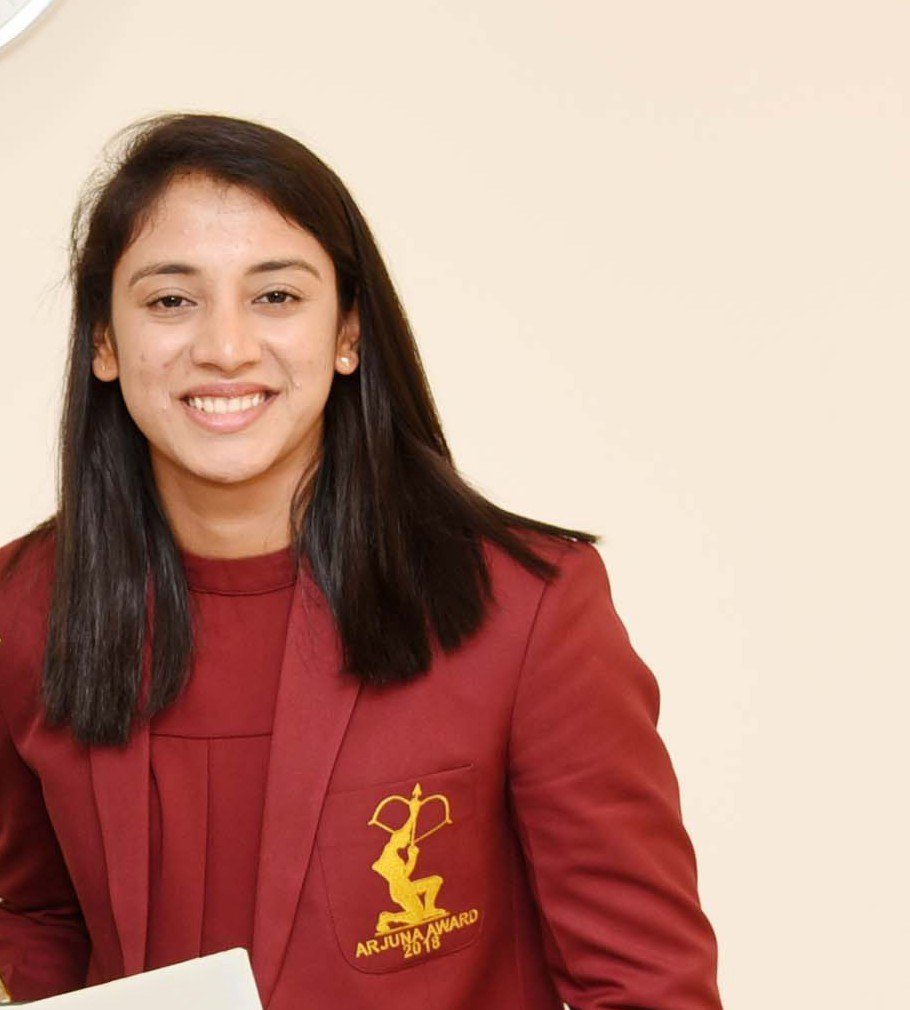
Smriti Mandhana, the newly appointed captain of the India women’s cricket team, has been named a Celebrity Advocate by UNICEF India. The announcement was made on Sunday, 11 October 2026, to mark the International Day of the Girl, as reported by The Indian Express and The New Indian Express. In her new role she will support UNICEF India’s work to empower adolescent girls, improve their health and well-being, and help them access opportunities to learn, play and lead.
“I am deeply honoured to join UNICEF India as a Celebrity Advocate,” Mandhana said, according to both newspapers. “Growing up playing cricket taught me that every dream begins with an opportunity.” She added that every child and young person deserves the chance to dream big and reach their full potential.
Captain first, then advocate
The appointment came days after a change in leadership of the national side. According to The Indian Express, Mandhana was handed the India captaincy earlier in the week after Harmanpreet Kaur stepped down from the role across all formats. Mandhana had been Harmanpreet’s deputy — so the correct description now is captain, not vice-captain. The Indian Express reported that the BCCI said she will be the full-time white-ball captain.
Some quick profile facts, as reported by The Indian Express and The New Indian Express:
- She has been part of the Indian team since 2013.
- She is a left-handed batter and an Arjuna Award recipient.
- She was the second-highest run-scorer at the 2025 Women’s ODI World Cup, with 434 runs; India won that title under Harmanpreet Kaur’s captaincy.
- She has previously supported UNICEF and International Cricket Council campaigns on gender equality and life skills, and UNICEF’s Promise to Children campaign.
Cricketer Sachin Tendulkar, who is associated with UNICEF as its Regional Ambassador for South Asia, welcomed her to the “@UNICEFIndia family”, according to The Indian Express.
What a celebrity advocate does
UN agencies use well-known personalities to draw public attention to their causes. A celebrity advocate lends a public profile to campaigns, speaks at events and uses social media reach to carry messages to audiences the agency may not reach on its own. The NIE report says UNICEF India seeks to use Mandhana’s influence to promote equal opportunities, health and well-being for adolescent girls, and that she will advocate for an environment in which girls can take part in sports and realise their potential.
Titles matter in exams. UNICEF uses different labels for the public figures it works with, and the exact title is often the point of a question. In this story, two titles appear side by side: Mandhana is a Celebrity Advocate for UNICEF India, a national role, while Tendulkar is described as UNICEF’s Regional Ambassador for South Asia, a regional role. Do not swap them, and do not upgrade either to a global title that the sources do not use.
The link to sport is deliberate. Sport is widely seen as a route to confidence, health and leadership for girls, and a captain of a world-champion team is a strong role model. The date matters too: the International Day of the Girl, observed on 11 October, draws attention to girls’ rights, safety, leadership and potential, and to the barriers that still limit their choices.
Background & Framework
UNICEF at a glance: UNICEF was established in 1946, in the aftermath of the Second World War, as the United Nations International Children’s Emergency Fund, according to unicef.org. Its mandate was to help children whose lives and futures were at risk, regardless of the role their country had played in the war. Today it is known as the United Nations Children’s Fund but keeps the original acronym.
Headquarters: New York, United States.
Nobel Peace Prize: UNICEF received the Nobel Peace Prize in 1965; its Executive Director Henry R. Labouisse accepted the gold Nobel medal in Norway on 10 December 1965.
Governance: UNICEF is overseen by an Executive Board of member states.
Children’s rights law: the UN Convention on the Rights of the Child (CRC) was adopted in 1989; India ratified it in 1992. UNICEF’s work is guided by the CRC.
Why it matters beyond sport
India’s Constitution gives the state wide room to act for girls and children. Article 15(3) allows special provisions for women and children. Article 21A makes free and compulsory education a fundamental right for children aged 6 to 14. Article 39(f), a Directive Principle, asks the state to ensure that children are given opportunities to develop in a healthy manner and in conditions of freedom and dignity. Advocacy campaigns by agencies such as UNICEF work alongside these public commitments, often by changing attitudes rather than laws.
There is also a balanced view to keep in mind. Celebrity advocacy raises awareness but does not by itself change outcomes; those depend on schools, health services, safety and family support. A thoughtful answer in a reading-comprehension passage would recognise both the value of visibility and its limits.
The CLAT Angle
GK — persons and organisations: “Who was named UNICEF India Celebrity Advocate on 11 October 2026?” — Smriti Mandhana. Pair it with static questions: UNICEF’s founding year (1946), headquarters (New York), original name (International Children’s Emergency Fund) and its Nobel Peace Prize (1965).
Precision trap: older material calls Mandhana vice-captain. After Harmanpreet Kaur stepped down, she is the captain. Examiners like such updated facts.
Legal reasoning: a passage on child rights might set out Article 15(3) or Article 21A and ask whether a special measure for girls is permissible. Under Article 15(3), special provisions for women and children are expressly allowed despite the general bar on sex discrimination.
Takeaway
The appointment links three exam-friendly threads: a leadership change in Indian women’s cricket, a UN agency’s advocacy for adolescent girls, and the International Day of the Girl on 11 October. Learn the person and the role, then the static UNICEF facts that usually come attached.
Key Facts
- Who: Smriti Mandhana, captain of the India women’s cricket team.
- Role: UNICEF India Celebrity Advocate.
- When: announced on Sunday, 11 October 2026.
- Occasion: International Day of the Girl (11 October).
- Focus: adolescent girls — health, well-being, chances to learn, play and lead.
- Captaincy: took over after Harmanpreet Kaur stepped down across formats.
- Record: 434 runs at the 2025 Women’s ODI World Cup, second-highest.
- Other UNICEF link: Sachin Tendulkar is UNICEF’s Regional Ambassador for South Asia.
- UNICEF: founded 1946; HQ New York; Nobel Peace Prize 1965.
- Original name: United Nations International Children’s Emergency Fund.
- CRC: adopted 1989; ratified by India in 1992.
Memory Hook / Mnemonic
“Girl’s Day, Captain’s Way: 11-10.” Named on 11 October, the Day of the Girl. For UNICEF: “46 born, 65 Nobel, New York home.” — founded 1946, Nobel Peace Prize 1965, headquarters New York.
Practice Quiz — 10 CLAT-Style Questions
Click an option to reveal the answer and explanation.