Watch the video explainer · open on YouTube
VIDEO EXPLAINER | 31 OCTOBER 2026
On 1 April 2026 NASA’s Artemis II carried four astronauts on a free-return flyby of the Moon, the first crewed lunar voyage since Apollo 17 in 1972, and set a new record for the farthest humans have travelled from Earth before splashing down in the Pacific on 11 April 2026 (UTC). Four months later, at the 9th India-US Civil Space Joint Working Group held at ISRO headquarters in Bengaluru on 5-6 August 2026, NASA invited ISRO to join its Moon Base programme, the effort to build a permanent human outpost near the lunar South Pole. India has been an Artemis Accords signatory since June 2023, and the invitation followed the joint NASA-ISRO NISAR mission.
What happened
The mission profile had Orion make two orbits of the Earth to check its systems before firing towards the Moon.
The crew reached a maximum distance of 252,756 miles (406,771 km) from Earth, breaking the record of 248,655 miles set by Apollo 13 in 1970.
During the flight the Artemis II crew made the first-ever ship-to-ship call between a spacecraft en route to the Moon and the International Space Station.
The CSJWG meeting was co-chaired by M. Sankaran, Director of the U R Rao Satellite Centre, for India, and by Dr Wesley Brooks (Assistant Secretary of State for Oceans and International Environmental and Scientific Affairs) with Kathleen Karika (NASA Associate Administrator for International and Interagency Relations) for the United States.
At the same meeting the two sides agreed to advance discussions on open scientific data sharing under the Artemis Accords.
The invitation followed the launch of the joint NASA-ISRO NISAR earth-observation radar satellite and Shubhanshu Shukla’s Axiom flight to the ISS, both in 2025.
The meeting was held under the US-India TRUST (Transforming the Relationship Utilizing Strategic Technology) Initiative announced in the February 2025 Joint Leaders’ Statement.
NASA invited ISRO to join its Moon Base programme at the 9th meeting of the India-US Civil Space Joint Working Group (CSJWG), hosted by India at ISRO headquarters, Bengaluru, on 5-6 August 2026.
Background and the rules behind it
Article IV of the Outer Space Treaty bars nuclear weapons or other weapons of mass destruction in orbit and requires that the Moon and other celestial bodies be used exclusively for peaceful purposes.
The Artemis Accords are a non-binding set of principles for civil space exploration, established in 2020 by NASA in coordination with the US Department of State and seven other founding signatory nations.
India signed the Artemis Accords on 21 June 2023 in Washington DC, becoming the 27th signatory; Ambassador Taranjit Singh Sandhu signed for India during Prime Minister Narendra Modi’s state visit.
The Artemis Accords reinforce commitments under the Outer Space Treaty, the Registration Convention and the Rescue and Return Agreement; they are political commitments, not a treaty.
Chandrayaan-3’s Vikram lander soft-landed near the Moon’s south pole on 23 August 2023, making India the fourth country to soft-land on the Moon and the first to do so near the south pole; 23 August is now observed as National Space Day.
Key terms
- Free-return trajectory: A flight path that uses the Moon’s gravity to curve a spacecraft back to Earth without firing engines, so a failure still brings the crew home.
- Flyby: Passing close to a body without entering orbit around it or landing on it.
- Low Earth orbit (LEO): Orbits roughly 160-2,000 km up, where the ISS flies; the Moon is about 200 times farther.
- Lunar outpost / Moon Base: A permanent surface facility where astronauts can live and work between missions, planned near the Moon’s South Pole.
- Human Landing System (HLS): The lander that carries Artemis crews from lunar orbit to the surface and back; NASA has contracted SpaceX and Blue Origin.
- Artemis Accords: A US-led set of non-binding principles on transparency, interoperability, heritage sites and space resources for civil lunar exploration.
Constitutional / Legal / Institutional framework
- Outer Space Treaty, 1967, Article II: Outer space, including the Moon, is not subject to national appropriation by claim of sovereignty, by use or occupation, or by any other means — so no country can own lunar territory, even where it builds a base.
- Outer Space Treaty, 1967, Article IV: No nuclear or other weapons of mass destruction may be placed in orbit or on celestial bodies, and the Moon must be used exclusively for peaceful purposes; military bases and weapon testing there are forbidden.
- Artemis Accords, 2020 (political commitment, not a treaty): Signatories commit to peaceful purposes, transparency, interoperability, emergency assistance, registration, release of scientific data, protection of heritage, deconfliction through ‘safety zones’, and a reading that extracting space resources does not amount to national appropriation.
- Moon Agreement, 1979: Declares the Moon and its natural resources the common heritage of mankind and envisages an international regime to govern their exploitation; the major spacefaring states have stayed out, and India signed but never ratified it.
CLAT angle
- Space-race passage: a news extract on Artemis II with inference questions on why a free-return flyby precedes a landing, and on what a ‘permanent outpost’ implies for the Outer Space Treaty’s no-appropriation rule.
- Firsts cluster: first woman / first person of colour / first non-American to the Moon’s vicinity — a favourite CLAT match-the-pair or ‘who among the following’ item.
- Match missions to their character: Apollo 11 (first landing), Apollo 17 (last landing), Artemis I (uncrewed flyby), Artemis II (crewed flyby), Artemis IV (planned first Artemis landing), Chandrayaan-3 (south-pole soft landing), Gaganyaan (India’s first crewed mission).
- Legal Reasoning: principle from Article II of the Outer Space Treaty applied to a facts pattern where a state or a company claims exclusive rights over a lunar mining site or a ‘safety zone’.
- Institutions: NASA vs ISRO vs CSA — who ran the mission, whose astronaut was aboard, who runs the Moon Base programme, what the Artemis Accords are (a non-binding set of principles, not a treaty).
Key facts
| Fact | Detail |
|---|---|
| 1967-10-10 | Outer Space Treaty enters into force |
| 1969-07-20 | Apollo 11 lands; Armstrong walks on the Moon |
| 1972-12 | Apollo 17, the last crewed Moon landing |
| 2023-06-21 | India signs the Artemis Accords as the 27th signatory |
| 2026-04-01 | Artemis II launches from Kennedy Space Center |
| 2026-08-05 | 9th India-US CSJWG opens at ISRO HQ, Bengaluru |
| 2027-06 | Artemis III, now a crewed demonstration flight in low Earth orbit, no earlier than this date |
| 2028 | Artemis IV, planned first crewed lunar landing of the programme |
Mnemonic / memory hook
Remember the trap.
Trap 1: Artemis II did NOT land and did not even orbit the Moon — it was a free-return flyby. Trap 2: It was the FIRST crewed Artemis flight (Artemis I was uncrewed), a statement the UE quiz itself set as a trap. Trap 3: the splashdown straddles a date line — 10 April 2026 by US Eastern time, 11 April 2026 in UTC/IST; give the time zone. Trap 4: the first Artemis Moon landing is now Artemis IV (early 2028), not Artemis III (re-planned in February 2026 as a LEO demonstration).
Sources
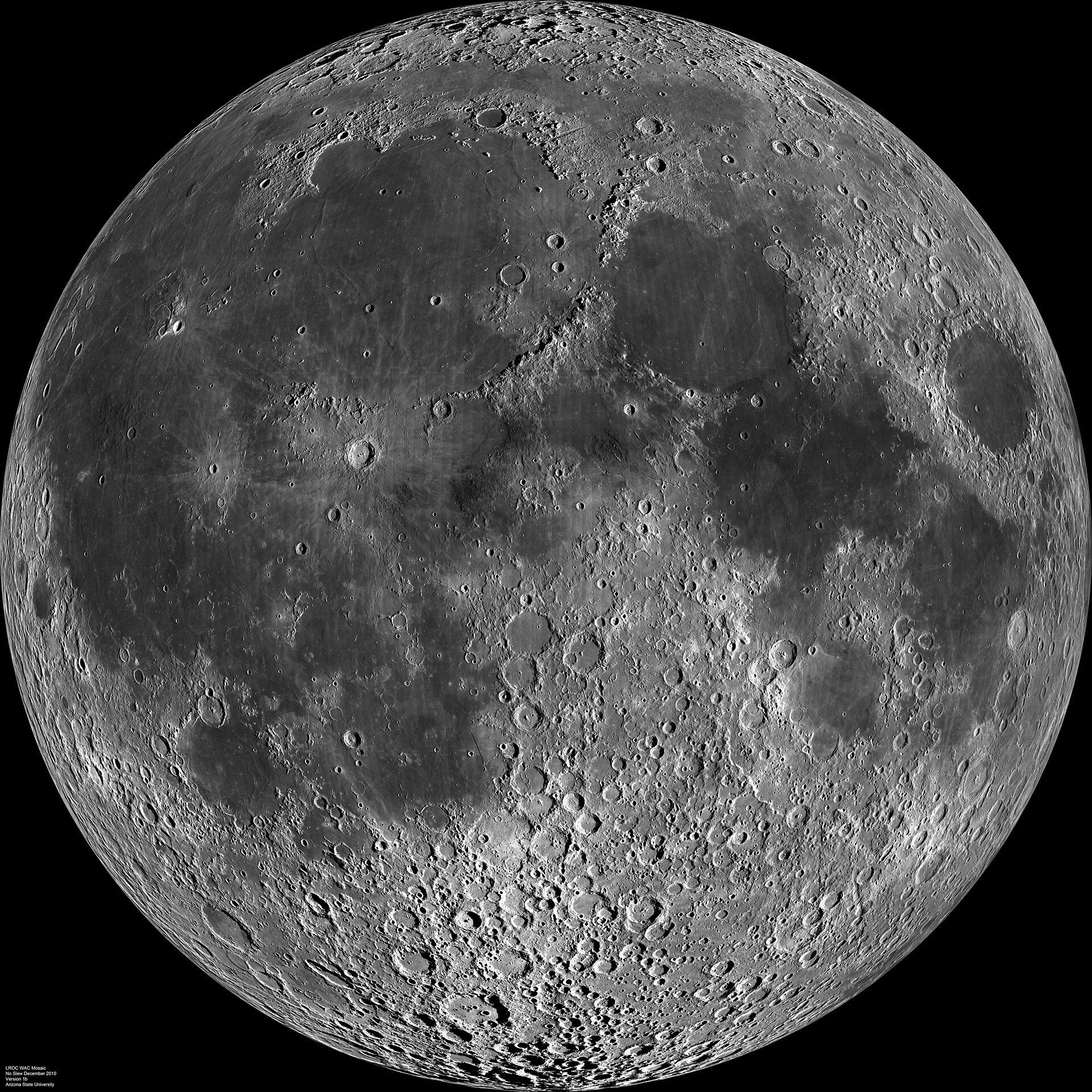
Primary documents and reporting listed in the fact base: nasa.gov, UE May 2026 p.75, newsonair.gov.in, isro.gov.in, UE September 2026 p.112; https:, unoosa.org, 2021-2025.state.gov. Lead image: Photo: NASA/GSFC/Arizona State University (public domain), via Wikimedia Commons.
Free in the CLAT Gurukul app
These notes (as a PDF lesson) and the 10-question CBT are in the app under Current Affairs → 31 Oct 2026. Get the app on Google Play or open app.clatgurukul.com.
Practice Quiz — 10 CLAT-Style Questions
Click an option to reveal the answer and explanation.