CURRENT AFFAIRS | 24 JULY 2026
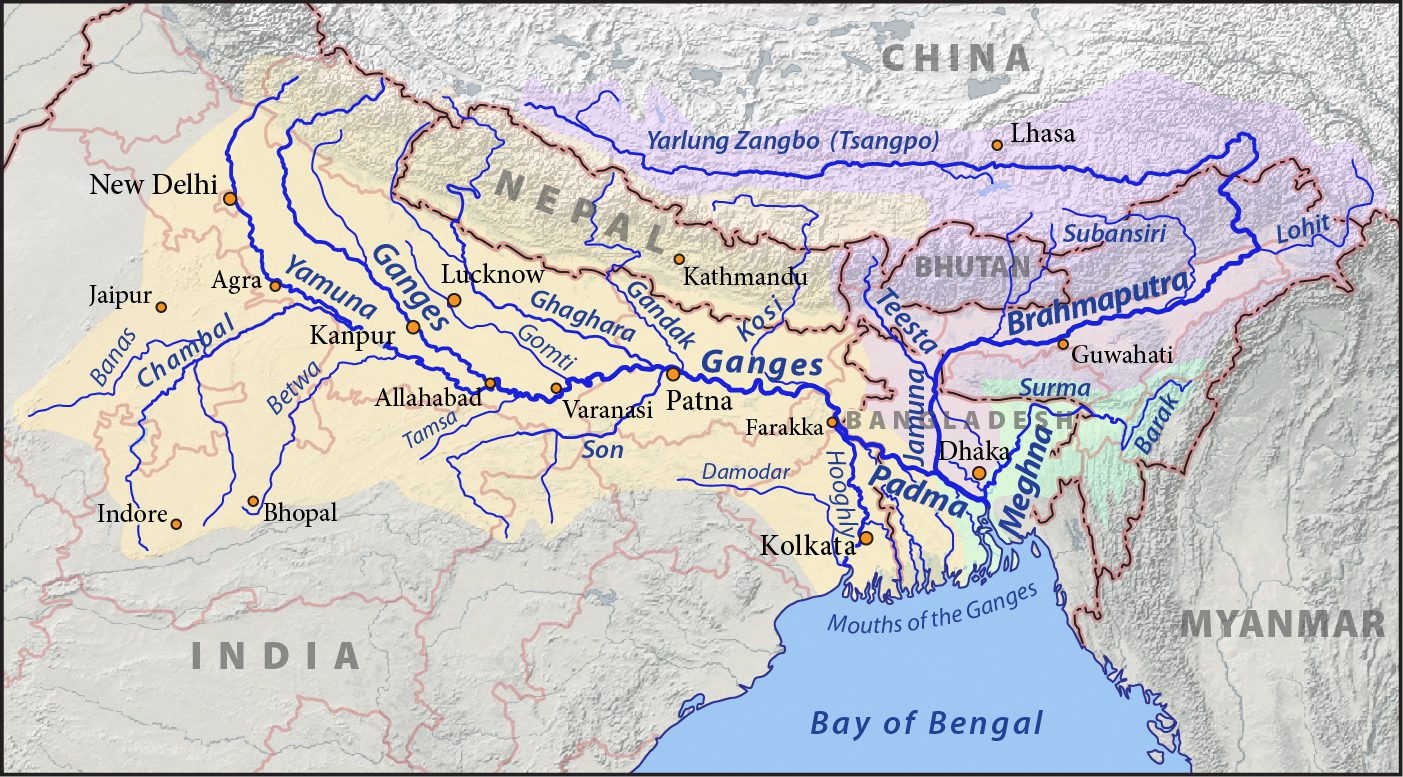
Deadly monsoon flooding has hit both ends of India — in Assam, parts of the Brahmaputra have shifted course, sweeping away riverbank villages, while in Gujarat’s Vapi over 22,000 residents were relocated and 1,200 rescued after torrential rain. The twin disasters spotlight India’s flood-management framework and the Disaster Management Act, 2005.
Constitutional & Legal Framework
- Disaster Management Act, 2005: Created the National Disaster Management Authority (NDMA), chaired by the Prime Minister, and the National Disaster Response Force (NDRF).
- Article 21 & environment: The right to a clean environment is read into the right to life (Subhash Kumar, M.C. Mehta line of cases).
- Federal response: Disaster management is handled at national (NDMA), State (SDMA) and district (DDMA) levels.
The CLAT Angle
CLAT’s environment questions increasingly combine geography and law. Know that the Brahmaputra (Tsangpo in Tibet, Jamuna in Bangladesh) is braided and sediment-heavy, causing chronic Assam floods; and that the Disaster Management Act, 2005 created the NDMA (PM as chair) and NDRF. Link environmental protection to Article 21 and the Directive Principle Article 48A.
Key Facts at a Glance
| Assam | Brahmaputra shifts course; riverbank villages washed away; 20+ deaths in Nagaland/Assam belt |
| Gujarat | Vapi floods; ~22,000 relocated, ~1,200 rescued |
| Governing law | Disaster Management Act, 2005 |
| Key body | NDMA (chaired by the PM) + NDRF |
| Constitutional hooks | Article 21, Article 48A, Article 51A(g) |
Memory Hook: “NDMA-PM”
National Disaster Management Authority — Prime Minister chairs it.
Test Yourself: 10-Question Quiz
Attempt all 10 questions below and check your CLAT current-affairs readiness.
Practice Quiz — 10 CLAT-Style Questions
Click an option to reveal the answer and explanation.