CURRENT AFFAIRS | 20 AUGUST 2026
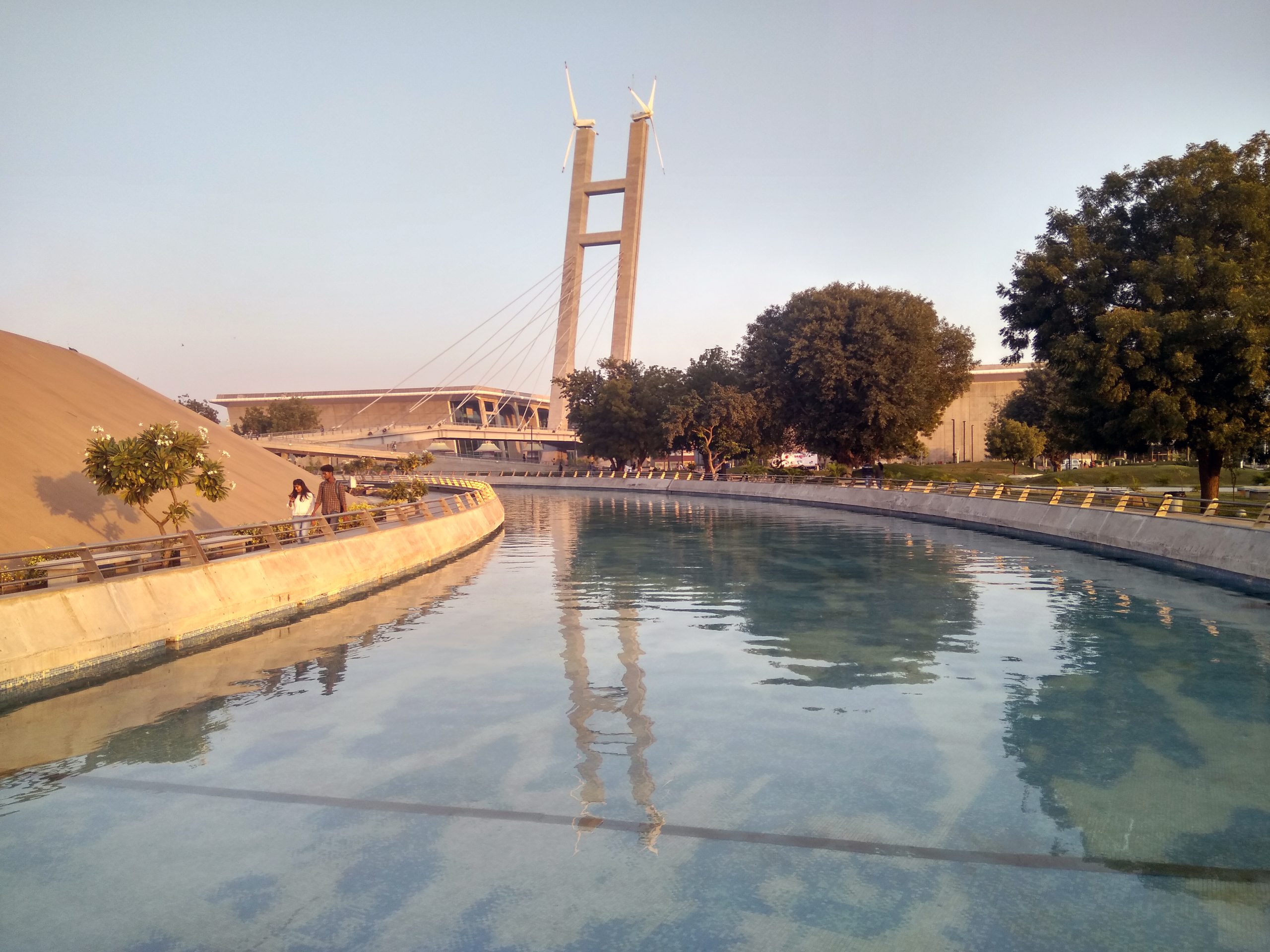
The BRICS Youth Council Meeting and the BRICS Youth Summit were held on 19 August 2026 at Gandhinagar, Gujarat, organised by the Department of Youth Affairs, Ministry of Youth Affairs and Sports, as part of India’s BRICS Chairship 2026. The inaugural session was attended by the Deputy Chief Minister of Gujarat, Shri Harsh Sanghavi; the Union Minister of State for Youth Affairs and Sports, Smt. Raksha Nikhil Khadse; the Acting Chief Secretary of Gujarat, Dr. Anju Sharma; the Additional Secretary, Department of Youth Affairs, Shri Nitesh Kumar Mishra; and Heads of Delegation and representatives from BRICS Member and Partner Countries. The engagements were framed, in the Ministry’s words, around a ‘people-centric’ and ‘humanity first’ approach.
For a CLAT aspirant, the temptation is to file this away as a soft cultural event. That would be a mistake. What happened at Gandhinagar is a working demonstration of how a consensus-based international grouping actually manufactures an outcome: an officials-level Council debates a Draft Joint Declaration and a BRICS Youth Cooperation Framework, a parallel Summit generates substantive input from delegates, and both feed into a Ministers’ Meeting that formally adopts the text. Understanding that ladder — working group, senior officials, ministers, leaders — is worth more in an exam than memorising the guest list.
What actually happened at Gandhinagar
The Youth Summit brought together youth delegates, young leaders, officials and ministers from BRICS Member and Partner Countries. Its thematic discussions were structured around four declared priority areas of youth cooperation: Education, Entrepreneurship and Future Readiness; Inclusive Development and Youth Wellbeing; Sustainability and Environmental Responsibility; and People-to-People Cooperation and Youth Engagement. These four tracks are not decorative. They map directly onto the theme of India’s chairship — “Building for Resilience, Innovation, Cooperation and Sustainability” — and they translate an abstract slogan into subject headings that a negotiator can actually draft language around.
Running alongside it, the BRICS Youth Council Meeting brought together representatives of Member Countries to deliberate on those same priority areas. The Council’s specific task was textual: it considered the Draft Joint Declaration and the BRICS Youth Cooperation Framework, weighing the observations, national experiences and best practices offered by Member Countries. The Ministry describes the deliberations as contributing towards consensus-based outcomes ahead of the BRICS Youth Ministers’ Meeting scheduled for 22 August 2026 at Visakhapatnam, Andhra Pradesh. Delegates also experienced Gujarat’s cultural traditions through traditional cuisine and cultural interactions.
Constitutional / Legal Framework
BRICS is not a treaty-based organisation. It has no founding charter, no permanent secretariat and no power to make binding law; its instruments are consensus declarations that operate as soft law — politically weighty, legally non-binding. A “Youth Cooperation Framework” therefore commits members to a shared direction, not to enforceable obligations. Domestically, India’s capacity to host and act on such engagements flows from Entry 14 of List I (entering into and implementing agreements with foreign countries) read with Article 73 (executive power co-extensive with legislative power) and Article 253 (Parliament’s power to legislate to implement international agreements). Note the federal texture of the subject matter itself: sports, entertainments and amusements fall under Entry 33 of List II, the State List, while education sits in Entry 25 of List III, the Concurrent List, having been moved there by the 42nd Amendment, 1976. That is precisely why a Union ministry works with a State government — here Gujarat — to deliver a youth event. Article 51, the Directive Principle on promoting international peace and respect for international law, supplies the constitutional spirit of such engagement.
Where the youth track sits in BRICS machinery
BRICS cooperation is conventionally described as resting on three pillars: political and security cooperation; economic and financial cooperation; and cultural and people-to-people cooperation. The youth track belongs to the third. It is easy to dismiss that pillar as ceremonial, but in a grouping with no secretariat and no enforcement power, people-to-people links are one of the few mechanisms that create continuity between annual summits. Officials rotate; a network of young professionals, entrepreneurs and researchers persists.
The operating rule of the grouping is consensus, and that single word explains the shape of the Gandhinagar meetings. Where a body votes, a majority can carry a text over objection; where it decides by consensus, every member effectively holds a veto, so drafting must happen slowly and in advance. Hence a Council that takes on board “observations, national experiences and best practices” before the Ministers convene: the negotiating work is done at officials’ level so that the ministerial meeting can adopt rather than argue. It is the same logic that governs sherpa-track preparation for a leaders’ summit.
The vocabulary of “Member and Partner Countries” is itself examinable. BRICS began as BRIC — a term coined by economist Jim O’Neill in 2001 — held its first summit at Yekaterinburg, Russia, in 2009, and became BRICS when South Africa joined in 2010. Its recent expansion added members including Egypt, Ethiopia, Iran, the United Arab Emirates and Indonesia, and the grouping subsequently created a distinct partner-country category for states that participate in BRICS activities without full membership. The presence at Gandhinagar of delegations from both categories is what makes the phrase “Member and Partner Countries” in the official release significant rather than stylistic.
Key Facts
| Events | BRICS Youth Council Meeting and BRICS Youth Summit |
| Date and venue | 19 August 2026, Gandhinagar, Gujarat |
| Organiser | Department of Youth Affairs, Ministry of Youth Affairs and Sports |
| Chairship theme | Building for Resilience, Innovation, Cooperation and Sustainability |
| Four youth tracks | Education and Entrepreneurship; Inclusive Development and Wellbeing; Sustainability; People-to-People Cooperation |
| Documents deliberated | Draft Joint Declaration; BRICS Youth Cooperation Framework |
| Next step | BRICS Youth Ministers’ Meeting, 22 August 2026, Visakhapatnam |
The CLAT Angle
Lock down the place-pairs, because that is how this will be asked: Youth Summit and Youth Council → Gandhinagar (Gujarat); Youth Ministers’ Meeting → Visakhapatnam (Andhra Pradesh). Add the office-holders: Raksha Nikhil Khadse as Union Minister of State for Youth Affairs and Sports, and Harsh Sanghavi as Deputy Chief Minister of Gujarat. On the static side, know that Gandhinagar is Gujarat’s capital while Ahmedabad is its largest city, and that Visakhapatnam hosts the Eastern Naval Command. For legal reasoning, the sharpest question a passage can pose is this: if a BRICS Youth Cooperation Framework is adopted by consensus, does it bind India? The answer is no — it is a non-binding political instrument, and even a binding treaty would need parliamentary legislation under Article 253 before it altered rights or duties inside India.
Why India invests in the youth track
There is a demographic argument behind the diplomacy. India has one of the youngest populations among the major economies, and a foreign policy that speaks to young people abroad plays to a genuine strength rather than a manufactured one. The four thematic tracks read like a statement of what India believes young people across the developing world actually need: skills and employability, entrepreneurship, inclusion and wellbeing, and a climate agenda that the young will inherit whether or not they helped create it. Framing these as BRICS priorities lets India shape the agenda of a bloc rather than merely attend it.
There is also a structural argument about how influence works in a body without a secretariat. A chair country’s real power is agenda-setting: it chooses which meetings to convene, where, and on what themes, and it drafts the texts that others amend. By running a Youth Council in parallel with a Youth Summit, India ensured that the political energy of the Summit was captured in a document the Council could refine and the Ministers could adopt three days later. That is a deliberate sequencing choice, and it is the same technique used across the sherpa and ministerial tracks that culminate in a leaders’ summit.
The domestic machinery behind the hosting is worth a line too, because GK papers do ask about it. The Ministry of Youth Affairs and Sports is organised into two departments — the Department of Youth Affairs, which ran these engagements, and the Department of Sports. Its long-standing delivery arms include the National Service Scheme (NSS), launched in 1969, and the Nehru Yuva Kendra Sangathan (NYKS), established in 1972 to reach rural youth, alongside the more recent autonomous body Mera Yuva Bharat (MY Bharat), created in 2023 as a technology-driven platform for youth engagement. When a Union ministry hosts an international youth event, it is these networks that supply volunteers, delegates and continuity on the ground.
Why it matters
Watch for what the Youth Ministers adopt at Visakhapatnam on 22 August 2026, because the adopted declaration — not the Gandhinagar discussions — is the citable outcome. In exam terms, keep three things separate: the chairship (India, 2026, with its four-word theme), the youth track (Council and Summit at Gandhinagar, Ministers at Visakhapatnam), and the leaders’ summit that sits above both. Questions frequently exploit exactly this confusion, offering a summit city as the answer to a ministerial-meeting question. Read the stem carefully and match the level of the meeting to the venue.
Memory Hook / Mnemonic
For the venues: “Gandhinagar gathers, Visakhapatnam ratifies” — delegates and officials meet in Gujarat on 19 August, Ministers meet in Andhra Pradesh on 22 August. For the four youth tracks, use E-I-S-P: Education and entrepreneurship, Inclusive development, Sustainability, People-to-people. And the chairship theme still spells the acronym: Building for Resilience, Innovation, Cooperation and Sustainability.
Practice Quiz — 10 CLAT-Style Questions
Click an option to reveal the answer and explanation.