CURRENT AFFAIRS | 20 AUGUST 2026
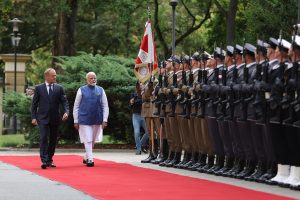
Raksha Mantri Shri Rajnath Singh holds a bilateral meeting with the Defence Minister of Japan, Mr Shinjiro Koizumi, in New Delhi on 20 August 2026. According to the Ministry of Defence, the talks are expected to strengthen bilateral defence relations, enhance strategic trust and cooperation, promote stability and security in the Indo-Pacific, and identify new areas of collaboration. The two Ministers will exchange views on deeper maritime security cooperation and on closer defence equipment and technology collaboration under the ‘Make-in-India’ framework — a conversation made newly possible by Japan’s revision of its Three Principles on Transfer of Defence Equipment and Technology. The meeting is intended to build a roadmap for advancing defence and security cooperation.
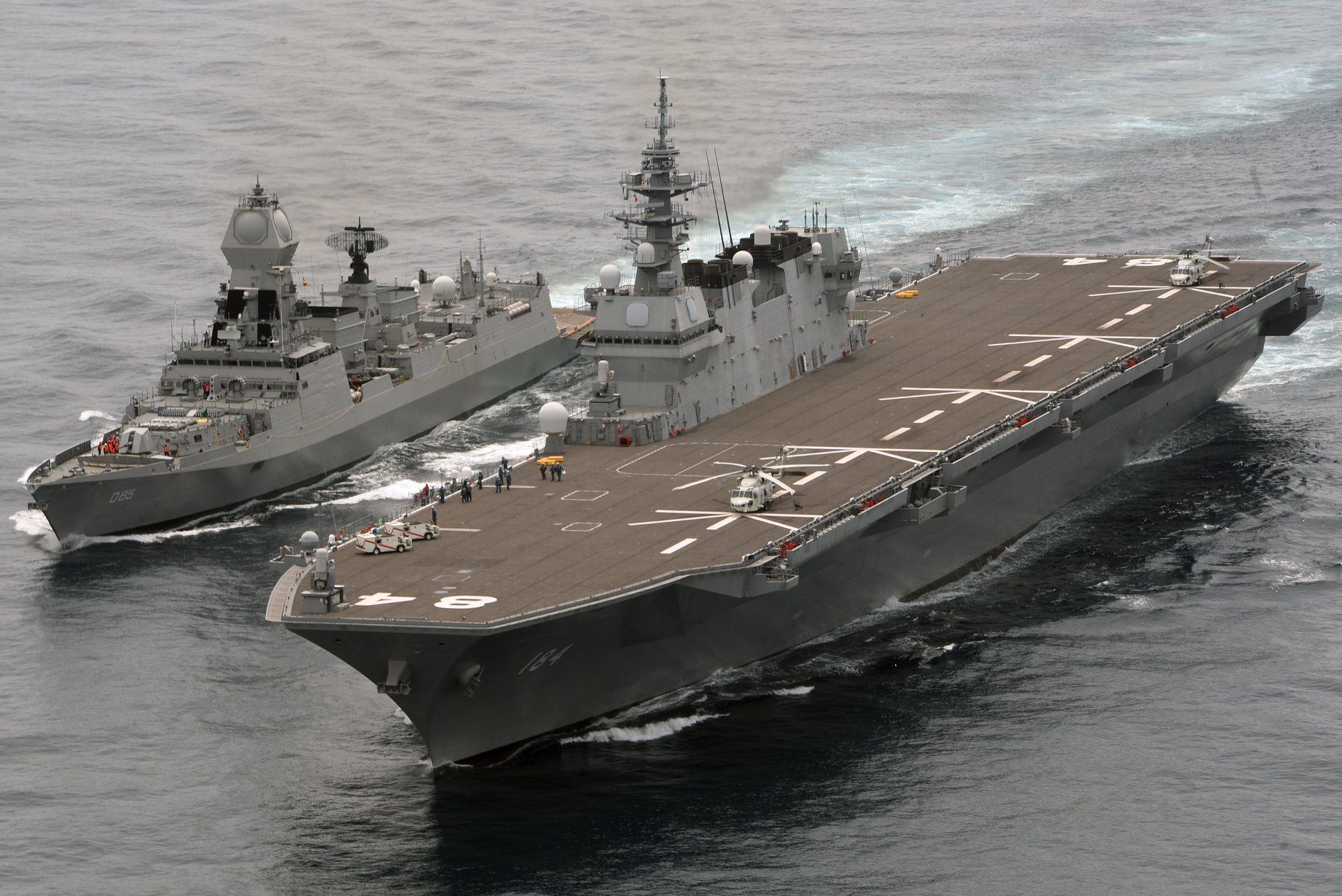
The visit is Mr Koizumi’s maiden visit to India, and it opened at sea rather than at a conference table. On 19 August 2026 he visited the Western Naval Command in Mumbai, holding discussions with the Chief of the Naval Staff, Admiral Krishna Swaminathan, and the Flag Officer Commanding-in-Chief, Western Naval Command, Vice Admiral Sanjay Vatsayan. The delegation was briefed on the roles, responsibilities and operational capabilities of the Indian Navy. On arrival the visiting Minister inspected a Guard of Honour, having earlier laid a wreath at the Gaurav Stambh at the Naval Dockyard, and he also visited the indigenous ship INS Chennai. For CLAT, the two-day visit is a compact case study in how modern defence diplomacy actually works — symbolism, shipyards and legal frameworks all in the same forty-eight hours.
Why Japan’s Three Principles matter
The single most important legal detail in the press release is easy to skim past. Japan’s post-war constitutional order, built around Article 9 of its 1947 Constitution, renounces war as a sovereign right and long confined the country to a strictly defensive posture. One expression of that restraint was a near-total ban on arms exports, embodied in the Three Principles on Arms Exports adopted in the 1960s. In 2014 Japan replaced them with the Three Principles on Transfer of Defence Equipment and Technology, which permitted transfers under defined conditions rather than prohibiting them outright. Japan has since revised those principles again, and it is that revision the Ministry of Defence expressly cites as the opening for closer equipment and technology collaboration with India.
This is why the phrase ‘Make-in-India’ framework appears alongside it. India’s preference in defence procurement has shifted decisively from buying finished platforms abroad towards co-development, co-production and technology transfer on Indian soil. A partner country whose own export rules were once prohibitive could not participate in that model. As Japanese rules loosen, the possibility opens of Japanese components, systems and design know-how flowing into Indian production lines — which is a different and far deeper relationship than an arms sale.
Constitutional / Legal Framework
How does India conclude defence arrangements with a foreign State? Entry 1 of List I (Defence of India) and Entry 14 of List I (entering into treaties and agreements with foreign countries and implementing treaties, agreements and conventions with foreign countries) place the subject squarely within Union competence. Under Article 73, the executive power of the Union extends to matters on which Parliament may legislate — so the power to negotiate and conclude a treaty is an executive function, exercised in the name of the President, and needs no prior parliamentary ratification. Article 253 then empowers Parliament to make law for the whole or any part of India for implementing any treaty, agreement or convention with another country, and it may do so even on subjects in the State List. In Maganbhai Ishwarbhai Patel v Union of India (1970) the Supreme Court confirmed that treaty-making is an executive act, and that legislation becomes necessary only where giving effect to the treaty requires altering existing law or affecting the rights of citizens. Article 51, a Directive Principle, directs the State to promote international peace and security and to foster respect for international law and treaty obligations.
The architecture of the India–Japan partnership
The two countries elevated their relationship to a Special Strategic and Global Partnership in 2014, and defence has been its fastest-growing limb. The habits of cooperation are institutional rather than episodic: a 2+2 ministerial dialogue bringing together the foreign and defence ministers of both sides; the bilateral naval exercise JIMEX; the army exercise Dharma Guardian; and the trilateral-turned-multilateral Malabar exercise, in which Japan became a permanent participant in 2015. The two navies also operate under an Acquisition and Cross-Servicing Agreement concluded in 2020, a reciprocal logistics arrangement that lets each side use the other’s bases and supplies — the kind of unglamorous plumbing that converts goodwill into operational reach.
Above all this sits the Quad — the Quadrilateral Security Dialogue of India, Japan, the United States and Australia — and the shared commitment, restated in the press release, to a free, open, resilient and prosperous Indo-Pacific. The intellectual origin of that phrase is worth knowing: former Japanese Prime Minister Shinzo Abe articulated the “Confluence of the Two Seas” idea in an address to the Indian Parliament in 2007, linking the Indian and Pacific Oceans into a single strategic space. Nearly two decades later, that formulation is the organising concept of both countries’ maritime policy.
Key Facts
| Meeting | Rajnath Singh – Shinjiro Koizumi bilateral, New Delhi, 20 August 2026 |
| Nature of visit | Maiden two-day visit by the Japanese Defence Minister |
| Naval leg | Western Naval Command, Mumbai, 19 August 2026; visit to INS Chennai |
| Indian officers met | Admiral Krishna Swaminathan (CNS); Vice Admiral Sanjay Vatsayan (FOC-in-C, WNC) |
| Agenda | Maritime security; defence equipment and technology under Make-in-India |
| Enabling change | Japan’s revision of the Three Principles on Transfer of Defence Equipment and Technology |
| Recent context | Annual Summit in Delhi between PM Modi and Japanese PM Sanae Takaichi, weeks earlier |
The CLAT Angle
Three examinable strands. Current affairs: the names — Rajnath Singh and Shinjiro Koizumi; Admiral Krishna Swaminathan as Chief of the Naval Staff; INS Chennai; Gaurav Stambh; the Western Naval Command at Mumbai; and Japanese Prime Minister Sanae Takaichi, who visited Delhi weeks earlier for the Annual Summit. Static IR: the Quad’s four members, the Special Strategic and Global Partnership of 2014, JIMEX, Dharma Guardian, Malabar, and Abe’s 2007 “Confluence of the Two Seas” speech. Legal reasoning: a passage may supply Articles 73, 253 and Entry 14 of List I and ask whether the Union may conclude — or implement — a defence agreement that touches a State subject. The answer turns on the special width of Article 253, which lifts the ordinary List II limitation when Parliament legislates to implement an international agreement.
Maritime security and the strategic logic
Why does maritime security dominate the agenda? Because both countries are structurally dependent on the sea. India sits astride the sea lanes of the Indian Ocean, through which the bulk of its trade and energy imports move; Japan, an island economy with negligible domestic hydrocarbons, depends on shipping routes that run from the Persian Gulf through the Indian Ocean and the Malacca Strait to its own ports. Their vulnerabilities overlap almost perfectly, which makes cooperation on sea-lane security, maritime domain awareness, anti-piracy and interoperability a matter of shared self-interest rather than favour.
The visit to INS Chennai carries its own message. As an indigenously built warship, it showcases exactly the domestic capability India wants foreign partners to plug into, and the choice of the Western Naval Command — India’s Arabian Sea command headquartered at Mumbai — underlines the western maritime approaches as a zone of common concern. The wreath at the Gaurav Stambh, the memorial at the Naval Dockyard, and the Guard of Honour are the protocol grammar of such visits: gestures that signal respect before substance is negotiated.
Roadmaps, agreements and the law of instruments
One habit worth building early is distinguishing the kinds of instrument that emerge from such meetings, because CLAT passages often turn on it. A joint statement or a roadmap is political rather than legal — it records intent and creates no enforceable obligation. A memorandum of understanding usually sits in the same category unless its language shows an intention to be bound. A treaty or agreement in the strict sense creates obligations in international law, governed by principles reflected in the Vienna Convention on the Law of Treaties, 1969, of which the most fundamental is pacta sunt servanda — agreements must be kept. India follows a dualist approach: an international obligation does not automatically become enforceable domestic law, and where it requires a change in Indian law, Parliament must legislate under Article 253. So when the Ministry describes the meeting as an opportunity to “build a roadmap”, the correct reading is that a political direction is being set, not that binding commitments are being exchanged.
Why it matters
Read together with the recent Annual Summit between Prime Minister Narendra Modi and Prime Minister Sanae Takaichi, where the two sides agreed to deepen defence and security cooperation, this ministerial meeting shows a partnership moving from declaratory alignment to concrete machinery. For aspirants, the takeaway is a template: an annual leaders’ summit sets direction, ministerial visits convert direction into a roadmap, and exercises and logistics agreements convert the roadmap into routine. Watch for whether the roadmap discussed on 20 August yields named co-development projects — that is the point at which the relationship would cross from cooperation into genuine industrial partnership.
Memory Hook / Mnemonic
For the exercises, remember “JIMEX at sea, Dharma Guardian on land, Malabar with friends.” For the treaty provisions: “73 empowers, 14 authorises, 253 implements, 51 inspires” — Article 73 (executive power), Entry 14 List I (treaty-making), Article 253 (implementing legislation), Article 51 (DPSP on international peace). And for the Indo-Pacific idea: “Abe joined the two seas in Delhi, 2007.”
Practice Quiz — 10 CLAT-Style Questions
Click an option to reveal the answer and explanation.