

CURRENT AFFAIRS | 02 OCTOBER 2026
Stanford Scientists Grow Human Brain Tissue Inside Mice — Promise and Ethical Caution
A study published in September 2026 in the journal Nature by neuroscientist Sergiu Pașca’s group at Stanford University reports that human brain tissue grown from stem cells was transplanted into mice whose cerebral cortex had been genetically prevented from fully forming. The transplanted tissue grew into the vacant space, produced several types of human brain cells, became electrically active, connected with the mouse nervous system, and was associated with measurable differences in behaviour. The finding opens new avenues for studying human brain development — while raising sharp bioethical questions.
- Published September 2026 in Nature; led by Sergiu Pașca, Stanford University
- Human stem-cell-derived tissue transplanted into mice lacking much of the cortex
- Tissue became electrically active and connected with the mouse nervous system
- Linked to measurable differences in the animals’ behaviour
- Researchers stress it is “a narrow glimpse of human brain development”
From a Skin Cell to a Brain Organoid
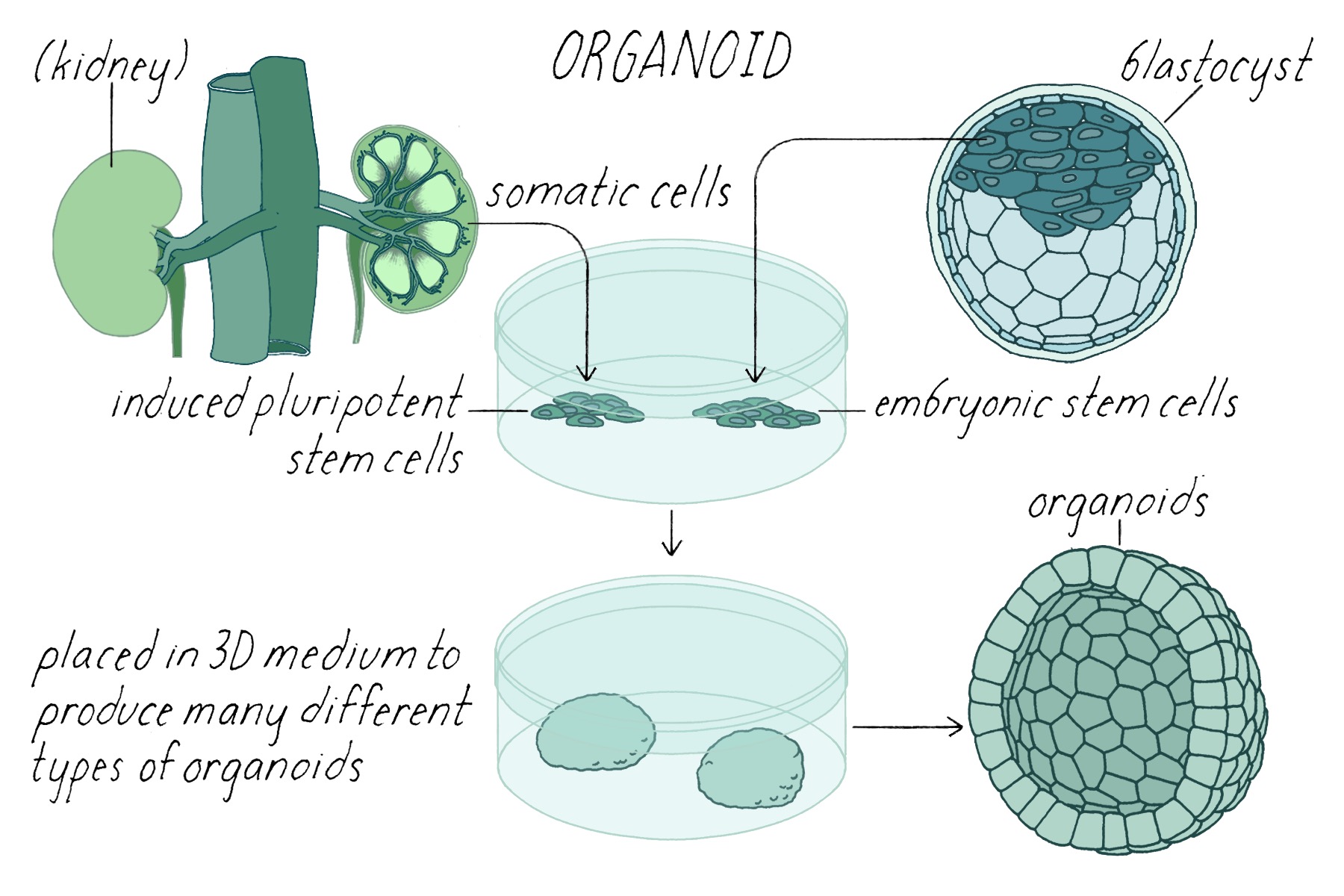
The method follows a now-established chain: ordinary human cells are reprogrammed into induced pluripotent stem cells (iPSCs), guided to become nerve cells, and grown in three dimensions into “organoids” — small lab-grown neural tissues that reproduce features of early brain development. Because a lab dish cannot provide blood circulation, sensory input or long-distance connections, the researchers transplanted the organoids into rodents to let them mature further.
Reading the Limits Carefully
The authors are explicit about what the study did not do: they did not create a human brain inside a mouse. The transplanted tissue remained immature, lacked the ordered structure of a normal human cortex, and the study cannot establish that human neurons directly caused any particular behaviour. Responsible science communication requires holding the therapeutic promise and these limitations together.
The study rests on induced pluripotent stem cell technology, for which Shinya Yamanaka shared the 2012 Nobel Prize in Physiology or Medicine. iPSCs let scientists reprogramme mature cells back into a pluripotent state, sidestepping many of the ethical concerns tied to embryonic stem cells.
Human-animal ‘chimera’ research raises questions of moral status, consent and animal welfare. In India it is governed by the ICMR National Ethical Guidelines for Biomedical and Health Research and the National Guidelines for Stem Cell Research (ICMR-DBT). The debate also engages the ‘right to health’ read into Article 21 (the right to life), balancing scientific progress against ethical safeguards.
Why It Matters Beyond the Lab
Organoid-and-transplant models hold out hope for understanding disorders of brain development and for testing drugs on human-like tissue. But they also push regulators to define where ethically acceptable research ends — a classic science-and-law frontier that CLAT passages like to explore.
Why Transplant Into an Animal at All
The decision to move the tissue from a dish into a living mouse is central to the study’s logic. A free-floating organoid in culture lacks blood circulation, sensory inputs and the long-distance connections that a developing brain needs to mature; its growth stalls. By transplanting it into the cortex-deficient mouse, the researchers gave the human tissue a vascular supply and a nervous system to connect with, allowing it to grow, become electrically active and integrate. This is precisely why the tissue could influence behaviour — and also precisely why the ethical questions sharpen, because integration with a living animal is what raises the ‘chimera’ concern.
Holding Promise and Caution Together
The responsible reading of the result refuses both hype and dismissal. On one side lies genuine therapeutic promise: better disease models and drug testing on human-like neural tissue. On the other lies the authors’ own insistence that the tissue stayed immature, lacked ordered cortical structure, and cannot be said to have caused any specific behaviour — it is, in their words, “a narrow glimpse of human brain development.” This is the precautionary balance that regulatory frameworks, including India’s ICMR guidelines, are designed to strike.
Expect this as a Legal Reasoning or Current Affairs passage testing the distinction between an organoid and a whole organ, the iPSC/Yamanaka link, and the ethical-regulatory regime (ICMR guidelines) alongside the right to health under Article 21. Questions often reward candidates who can balance innovation against the precautionary principle.
Trace the chain in one line: “Skin cell → iPSC → neuron → organoid → transplant.” And fix the credit: “Yamanaka, 2012 Nobel, for iPSCs.”
Practice Quiz — 10 CLAT-Style Questions
Click an option to reveal the answer and explanation.