CURRENT AFFAIRS | 02 OCTOBER 2026
Supreme Court stays execution of death sentence in the 2008 Ahmedabad serial blasts case
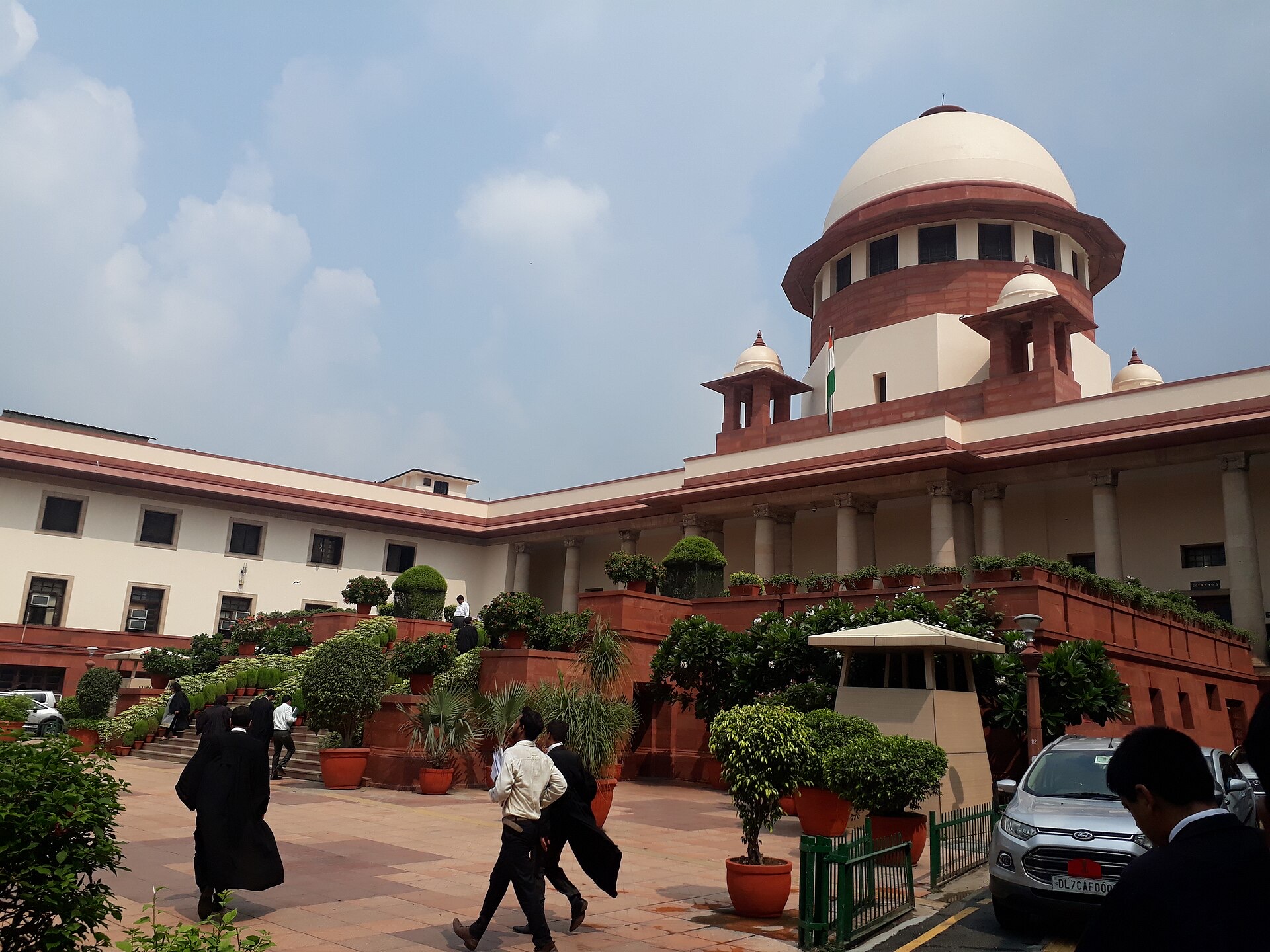
On Thursday, 1 October 2026, the Supreme Court stayed the execution of the death sentence awarded to an Indian Mujahideen operative convicted in the 2008 Ahmedabad serial bomb blasts case, in which 56 people were killed. A Bench of Justices Vikram Nath, A.G. Masih and Sandeep Mehta passed the interim order while hearing an appeal filed by Ahmed Bawa, alias Abbu Abubakar Barelvi, who has challenged the Gujarat High Court verdict affirming his death sentence. The stay keeps the capital sentence in abeyance pending the final hearing of the appeal.
- Court: Supreme Court Bench of Justices Vikram Nath, A.G. Masih and Sandeep Mehta.
- Order: stay on execution of the death sentence (interim, pending appeal).
- Appellant: Ahmed Bawa, alias Abbu Abubakar Barelvi, an Indian Mujahideen operative.
- The appeal challenges the Gujarat High Court verdict affirming the death sentence.
- The 2008 Ahmedabad serial blasts killed 56 people; the 2022 trial awarded the highest number of death sentences in a single case in India.
The ‘rarest of rare’ doctrine
Indian death-penalty jurisprudence turns on the ‘rarest of rare’ doctrine. In Bachan Singh v. State of Punjab (1980), a Constitution Bench upheld the constitutional validity of the death penalty but held that it may be imposed only in the rarest of rare cases, where the alternative of life imprisonment is unquestionably foreclosed. The doctrine requires sentencing courts to weigh aggravating circumstances against mitigating ones and to record special reasons before awarding death. Three years later, Machhi Singh v. State of Punjab (1983) operationalised this test by setting out guidelines on the aggravating-mitigating balance.
Article 21 guarantees that no person shall be deprived of life except according to ‘procedure established by law’, which, after Maneka Gandhi, must be fair, just and reasonable. Article 134 provides for appeal to the Supreme Court in criminal matters, and Article 136 for special leave. The power to pardon, reprieve or commute vests in the President under Article 72 and the Governor under Article 161. A death sentence must be confirmed by the High Court, earlier under Section 366 CrPC and now under the corresponding provision of the BNSS.
Delay, mercy and commutation
Even where a death sentence attains finality, its execution is not automatic. In Shatrughan Chauhan v. Union of India (2014), the Supreme Court held that inordinate and inexplicable delay in deciding mercy petitions is itself a ground to commute a death sentence to life imprisonment, and that the solitary confinement of death-row convicts is illegal. A stay of execution, such as the one granted here, reflects the judiciary’s insistence that capital punishment be subjected to the most exacting procedural and substantive safeguards before it is carried out.
The appellate journey of a capital case is itself a layered safeguard. A sentence of death passed by a Sessions Court does not take effect until it is confirmed by the High Court; the convict may then approach the Supreme Court by way of appeal under Article 134 or, where leave is granted, by special leave under Article 136. At each stage the court re-examines not merely the conviction but the proportionality of the sentence, asking afresh whether the case truly falls within the narrow ‘rarest of rare’ category. The stay granted to Ahmed Bawa operates within this architecture: the Supreme Court has preserved the status quo so that the appeal can be heard on its merits without the irreversible step of execution foreclosing the convict’s remedies.
Bachan Singh (1980): validity upheld; ‘rarest of rare’ doctrine. Machhi Singh (1983): aggravating-mitigating guidelines. Shatrughan Chauhan (2014): inordinate mercy-petition delay is a ground for commutation; solitary confinement of death-row convicts held illegal.
Abolitionist in practice?
India retains the death penalty on its statute books but confines it to the rarest of rare cases, which has led commentators to describe the country as ‘abolitionist in practice’ given the rarity of actual executions. The Ahmedabad case is notable because the 2022 trial awarded the highest number of death sentences in a single case in Indian legal history, placing the appellate scrutiny of those sentences under particular public attention. The present stay underscores that the Supreme Court will independently re-examine both conviction and sentence before any execution proceeds.
Capital-punishment jurisprudence is a core CLAT topic. Aspirants must be able to apply the ‘rarest of rare’ test to hypothetical fact-patterns and connect it to Article 21, the appellate route (Articles 134 and 136), and the clemency powers (Articles 72 and 161). The shift from the CrPC to the BNSS makes the confirmation and appeal procedure a likely area for legal-reasoning questions.
Fix the sequence with “Before Mercy Stops” — Bachan Singh (the doctrine), Machhi Singh (the guidelines), Shatrughan Chauhan (delay → commutation). Doctrine, then test, then the exit route of commutation.
Practice Quiz — 10 CLAT-Style Questions
Click an option to reveal the answer and explanation.