VIDEO EXPLAINER | 18 OCTOBER 2026
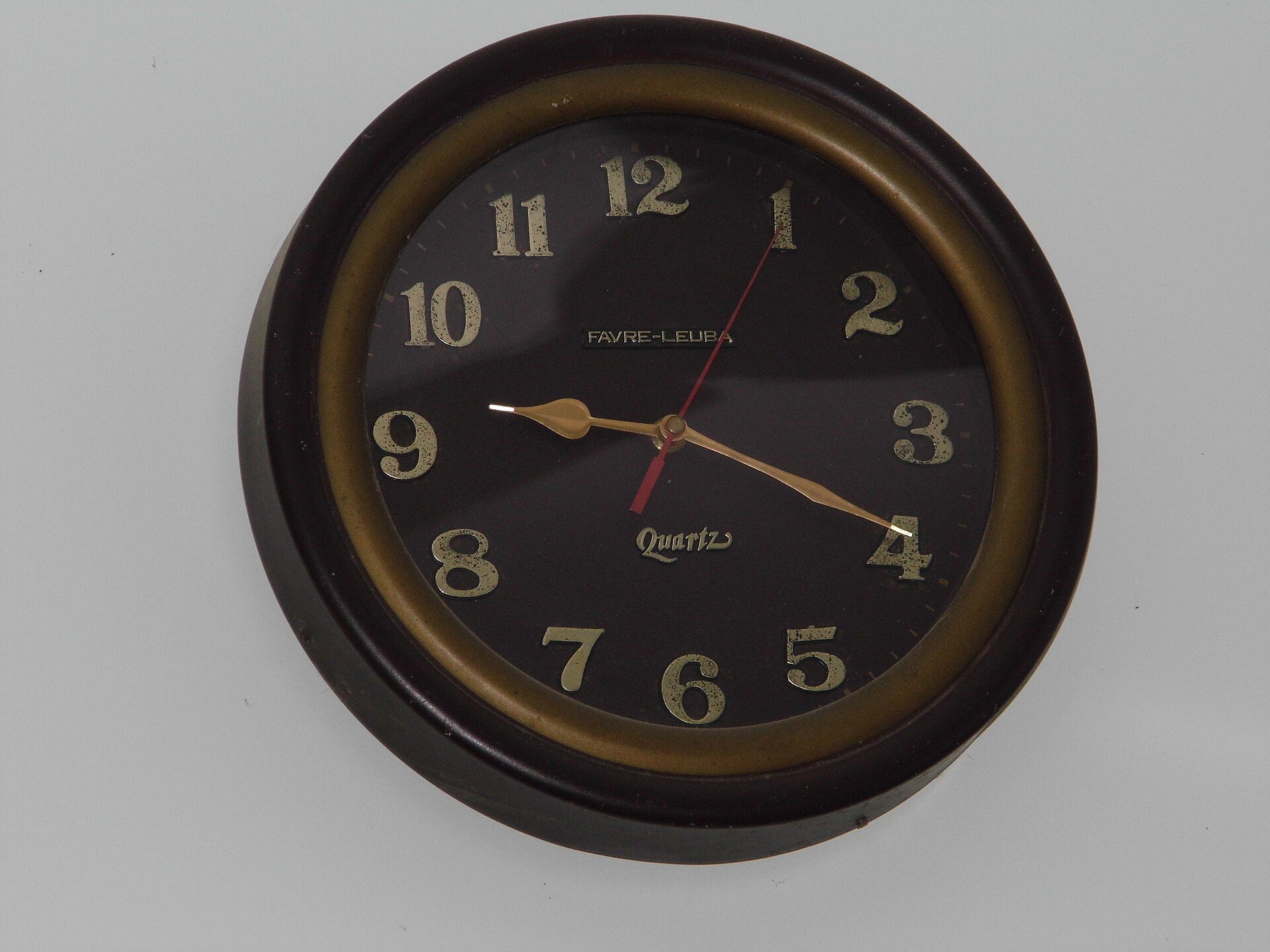
From 5 AM to 10 PM, how many times do the hands of a clock meet? Most students multiply the 17 hours by one and answer 17. The correct answer is 16. In the same window the hands are opposite each other 15 times and at a right angle 31 times. Amit Sir’s two-second trick gets all three answers without writing a single time. This note explains why the trick works, gives the angle formula behind it and works through examples of the kind that appear in aptitude and logical reasoning sections.
Why the hands meet only 11 times in 12 hours
The minute hand moves 6° per minute and the hour hand 0.5° per minute, so the minute hand gains 5.5° every minute. To lap the hour hand once it must gain a full 360°, which takes 360 ÷ 5.5 = 65 5/11 minutes, not 60. Because each lap takes a little longer than an hour, the hands meet 11 times in 12 hours, not 12. The “missing” meeting is around 12 o’clock: between 11:00 and 1:00 they meet only once, at exactly 12:00.
The same logic gives the other two counts. The hands are opposite (180°) 11 times in 12 hours; the missing one is near 6 o’clock, because between 5:00 and 7:00 they are opposite only once, at 6:00. They are at a right angle (90°) 22 times in 12 hours, twice an hour, except that between 2:00 and 4:00, and again between 8:00 and 10:00, there are only three right angles, with one at 3:00 and one at 9:00.
The two-second trick
Count the hours in the window, then subtract the number of times the hour hand passes the “special” mark:
- 0° (coincide): hours − number of times the hour hand passes 12.
- 180° (opposite): hours − number of times it passes 6.
- 90° (right angle): 2 × hours − number of times it passes 3 or 9.
For 5 AM to 10 PM there are 17 hours. The hour hand passes 12 once (noon), 6 twice (6 AM and 6 PM), and 3 or 9 three times (9 AM, 3 PM and 9 PM). So the answers are 17 − 1 = 16, 17 − 2 = 15 and 34 − 3 = 31. A full listing confirms each count: the first meeting is at 5:27 AM and the last at 9:49 PM, and neither 5:00 nor 10:00 is itself a meeting, opposite or right-angle position.
At H hours and M minutes, the angle between the hands is θ = |30H − 5.5M|. If the result is more than 180°, subtract it from 360° to get the smaller angle. Example: at 3:40, θ = |90 − 220| = 130°. To find when the hands meet between 2 and 3, set θ = 0: 60 = 5.5M, so M = 10 10/11 and the time is 2:10 10/11.
Worked examples
1 PM to 5 PM, right angles: 4 hours × 2 = 8; the hour hand passes 3 once (3 PM), so 8 − 1 = 7.
2 PM to 4 PM, right angles: 2 × 2 = 4; it passes 3 once, so 3 (at about 2:27, 3:00 and 3:33).
A full day: in 24 hours the hands meet 22 times, are opposite 22 times and form a right angle 44 times.
Watch the endpoints. If the window starts or ends exactly on a special position, decide whether it is included. From 6 AM to 6 PM the trick gives 12 − 1 = 11 opposites, but 6:00 AM and 6:00 PM are both opposite positions, so a question that counts both ends has 12. Read the wording before you subtract.
- Clock problems appear in aptitude and logical reasoning practice sets and in other entrance tests such as IPM and CUET General Test.
- The count questions (“how many times between X and Y”) are fastest with the subtraction trick.
- “At what angle” questions need θ = |30H − 5.5M|; “at what time” questions set θ to 0°, 90° or 180° and solve for M.
- Traps: multiplying hours by 1 or 2 without subtracting, and miscounting the endpoints.
| Minute hand speed | 6° per minute |
| Hour hand speed | 0.5° per minute |
| Relative speed | 5.5° per minute |
| Gap between two meetings | 65 5/11 minutes |
| Coincide in 12 h / 24 h | 11 / 22 |
| Opposite in 12 h / 24 h | 11 / 22 |
| Right angle in 12 h / 24 h | 22 / 44 |
| 5 AM to 10 PM | 0°: 16 · 180°: 15 · 90°: 31 |
Subtract one for every time the hour hand passes 12 when counting meetings, 6 when counting opposites, and 3 or 9 when counting right angles.
Sources
Amit Sir’s CLAT Gurukul class on clock problems (5 AM to 10 PM worked example), checked against a full listing of every hand position computed with the angle formula θ = |30H − 5.5M|.
Free in the CLAT Gurukul app
These notes (as a PDF lesson) and the 10-question CBT are in the app under Current Affairs → 18 Oct 2026. Get the app on Google Play or open app.clatgurukul.com.
Practice Quiz — 10 CLAT-Style Questions
Click an option to reveal the answer and explanation.