DAILY NEWS WRAP | 29 OCTOBER 2026
Eight stories from 28 October 2026 that a CLAT, UPSC or SSC aspirant can revise from: a Supreme Court judgment on pensions, the DPDP Act and press freedom, a UN General Assembly vote, a Lancet health report, an ISRO launch and two Cabinet decisions.
1. Supreme Court: war injury pension for a Kargil veteran
On 28 October 2026 a Supreme Court bench of Justices PS Narasimha and Alok Aradhe dismissed the Union government’s appeal and upheld a war injury pension for an Army veteran who was posted at Kargil from July 2003 to July 2005 as part of Operation Rakshak, where he was diagnosed with rheumatoid arthritis. The Armed Forces Tribunal had allowed his claim in April 2024 and the High Court upheld it in August 2025. The veteran relied on a 2001 Ministry of Defence policy letter, Category E(i), which covers disability from operations specially notified by the Government. The Court called it an enabling provision, meant to give the government flexibility to cover war-like situations. It said: “Courts will simply declare what a policy says it is and not what is in the imagination of the policymaker.” It also held that a liberal interpretation is compelling for pensionary policies and suggested that the Ministry issue comprehensive, clearly identifiable subordinate legislation.
2. DPDP Act and press freedom: the Minister’s statement
On 28 October 2026 IT Minister Ashwini Vaishnaw said the Digital Personal Data Protection (DPDP) Act does not infringe on press freedom, adding that the Constitution protects journalistic freedom, and invited editors for an open dialogue. News publishers fear that the absence of a specific exemption for journalism could make investigative reporting harder, including retaining information and protecting confidential sources. Business Standard reports that publishers have challenged provisions of the Act in the Supreme Court. Press freedom is not a separate article: it flows from the freedom of speech and expression under Article 19(1)(a) of the Constitution.
3. UN General Assembly votes for the 34th time on the Cuba embargo
On 28 October 2026 the UN General Assembly called for the 34th time for an end to the US economic, commercial and financial embargo on Cuba: 130 votes in favour, 17 against and 25 abstentions, the weakest backing in two decades. Last year it passed by 165 votes to 7 with 12 abstentions, and Germany, Italy and Latvia were among the Western countries that abstained. The resolution is not legally binding, so it cannot force Washington to end the embargo; only the US Congress can lift the restrictions. It cites the UN Charter principles of sovereign equality, non-interference in internal affairs and freedom of trade and navigation, and names the US Helms-Burton Act of 1996. The first vote, in 1992, drew 59 votes in favour; support peaked at 191 in 2015 and 2017. The US Ambassador said there is “no blockade”.
4. Lancet: declare climate change a global health emergency
The 10th Lancet Countdown report, released on 28 October 2026 ahead of the COP 31 summit in November, calls for climate change to be declared a global health emergency. It records a record 710,000 heat-related deaths in 2023, with more than 70% linked to human-caused climate change. Hindustan Times reports that heat-related deaths rose by nearly 36% in the decade since the Paris Agreement (2015).
5. ISRO to launch NVS-03 on 30 October
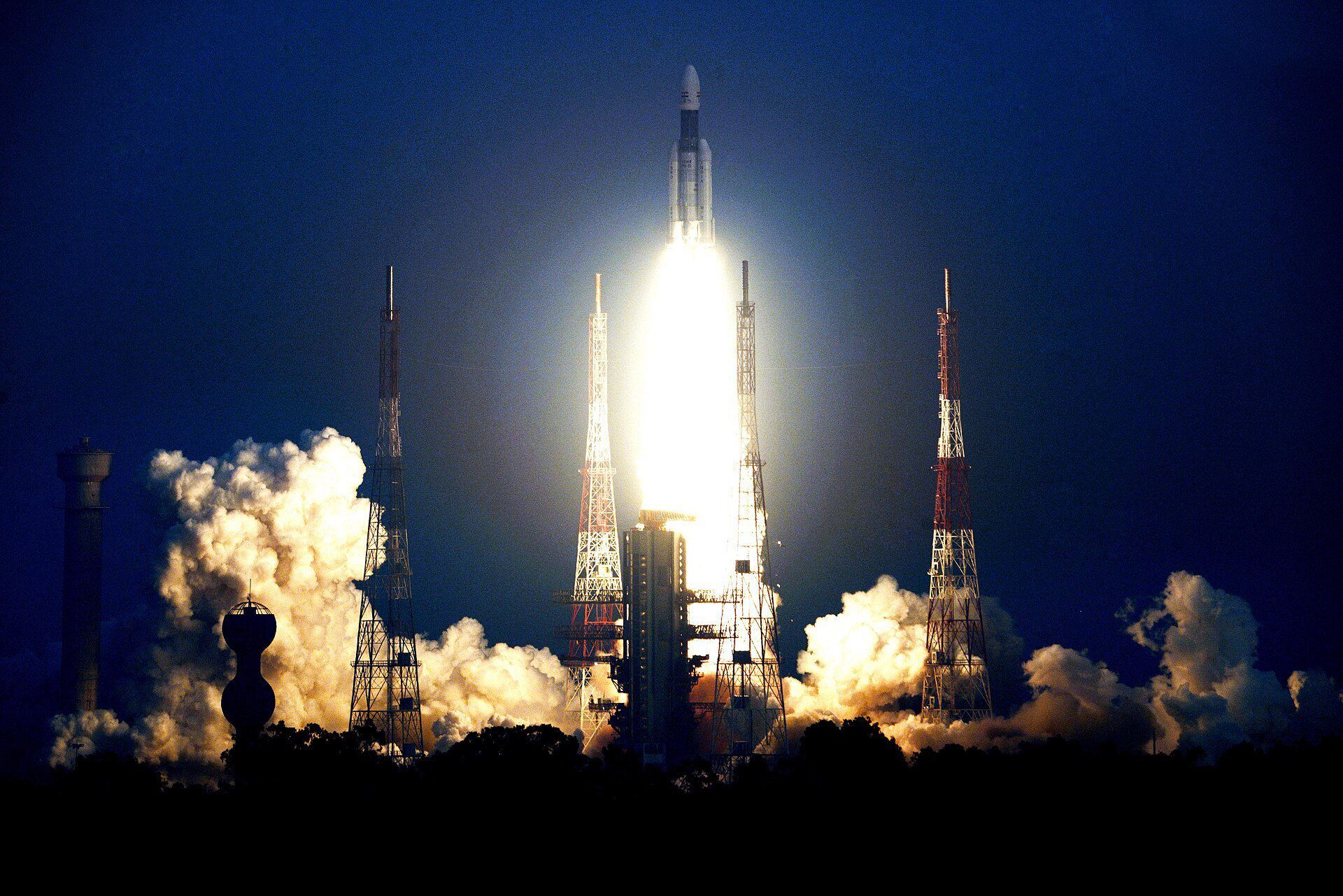
ISRO’s GSLV-F18 will launch the NVS-03 navigation satellite on 30 October 2026 from Sriharikota into geosynchronous transfer orbit. NVS-03 is the third satellite of the next-generation NavIC series and carries an indigenous atomic clock; NavIC covers India and a region 1,500 km around its geopolitical boundary. The launch is scheduled, not yet completed. NVS-02 (January 2025) could not raise its orbit after a valve problem.
6. Container Manufacturing Promotion Scheme: ₹10,000 crore
On 28 October 2026 the Cabinet approved the Container Manufacturing Promotion Scheme with an outlay of ₹10,000 crore up to FY40. As reported, it has four components: interest subvention, testing and certification, land leasing and operational expenditure assistance. Greenfield units need at least 1,00,000 TEUs a year and brownfield expansions 25,000 TEUs, commissioned within three years.
7. ₹7,395 crore for PM Viksit Gram Swaraj Yojana
The Cabinet also approved ₹7,395 crore for the Pradhan Mantri Viksit Gram Swaraj Yojana on 28 October 2026. It aims to strengthen rural governance through local planning and capacity building: panchayats prepare development plans on local priorities and resources, elected representatives get training, and panchayats are meant to become more financially self-reliant through Finance Commission grants and own-source revenue.
8. MEA: 22 Indians killed in the West Asia conflict
A Ministry of External Affairs spokesperson said on 28 October 2026 that India has lost 22 nationals in the West Asia conflict, including 14 seafarers, and that 3 Indians have died in Saudi Arabia. The MEA said it remains in close touch with the Indian community in the Gulf region for their safety.
- Supreme Court: reads a policy by its plain words (war injury pension, Category E(i) of the 2001 MoD policy letter). Appeals from the Armed Forces Tribunal and the High Court reached it here.
- Article 19(1)(a): freedom of speech and expression; the source of press freedom. The DPDP Act is the data-protection statute under debate.
- UN General Assembly: its resolutions are not legally binding. The Cuba resolution rests on the UN Charter principle of sovereign equality.
- Ministry of External Affairs is the source for the count of Indians killed in West Asia.
- Legal Reasoning: a passage on interpretation of a policy or statute, where plain words prevail over what the maker imagined.
- Legal Reasoning: a fundamental-right passage on press freedom and a data-protection law without a journalism exemption.
- GK: the 130-17-25 vote, the 34th time, and why a General Assembly resolution cannot bind a state.
- GK: NavIC is India’s regional navigation system, covering India plus 1,500 km around.
- Current affairs: Lancet Countdown asks for a ‘global health emergency’; COP 31 is in November.
| Fact | Detail |
|---|---|
| Supreme Court bench | Justices PS Narasimha and Alok Aradhe, 28 October 2026 |
| Veteran’s posting | Kargil, July 2003 to July 2005, Operation Rakshak |
| Policy provision | Category E(i), 2001 MoD policy letter |
| Source of press freedom | Article 19(1)(a) |
| UNGA Cuba vote, 2026 | 130 for, 17 against, 25 abstentions (34th time) |
| UNGA Cuba vote, 2025 | 165 for, 7 against, 12 abstentions |
| US law named in the resolution | Helms-Burton Act, 1996 |
| Heat-related deaths, 2023 | Record 710,000 (Lancet) |
| NVS-03 launch | 30 October 2026, GSLV-F18 |
| Container scheme outlay | ₹10,000 crore up to FY40 |
“Plain words win.” Courts declare what the policy SAYS, not what the policymaker IMAGINED. And a UN resolution is a VOICE, not a LAW.
Sources
Hindustan Times, LiveLaw, The Hindu, Business Standard, UN News, The Times of India (PTI), The Indian Express, DW, India Today and the ISRO mission page (28 October 2026).
Free in the CLAT Gurukul app
These notes (as a PDF lesson) and the 10-question CBT are in the app under Current Affairs → 29 Oct 2026. Get the app on Google Play or open app.clatgurukul.com.
Practice Quiz — 10 CLAT-Style Questions
Click an option to reveal the answer and explanation.