Watch the video explainer · open on YouTube
DAILY NEWS WRAP | 6 NOVEMBER 2026
Four stories from 5 November 2026 that a CLAT, UPSC or SSC aspirant can revise from: the Supreme Court on the 24-hour production rule, the Goa Bench of the Bombay High Court on Form 8, the Election Commission’s Special Summary Revision in four States and two Union Territories, and the Supreme Court’s refusal to transfer the Tirupati laddu ghee trial.
1. Supreme Court: the 24-Hour Clock Starts at Detention, Not Formal Arrest
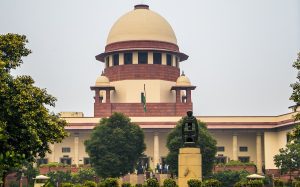
On 5 November 2026 the Supreme Court ruled that the 24-hour limit for producing a person before a Magistrate runs from the moment of detention, not from the time of formal arrest.
A Bench of Justice Ujjal Bhuyan and Justice Atul S Chandurkar held on 5 November 2026 that the 24-hour period for production before the Magistrate under Article 22(2) of the Constitution runs from the date and time of detention, when the person’s liberty is curtailed. It does not run only from the time the police formally record the arrest.
The Bench said that an artificial distinction between ‘detention’ and ‘arrest’ cannot be sustained. Article 22(2) speaks of a person who is ‘arrested and detained in custody’, and the Court read the two words together as joint and conjunctive. In its words, the Constitution does not recognise any detention divorced from arrest. There is therefore no buffer period between detention and arrest that stays outside the 24-hour count.
The Court laid down several directions. If a person is held beyond 24 hours without being produced before a Magistrate, the person must be released forthwith. While counting the 24 hours, only one period may be excluded: the time necessary for the journey from the place of arrest to the court of the Magistrate.
2. Bombay High Court (Goa Bench) Orders Six Voters Added Back; Form 8 Must Be Decided During SIR
On 5 November 2026 the Goa Bench of the Bombay High Court ordered the Election Commission of India to include six voters in the electoral roll within 10 days, and held that Form 8 applications must be decided even while the Special Intensive Revision (SIR) is on.
The Goa Bench of the Bombay High Court, comprising Justice Valmiki Menezes and Justice Amit Jamsandekar, on 5 November 2026 directed the Election Commission of India (ECI) to add back the names of six voters. The case is Paresh Salgaonkar and Others v. State of Goa and Others. The Court issued a mandamus asking the officer to include the names of the petitioners within 10 days, after confirming their residence.
The Court also declined to keep the petition pending until the Supreme Court decides on the validity of the SIR, and it did not grant a stay on including the names. The six petitioners had voted in the Santa Cruz constituency since 1995 and had shifted residence from Part 29 to Part 25 of the same constituency.
The petitioners had submitted Form 8, the form for shifting of residence, through the Booth Level Officer. Their names were deleted from the earlier part but were not included in the draft roll for the new part, and the Electoral Registration Officer (ERO) later rejected the Form 8 applications and asked them to file Form 6 as fresh applicants.
3. Election Commission Announces Special Summary Revision in 4 States and 2 UTs
On 5 November 2026 the Election Commission of India announced a Special Summary Revision of electoral rolls in four States and two Union Territories, with draft rolls on 30 November 2026 and final rolls on 21 January 2027.
On 5 November 2026 the Election Commission of India (ECI) announced the annual Special Summary Revision (SSR) of electoral rolls for six places: the States of Arunachal Pradesh, Mizoram, Odisha and Sikkim, and the Union Territories of Chandigarh and Dadra and Nagar Haveli and Daman and Diu. In all six, the Special Intensive Revision (SIR) has already been completed and the final rolls published.
The draft rolls will be published on 30 November 2026 and the final rolls on 21 January 2027. The SSR aims to enrol eligible citizens, particularly young and first-time voters, and to take advance applications from those who will become eligible on 1 April, 1 July and 1 October 2027.
According to reports of the ECI order, furnishing Aadhaar details in Form 6 and Form 8 remains voluntary, and no application can be rejected, nor an existing entry deleted, for failure to provide Aadhaar. Under the SSR, voters do not have to submit documents proving citizenship or be mapped with earlier rolls, which was part of the SIR.
4. Supreme Court Refuses to Transfer Tirupati Laddu Ghee Trial Out of Andhra Pradesh
On 5 November 2026 the Supreme Court refused a plea to transfer the Tirupati laddu ghee adulteration trial out of Andhra Pradesh, saying no case for transfer was made out.
On 5 November 2026 a Bench of Chief Justice of India Surya Kant and Justice Joymalya Bagchi rejected a petition seeking to transfer the trial in the Tirupati laddu ghee adulteration case outside Andhra Pradesh. The case is Machindra Shantaram Lanke v. State of Andhra Pradesh. The Court ordered: ‘No case made out to transfer trial. Dismissed.’
The petitioner is a Maharashtra-based dairy businessman and one of the accused. His senior counsel argued that the atmosphere in the State was politically charged and that statements by State office-holders threatened a fair trial, and asked that the trial be shifted to a neighbouring State. The Bench noted that the probe is with a Central agency, the Central Bureau of Investigation (CBI). The Chief Justice told the petitioner that if something happens, he can come back to the Court.
According to reports of the investigations by the CBI and the Enforcement Directorate (ED), the case involves a Rs 250 crore scam in the supply of about 68 lakh kg of fake and synthetic ghee to the Tirumala Tirupati Devasthanams (TTD) between 2019 and 2024. These are the allegations under trial. The accused have not been found guilty by any court in the material cited here, and the decision of 5 November 2026 concerns only where the trial will be held.
Constitutional / Legal / Institutional framework
Article 22(2) in Part III of the Constitution requires that every person who is arrested and detained in custody be produced before the nearest Magistrate within 24 hours, excluding the journey time. The 5 November 2026 judgment fixes the starting point of that 24 hours at detention, so the clock cannot be delayed by describing the early period as inquiry or investigation.
The Representation of the People Act, 1950 and the Registration of Electors Rules, 1960 govern the preparation and revision of electoral rolls. Section 22 allows the Electoral Registration Officer to correct entries, shift an elector on a change of residence, or delete a name, but only after a reasonable opportunity of being heard. The High Court held that these provisions stay in force during an SIR.
Article 324 vests the superintendence, direction and control of the preparation of the electoral rolls and the conduct of elections in the Election Commission of India. A roll revision is an exercise of that power, carried out under the Representation of the People Act, 1950. An SSR updates the existing roll, while an SIR prepares the roll afresh.
Article 21 says no person shall be deprived of life or personal liberty except according to procedure established by law, and the Supreme Court has read the right to a fair trial into it. A transfer petition asks the Court to protect that right by moving a trial. On 5 November 2026 the Bench held that no case for transfer was made out and kept the trial in Andhra Pradesh.
CLAT angle
- Article 22(2): production before a Magistrate within 24 hours, excluding journey time.
- The clock starts when liberty is curtailed (detention), not at the formal arrest entry.
- Form 6: a new elector who has never been in any roll. Form 8: an existing voter shifting residence or correcting entries.
- Section 22 of the RP Act, 1950: hearing before deletion of a name.
- Article 324: ECI controls the preparation of electoral rolls and elections.
- SSR (summary) updates the existing roll; SIR (intensive) prepares it afresh.
- Article 21: right to life and personal liberty; fair trial is part of it.
- A transfer plea must show that a fair trial is not possible in the State concerned.
Key facts
| Fact | Detail |
|---|---|
| Ruling date | 5 November 2026 |
| Bench | Justices Ujjal Bhuyan and Atul S Chandurkar |
| Court | Goa Bench of the Bombay High Court |
| Date of order | 5 November 2026 |
| Announced | 5 November 2026 |
| States | Arunachal Pradesh, Mizoram, Odisha, Sikkim |
| Date | 5 November 2026 |
| Case | Machindra Shantaram Lanke v. State of Andhra Pradesh |
Mnemonic / memory hook
‘Detain, Add, Revise, Retain.’ The 24-hour clock starts at detention; Form 8 names are added; six places get a revision; the Tirupati trial is retained in Andhra Pradesh.
Sources
The Hindu, LiveLaw, Business Standard, Hindustan Times and Lawbeat, all dated 5 November 2026. Bar and Bench, The New Indian Express and LiveLaw, all dated 5 November 2026. The Hindu and The Times of India, both dated 5 November 2026. The Hindu and Bar and Bench, both dated 5 November 2026.
Free in the CLAT Gurukul app
These notes (as a PDF lesson) and the 10-question CBT are in the app under Current Affairs → 6 Nov 2026. Get the app on Google Play or open app.clatgurukul.com.
Practice Quiz — 10 CLAT-Style Questions
Click an option to reveal the answer and explanation.