Watch the video explainer · open on YouTube
VIDEO EXPLAINER | 31 OCTOBER 2026
The 2026 Environmental Performance Index, a biennial Yale–Columbia scorecard, ranked 177 countries on 47 indicators. Estonia topped it with 74.79, while India came 176th with 22.46, ahead only of Laos, dragged down by air quality, biodiversity loss and waste management. It is a staple reports-and-indices question: who publishes it, who topped, where India stands and how India has reacted to past editions.
What happened
The 2026 EPI ranks 177 countries.
Laos ranked last (177th) with a score of 21.78.
India ranked 176th of 177 countries — second from the bottom — with an overall score of 22.46.
On the three policy objectives India ranked 174th in Environmental Health, 171st in Ecosystem Vitality and 130th in Climate Change.
India ranked 175th on air quality, with a score of 7.89.
India ranked 174th on biodiversity and habitat (score 9.09).
India ranked 1st (score 100) on the crop-yield indicator, despite its low overall rank.
India’s EPI score rose by 7.47 points over ten years, so the rank reflects slower improvement than peers, not a fall in its own score.
India’s score of 22.46 compares with a regional average of 31.81.
Reasons given for India’s low rank: air pollution, poor waste management, biodiversity loss, inadequate wastewater treatment and a high risk of future emissions.
EPI 2026 scores are strongly correlated with national wealth (r = 0.69), though some countries do better or worse than their income peers.
The 2026 EPI uses 47 performance indicators.
The EPI researchers attributed India’s very weak performance to critical air quality problems, continued reliance on coal-fired power and a lack of biodiversity protections.
The 47 indicators are grouped into 12 issue categories.
The issue categories fall under three policy objectives: Environmental Health, Ecosystem Vitality and Climate Change.
The weights of the three objectives are Ecosystem Vitality 45%, Climate Change 30% and Environmental Health 25%.
Estonia ranked first in the 2026 EPI with a score of 74.79.
Estonia’s lead is credited mainly to the steep fall in greenhouse gas emissions from its power sector over the past decade, as it expanded renewable electricity and shut fossil fuel production.
The top five were all European: Estonia (1), Luxembourg (2), United Kingdom (3), Finland (4) and the Netherlands (5).
Ranks 6 to 10 went to Germany, France, Norway, Sweden and Austria, in that order.
Background and the rules behind it
The EPI is a biennial index (published every two years).
Estonia was also ranked first in the 2024 EPI.
In the 2022 EPI India ranked last (180th of 180) with a score of 18.9; Denmark ranked first.
CIESIN, formerly the Center for International Earth Science Information Network, was renamed the Center for Integrated Earth System Information in November 2024; it sits in the Columbia Climate School.
Key terms
- Environmental Performance Index (EPI): A biennial Yale–Columbia scorecard ranking countries on environmental health, ecosystem vitality and climate change.
- Ecosystem Vitality: The EPI objective (45% weight) covering biodiversity, forests, fisheries, grasslands, agriculture and water resources.
- Environmental Health: The EPI objective (25%) on air quality, sanitation and drinking water, heavy metals and waste.
- Climate Change Mitigation: The EPI objective (30%) on greenhouse gas trends and projected emissions.
- CIESIN: Columbia University’s Center for Integrated Earth System Information, a co-producer of the EPI.
Constitutional / Legal / Institutional framework
- Art. 48A, Constitution of India: Directive Principle: the State shall endeavour to protect and improve the environment and safeguard forests and wildlife (added by the 42nd Amendment, 1976).
- Art. 51A(g), Constitution of India: Fundamental Duty to protect and improve the natural environment, including forests, lakes, rivers and wildlife.
CLAT angle
- Direct: which country topped EPI 2026 / India’s rank (176 of 177) / who ranked last (Laos).
- Publisher identification: Yale and Columbia (not UNEP, WEF or World Bank).
- Statement question on the three objectives and weights (45/30/25) and number of countries/indicators.
- Trend passage: India 180/180 (2022) → 176/180 (2024) → 176/177 (2026), and the government’s rejection of the index.
- Paradox angle: India 1st on crop yield but 175th on air quality.
Key facts
| Fact | Detail |
|---|---|
| 2002 | WEF, Yale and Columbia begin the environmental index initiative |
| 2006 | First full EPI report released |
| 2022 | India last (180/180); Denmark first; MoEFCC rejects the index |
| 2024 | India 176/180; Estonia first |
| 2024-11 | CIESIN renamed Center for Integrated Earth System Information |
| 2026-07 | EPI 2026: Estonia first (74.79), India 176/177 (22.46), Laos last |
Mnemonic / memory hook
Remember the trap.
Columbia’s centre is now the Center for Integrated Earth System Information (renamed November 2024; acronym CIESIN kept). Do not call the EPI a UN or World Bank index. 2026 counted 177 countries on 47 indicators, not 180 countries on 58 indicators as in 2024, so ranks are not directly comparable. India’s score rose over the decade; the low rank is relative.
Sources
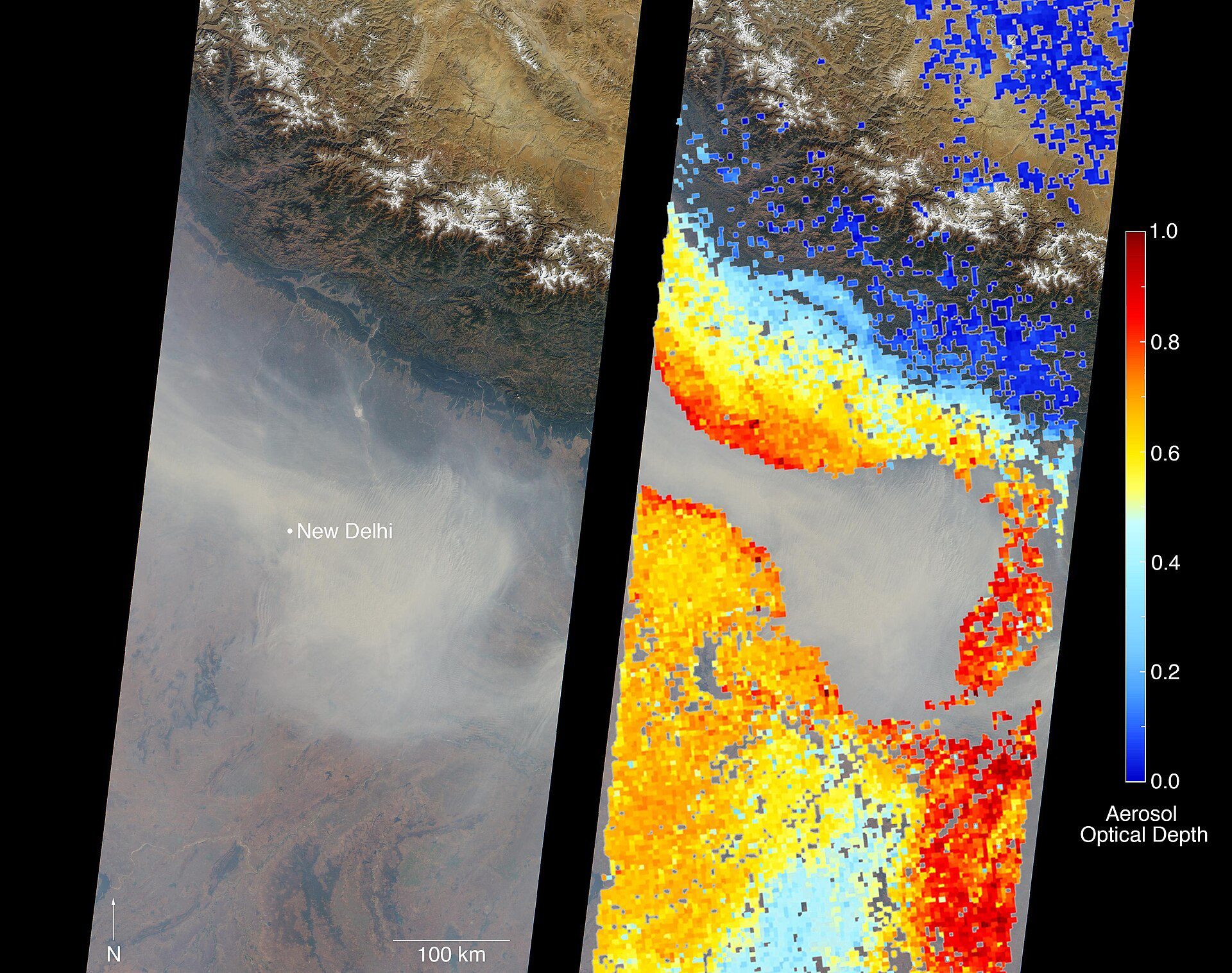
Primary documents and reporting listed in the fact base: epi.yale.edu, etvbharat.com, en.wikipedia.org, theprint.in, climate.columbia.edu. Lead image: NASA/GSFC/LaRC/JPL, MISR Team (public domain), via Wikimedia Commons.
Free in the CLAT Gurukul app
These notes (as a PDF lesson) and the 10-question CBT are in the app under Current Affairs → 31 Oct 2026. Get the app on Google Play or open app.clatgurukul.com.
Practice Quiz — 10 CLAT-Style Questions
Click an option to reveal the answer and explanation.