Watch the video explainer · open on YouTube
VIDEO EXPLAINER | 31 OCTOBER 2026
A wave of licence suspensions by Maharashtra’s FDA under Commissioner Tukaram Mundhe (199 suspended, 25 May–31 Aug 2026) put food safety back in the news, just as FSSAI’s revised licensing slabs (from 1 April 2026) took effect and WHO raised its global estimate to 866 million foodborne illnesses a year. The story covers India’s legal framework (the FSS Act 2006, FSSAI, State enforcers) and global standards (Codex, SPS, IPPC). It also shows the enforcement gap between holding a licence and actually serving safe food.
What happened
Rajit Punhani (IAS, 1991 batch) is FSSAI’s CEO; he took charge on 1 September 2025.
The FSS (Licensing and Registration of Food Businesses) Amendment Regulations, 2026 were notified on 10 March 2026. An implementing FSSAI order followed on 13 March 2026.
Street food vendors registered under the Street Vendors Act, 2014 are now deemed registered with FSSAI. This benefits over 10 lakh vendors.
The 2026 reforms bring in a technology-enabled, risk-based inspection framework that uses commodity risk, past compliance and third-party audit results.
On 13 March 2026 the Union Health Ministry (MoHFW) approved a package of FSSAI regulatory reforms aligned with NITI Aayog’s High-Level Committee on Non-Financial Regulatory Reforms.
From 1 April 2026, the turnover limit for basic FSSAI registration rose from Rs 12 lakh to Rs 1.5 crore.
IAS officer Tukaram Mundhe (2005 batch, Maharashtra cadre) took charge as Commissioner of Maharashtra’s Food and Drug Administration (FDA) in May 2026.
WHO’s 2026 estimates say about 866 million people (almost 1 in 9) fall ill each year from contaminated food.
The theme of World Food Safety Day 2026 (7 June) was ‘From burden to solutions – safe food everywhere’.
Background and the rules behind it
Article 47 (a Directive Principle) makes raising the level of nutrition and improving public health among the State’s primary duties.
The Codex Alimentarius Commission was founded in 1963 by FAO and WHO. Its secretariat (the Joint FAO/WHO Food Standards Programme) is in Rome.
The WTO SPS Agreement entered into force with the WTO on 1 January 1995. It names Codex, WOAH (formerly OIE) and IPPC as its reference standard-setters.
The UN General Assembly proclaimed World Food Safety Day by resolution 73/250 on 20 December 2018. It is observed every 7 June, first in 2019.
FSSAI launched the Eat Right India movement in July 2018 to promote safe, healthy and sustainable food.
The Eat Right India movement’s tagline is ‘Sahi Bhojan, Behtar Jeevan’ (right food, better life), and it rests on three pillars – Eat Safe, Eat Healthy and Eat Sustainable.
Key terms
- Food safety: Keeping food free of biological, chemical and physical hazards at every stage from farm to fork.
- Food security: Reliable access for all people to enough affordable, nutritious food. It is about availability and access, not contamination.
- Adulteration: Adding or substituting a substance, deliberately or through negligence, that makes food unsafe, sub-standard or misbranded.
- Unsafe food: Under s.3(1)(zz) of the FSS Act, food whose nature, substance or quality makes it injurious to health.
- Misbranded food: Food with false or misleading labels or claims. Under s.52 of the FSS Act the penalty is up to Rs 3 lakh.
- Food Business Operator (FBO): Anyone running a food business, from a hawker to a manufacturer. All must register or hold a licence.
Constitutional / Legal / Institutional framework
- Food Safety and Standards Act, 2006 (34 of 2006): The single law on food. It set up FSSAI and State food safety authorities and repealed the PFA Act 1954 and seven Orders.
- FSS Act 2006, s.3(1)(zz) and s.3(1)(a): Define ‘unsafe food’ (injurious to health, including excess pesticides) and ‘adulterant’.
- FSS Act 2006, s.59: Graded punishment for unsafe food: 6 months/Rs 1 lakh (no injury) up to at least 7 years to life/Rs 10 lakh (death).
- FSS Act 2006, s.65: Compensation to the victim: at least Rs 5 lakh for death, up to Rs 3 lakh for grievous injury, paid within six months.
- FSS Act 2006, ss.51–53 and s.57: Civil penalties for sub-standard (Rs 5 lakh), misbranded (Rs 3 lakh) and misleading ads (Rs 10 lakh). Possessing an injurious adulterant carries up to Rs 10 lakh.
- FSS Act 2006, s.31: Licence mandatory for food businesses; petty operators register instead. The thresholds are set by regulations (revised 1 April 2026).
CLAT angle
- A passage contrasting food safety (hazard-free food under the FSS Act 2006) with food security (access, as under the National Food Security Act 2013). Questions test the distinction.
- Legal Reasoning: apply s.59’s graded punishments. If a restaurant serves contaminated food causing grievous injury, the answer is up to 6 years and Rs 5 lakh. Also s.65 compensation, and the parallel BNS ss.274–275 offences.
- Principle-application: ‘unsafe’ (s.3(1)(zz), injurious to health) versus ‘sub-standard’ or ‘misbranded’ (civil penalties only). A misleading label alone is not ‘unsafe food’.
- Federalism angle: adulteration is Entry 18, List III (Concurrent). FSSAI sets standards; State Commissioners of Food Safety enforce, e.g. the Maharashtra FDA drive.
- Static GK pairs: FSSAI (2008, Delhi, MoHFW); Codex (1963, FAO + WHO, Rome, 189 members, India since 1964); SPS Agreement (1 Jan 1995); IPPC (1951, 185 parties); World Food Safety Day (7 June, UNGA 73/250).
Key facts
| Fact | Detail |
|---|---|
| 1954 | Prevention of Food Adulteration Act enacted, later repealed by the FSS Act |
| 1963 | FAO and WHO set up the Codex Alimentarius Commission |
| 1964 | India joins Codex |
| 1995-01-01 | WTO SPS Agreement enters into force |
| 2006-08-23 | Food Safety and Standards Act, 2006 gets Presidential assent |
| 2008-09-05 | FSSAI established |
| 2011-08-05 | FSS Rules and Regulations 2011 in force; FSS Act fully implemented |
| 2018-07 | FSSAI launches Eat Right India |
Mnemonic / memory hook
Remember the trap.
(1) Use the NEW WHO figures (866 million ill, 1.52 million deaths a year, US$310 bn lost; WHO fact sheet of 4 June 2026), not the older ‘600 million’ figure still common in prep material. (2) Write ‘Food Safety and Standards Act’ (plural), not ‘Standard Act’. (3) FSSAI licensing thresholds changed on 1 April 2026. Old question banks say Rs 12 lakh / Rs 20 crore (the Rs 20 crore cut-off applied to distributors, retailers and restaurants, not manufacturers); the current figures are Rs 1.5 crore / Rs 50 crore.
Sources
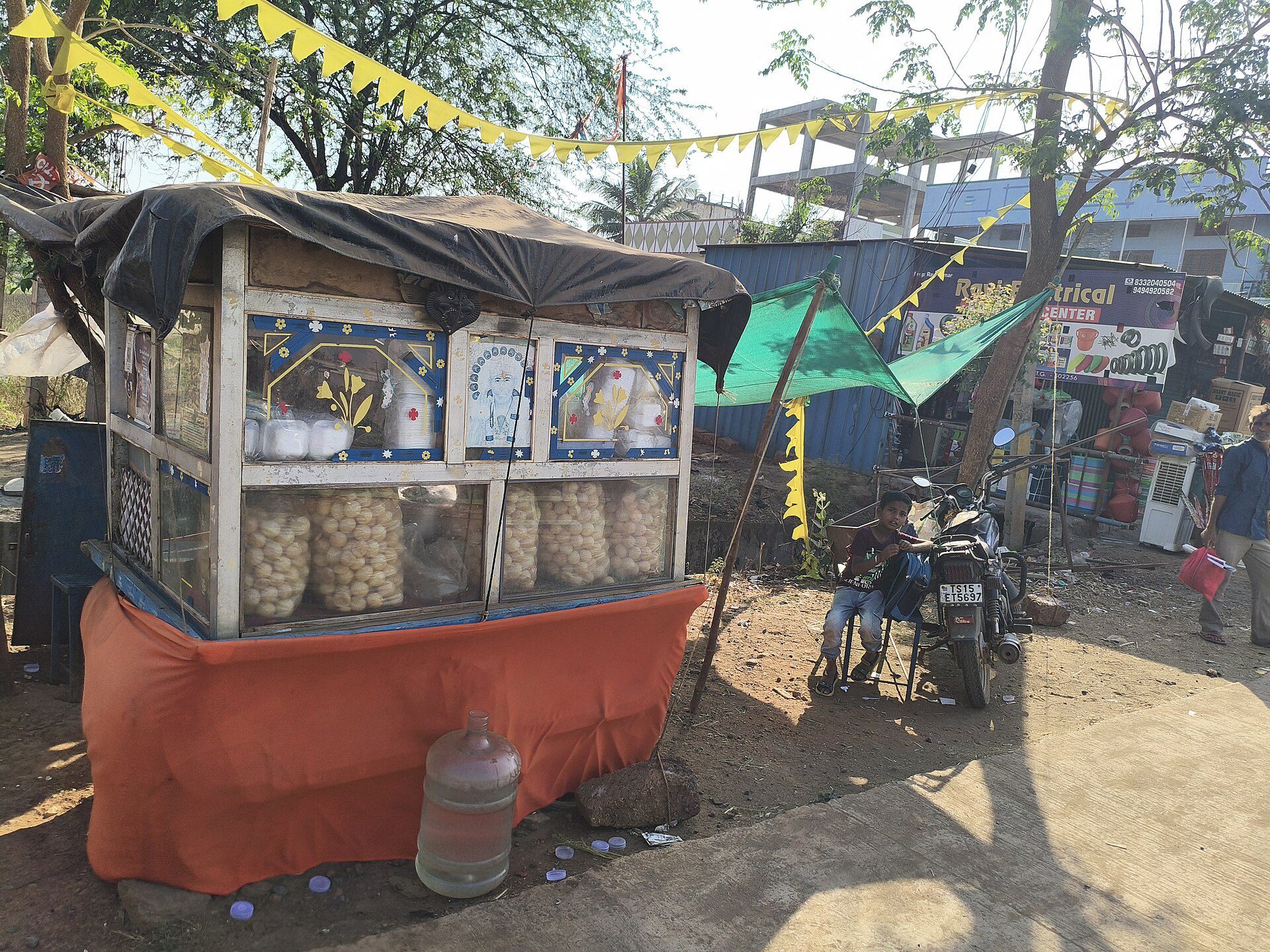
Primary documents and reporting listed in the fact base: outlookindia.com, fssai.gov.in, chambers.com, who.int, fao.org, legislative.gov.in, wto.org, un.org. Lead image: Sangameshwar Reddy, CC BY 4.0, via Wikimedia Commons.
Free in the CLAT Gurukul app
These notes (as a PDF lesson) and the 10-question CBT are in the app under Current Affairs → 31 Oct 2026. Get the app on Google Play or open app.clatgurukul.com.
Practice Quiz — 10 CLAT-Style Questions
Click an option to reveal the answer and explanation.