Watch the video explainer · open on YouTube
VIDEO EXPLAINER | 31 OCTOBER 2026
The VB-G RAM G Act, 2025 (Act 36 of 2025), in force in all rural areas from 1 July 2026, repealed the 2005 rural employment law (MGNREGA) and raised the statutory entitlement to wage employment from 100 to 125 days a year for every rural household. It turns the programme into a Centrally Sponsored Scheme on a 60:40 Centre-State pattern (90:10 for North Eastern and Himalayan States) and lets States pause works for up to 60 days in peak sowing and harvesting seasons, while the 125 days must still be met in the rest of the year.
What happened
The Act is run as a Centrally Sponsored Scheme with a 60:40 Centre-State cost-sharing pattern, 90:10 for North Eastern and Himalayan States, and 100 per cent central funding for Union Territories without legislatures.
The ceiling on administrative expenditure was raised from 6 per cent to 9 per cent of programme spending.
Every State Government must notify its own Scheme under the Act within six months of the Act’s commencement, i.e. by 31 December 2026.
Section 5(1) fixes the entitlement at not less than 125 days of wage employment per rural household per financial year, up from the 100 days under MGNREGA.
Section 6 empowers States to notify in advance a pause period aggregating 60 days in a financial year, covering peak sowing and harvesting, when no works are taken up; the 125 days must still be provided in the remaining period.
Union Minister for Rural Development and Agriculture & Farmers’ Welfare Shivraj Singh Chouhan launched the Mission nationally on 2 July 2026 in Tirupati district, Andhra Pradesh.
Background and the rules behind it
Article 41, a Directive Principle, asks the State, within the limits of its economic capacity, to make effective provision for securing the right to work, to education and to public assistance in unemployment, old age, sickness and disablement.
Part IX (Articles 243 to 243-O) and the Eleventh Schedule were inserted by the Constitution (Seventy-third Amendment) Act, 1992, which came into force on 24 April 1993.
MGNREGA came into force on 2 February 2006 under the UPA government of Prime Minister Manmohan Singh; the Bill had been tabled by Rural Development Minister Raghuvansh Prasad Singh.
Starting in a first set of districts in 2006, NREGA was scaled up to cover all districts of India from 1 April 2008.
Article 243B requires Panchayats at the village, intermediate and district levels in every State; the intermediate level may be skipped in a State with a population not exceeding twenty lakh.
Key terms
- Convergence: Bringing different schemes, departments and funds around one shared outcome while each keeps its own mandate, rules and budget.
- Merger: Combining schemes or institutions into a single administrative structure. Convergence is not a merger.
- Saturation: Covering every eligible person or closing every identified gap under a scheme, as against coordinating different schemes.
- Centrally Sponsored Scheme: A scheme run by States with costs shared with the Centre in a fixed ratio, unlike a Central Sector Scheme funded fully by the Centre.
- Normative allocation: A state-wise ceiling of central funds fixed by formula; spending above it falls on the State.
- Viksit Gram Panchayat Plan (VGPP): The village-level plan, approved by the Gram Sabha, from which all works under the new Act must originate.
Constitutional / Legal / Institutional framework
- VB-G RAM G Act, 2025 (Act 36 of 2025): In force from 1 July 2026; provides 125 days of wage employment a year per rural household and repeals MGNREGA, 2005.
- s.5(1), VB-G RAM G Act, 2025: Statutory entitlement to not less than 125 days of wage employment per rural household in each financial year.
- s.6, VB-G RAM G Act, 2025: States may notify a pause period aggregating 60 days in a financial year during peak sowing and harvesting; the 125 days must still be provided in the rest of the year.
- s.5(3) and Schedule II, VB-G RAM G Act, 2025: Wages weekly or within 15 days of muster-roll closure; delay compensation at 0.05% of unpaid wages per day beyond the sixteenth day; worksite facilities are a legal entitlement.
- MGNREGA, 2005 (Act 42 of 2005): Provided 100 days of unskilled wage employment per rural household a year. Repealed on 1 July 2026 by the VB-G RAM G Act.
- Art. 41, Constitution of India: Directive Principle asking the State to secure the right to work within the limits of its economic capacity. Not enforceable in court by itself (Art. 37).
CLAT angle
- Numbers trap: the entitlement moved from 100 to 125 days; the pause is 60 days; the sharing pattern is 60:40 (90:10 for NE/Himalayan States, 100% Centre for UTs without legislature); administrative expenditure 6% to 9%. Options will mix these four pairs.
- Constitutional link: the right to work is a Directive Principle (Art. 41), not a Fundamental Right, and is non-justiciable under Art. 37 — statutes like MGNREGA and VB-G RAM G are what make it enforceable. Gram Panchayat planning rests on Art. 243G and the Eleventh Schedule (29 subjects, 73rd Amendment 1992).
- Convergence vs merger vs saturation is a ready-made three-statement question: convergence keeps schemes separate, merger combines them, saturation is about full coverage of one scheme.
Key facts
| Fact | Detail |
|---|---|
| 1993-04-24 | 73rd Amendment brings Part IX and the Eleventh Schedule into force, giving Panchayats constitutional status |
| 2005-09-05 | President assents to NREGA (Act 42 of 2005) |
| 2006-02-02 | NREGA comes into force |
| 2008-04-01 | Scheme extended to all districts of India |
| 2009 | Renamed Mahatma Gandhi NREGA by the 2009 amendment Act |
Mnemonic / memory hook
Remember the trap.
(1) Never call this a constitutional amendment or a ‘scheme’ alone — it is an Act of Parliament (Act 36 of 2025) that repealed another Act. (2) The funding change is the sharpest difference: MGNREGA was demand-driven with the Centre bearing the full unskilled wage bill; VB-G RAM G is a Centrally Sponsored Scheme with a 60:40 split and a normative ceiling, which is exactly what the Opposition attacked. Do not describe MGNREGA loosely as ‘100% centrally funded’ — the Centre funded all unskilled wages but shared material costs.
Sources
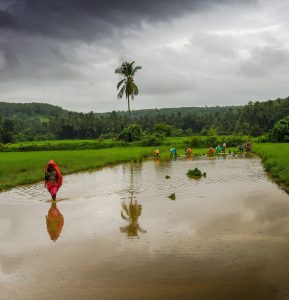
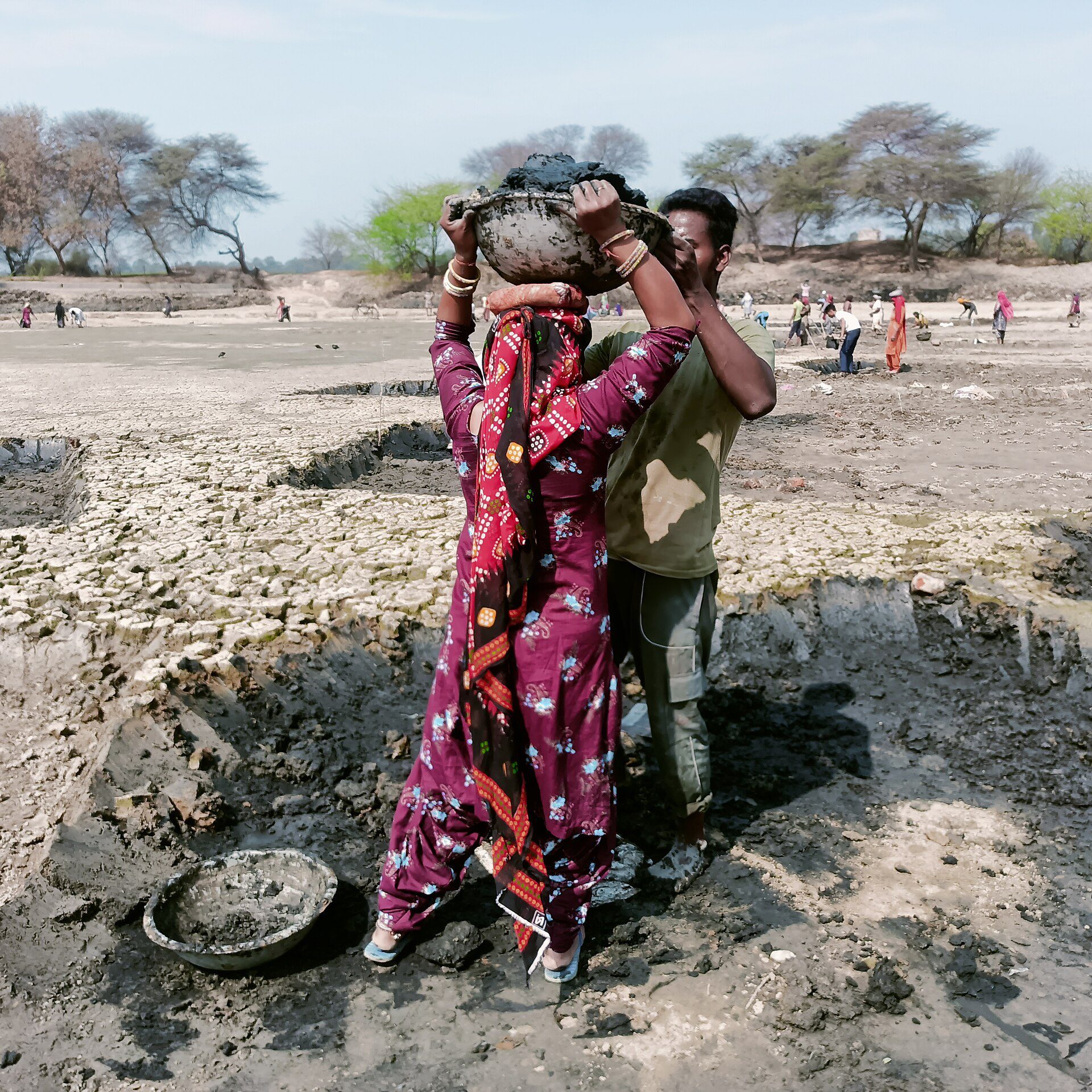
Primary documents and reporting listed in the fact base: cdnbbsr.s3waas.gov.in, pib.gov.in, legislative.gov.in, en.wikipedia.org. Lead image: Mulkh Singh, CC BY-SA 4.0, via Wikimedia Commons.
Free in the CLAT Gurukul app
These notes (as a PDF lesson) and the 10-question CBT are in the app under Current Affairs → 31 Oct 2026. Get the app on Google Play or open app.clatgurukul.com.
Practice Quiz — 10 CLAT-Style Questions
Click an option to reveal the answer and explanation.