Watch the video explainer · open on YouTube
VIDEO EXPLAINER | 31 OCTOBER 2026
With the 1960 Indus Waters Treaty held ‘in abeyance’ since April 2025, the Centre approved a Rs 2,352 crore Chenab-Beas Link Tunnel in May 2026. An 8.7-km tunnel through the Pir Panjal will carry water from the Chandra, a Chenab headwater, from near Koksar into the Beas basin. It is the first project to move western-river (Pakistan-allocated) water into an eastern-river basin. On 31 August 2026 a Court of Arbitration at The Hague held the treaty still fully in force. India rejected the ruling.
What happened
India announced on 23 April 2025 that it would hold the Indus Waters Treaty in abeyance, a day after 26 people were killed in the Pahalgam terror attack.
Foreign Secretary Vikram Misri said the treaty would stay suspended until Pakistan ‘credibly and irrevocably abjures’ support for cross-border terrorism.
India formally told Pakistan of its decision to keep the treaty in abeyance on 24 April 2025.
Proposed western-river projects to be fast-tracked include Sawalkot (1,856 MW), Kirthai-II (930 MW), Dulhasti Stage-II (260 MW) and Uri-I Stage-II (240 MW).
SANDRP said the project lacked the legally required environmental, forest and tribal clearances and Gram Sabha resolutions when the tender was issued.
The Chenab-Beas link project is expected to take 49 months, and NHPC has applied for about 10 hectares of forest land.
The 8.7-km tunnel will be built with a tunnel boring machine to limit damage to the Pir Panjal hills (reported 27 August 2026).
The Chenab-Beas Link Tunnel project is estimated to cost about Rs 2,352 crore.
The diversion site is upstream of the north portal of the Atal Tunnel at Rohtang, and the tunnel runs through the Pir Panjal range.
A second approved project is a Rs 268 crore diversion-cum-sediment bypass tunnel at the Salal hydroelectric project in Jammu and Kashmir. Together the two cost over Rs 2,600 crore.
Background and the rules behind it
The treaty came into force on 12 January 1961, when ratifications were exchanged in New Delhi, with retrospective effect from 1 April 1960.
The treaty defines the Eastern Rivers as the Sutlej, Beas and Ravi, and the Western Rivers as the Indus, Jhelum and Chenab.
The treaty gives the Western Rivers to Pakistan and the Eastern Rivers to India, while allowing each country certain uses of the other’s rivers.
The IWT was signed after nine years of India-Pakistan negotiations brokered by the World Bank, which is also a signatory. The talks were initiated by World Bank President Eugene Black.
The World Bank’s role under the treaty is ‘limited and procedural’: it only designates people for Neutral Expert or Court of Arbitration proceedings.
The treaty had a Transition Period starting 1 April 1960, due to end on 31 March 1970.
Key terms
- Abeyance: A temporary suspension of performance. India’s term for its April 2025 step on the IWT; the treaty has no such clause.
- Western Rivers: Indus, Jhelum and Chenab: allocated to Pakistan under the IWT, with limited Indian uses.
- Eastern Rivers: Sutlej, Beas and Ravi: allocated to India for unrestricted use.
- Inter-basin transfer: Moving water from one river basin to another through a canal or tunnel.
- Neutral Expert: Technical expert who decides ‘differences’ under the IWT, appointed via the World Bank if needed.
- Rebus sic stantibus: Doctrine that a fundamental change of circumstances may justify ending or suspending a treaty (VCLT Art. 62).
Constitutional / Legal / Institutional framework
- Indus Waters Treaty 1960, Art. XII(3)-(4): The treaty can be modified or terminated only by a duly ratified treaty between India and Pakistan. There is no unilateral suspension clause.
- Indus Waters Treaty 1960, Art. I(3)-(6): Defines Eastern and Western Rivers. The Chandra and Bhaga are tributaries of the Chenab, so their water is western-river water.
- Indus Waters Treaty 1960, Art. IX and Annexures F-G: Dispute ladder: Permanent Indus Commission, then Neutral Expert, then Court of Arbitration.
- Vienna Convention on the Law of Treaties 1969, Arts. 60-62: Grounds for suspension: material breach, supervening impossibility, fundamental change of circumstances.
CLAT angle
- River matching: Eastern (Ravi, Beas, Sutlej) go to India; Western (Indus, Jhelum, Chenab) go to Pakistan. The Chandra is a Chenab headwater, so the tunnel moves western-river water into an eastern basin (the Beas).
- Legal Reasoning: can a party suspend a treaty that has no suspension clause? Art. XII(4) requires a new ratified treaty. Contrast the VCLT grounds (material breach, fundamental change).
- Geography: Chandra and Bhaga meet at Tandi (Lahaul); the tunnel runs through the Pir Panjal near the Atal Tunnel; Ratle, Pakal Dul, Kiru and Kwar are in Kishtwar (J&K).
- Dates: signed 19 Sep 1960 (Karachi), in force 12 Jan 1961 (retrospective to 1 Apr 1960), abeyance 23 Apr 2025, Court of Arbitration ruling 31 Aug 2026.
Key facts
| Fact | Detail |
|---|---|
| 1960-04-01 | IWT’s Effective Date (retrospective) |
| 1960-09-19 | IWT signed at Karachi by Nehru, Ayub Khan and the World Bank |
| 1961-01-12 | IWT enters into force on exchange of ratifications in New Delhi |
| 2025-04-22 | Pahalgam terror attack kills 26 |
| 2025-04-23 | India holds IWT in abeyance (CCS decision) |
| 2026-05-20 | NHPC tender for Chenab-Beas Link Tunnel (Link 3); withdrawn 23 May |
| 2026-08-31 | Court of Arbitration rules treaty ‘remains fully in force’; India rejects |
Mnemonic / memory hook
Remember the trap.
(1) The Chandra rises in Lahaul and is a Chenab headwater. Under IWT Art. I it is western-river water even though it flows through Himachal. (2) ‘Abeyance’ is India’s term; the IWT has no suspension clause, and Art. XII(4) needs a new ratified treaty to end it.
Sources
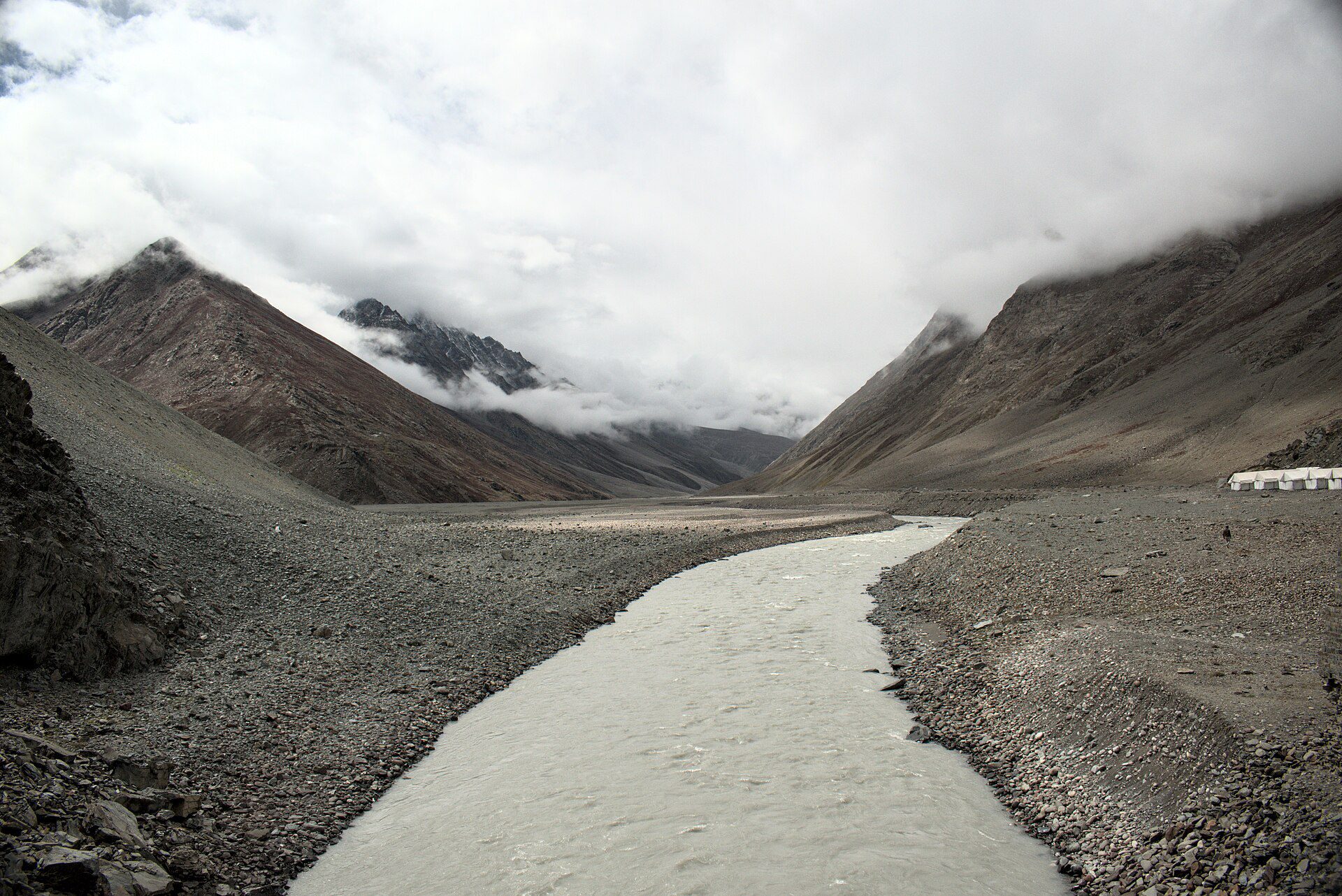
Primary documents and reporting listed in the fact base: swarajyamag.com, sandrp.in, etvbharat.com, theprint.in, npr.org, deccanherald.com, treaties.un.org, worldbank.org. Lead image: Photo: ADARSHluck, CC BY-SA 4.0, via Wikimedia Commons.
Free in the CLAT Gurukul app
These notes (as a PDF lesson) and the 10-question CBT are in the app under Current Affairs → 31 Oct 2026. Get the app on Google Play or open app.clatgurukul.com.
Practice Quiz — 10 CLAT-Style Questions
Click an option to reveal the answer and explanation.