Watch the video explainer · open on YouTube
VIDEO EXPLAINER | 2 NOVEMBER 2026
Reporters Without Borders (RSF) released its 2026 World Press Freedom Index on 30 April 2026, ranking India 157th of 180 countries and territories with a score of 31.96, down from 151st (32.96) in 2025 and inside the ‘very serious’ band. RSF said the global average score was the lowest in the Index’s 25-year history, with more than half the countries now ‘difficult’ or ‘very serious’; Norway stayed first for a tenth straight year and Eritrea last for a third.
What happened
RSF published the 2026 World Press Freedom Index on 30 April 2026.
Press freedom scores declined in 100 of the 180 countries and territories in 2026.
The legal indicator fell the most in 2026, deteriorating in 110 of 180 states.
Norway ranked 1st for the tenth consecutive year (score 92.72 on RSF’s Norway page).
The Netherlands ranked 2nd (score 88.92) and Estonia 3rd (88.54).
Eritrea ranked last (180th) for the third year in a row, with North Korea 179th and China 178th.
India’s neighbours ranked above it in 2026: Pakistan 153rd, Bangladesh 152nd, Bhutan 150th, Sri Lanka 134th and Nepal 87th.
Nepal was the best-ranked South Asian country at 87th (score 54.80).
Palestine ranked 156th, one place above India; RSF counted more than 220 journalists killed in Gaza since October 2023.
The United States fell seven places to 64th.
Syria made the biggest improvement, climbing 36 places from 177th to 141st after the fall of the Assad government.
India ranked 157th out of 180 countries and territories in the 2026 Index, with a score of 31.96.
Niger recorded the steepest fall in 2026 (down 37 places, to 120th).
In the 2025 Index India ranked 151st of 180 with a score of 32.96, so it fell six places in 2026.
With a score below 40, India falls in RSF’s ‘very serious’ category (score band 0-40).
India’s weakest 2026 indicator was political context: ranked 160th with a score of 21.16.
India’s 2026 legal indicator score fell to 39.59 (rank 141) from 42.64 in 2025; RSF named India among countries whose legal indicator deteriorated.
RSF said the average score of all 180 countries and territories was the lowest in the Index’s 25-year history.
For the first time, over half the countries (52.2%) were in the ‘difficult’ or ‘very serious’ categories, against 13.7% in 2002.
Less than 1% of the world’s population lives in a country rated ‘good’ for press freedom in 2026, against 20% in 2002.
World Press Freedom Day 2026 (3 May) was hosted in Lusaka, Zambia.
Background and the rules behind it
Reporters Without Borders (RSF) was founded in 1985 in Montpellier, France, by four journalists.
The World Press Freedom Index compares 180 countries and territories and was first published in 2002, making 2026 its 25th year.
World Press Freedom Day (3 May) was proclaimed by the UN General Assembly in December 1993 on UNESCO’s recommendation; 3 May marks the anniversary of the Declaration of Windhoek.
Article 19(1)(a) of the Constitution of India gives all citizens the right to freedom of speech and expression.
Press freedom is not named as such in India’s Constitution; it is protected as part of freedom of expression.
Key terms
- RSF: Reporters Without Borders (Reporters sans frontières), Paris-based NGO that publishes the World Press Freedom Index.
- SLAPP: Strategic lawsuit against public participation: an abusive lawsuit meant to silence journalists or critics.
- Very serious (RSF): The lowest of RSF’s five categories: a score below 40 out of 100.
Constitutional / Legal / Institutional framework
- Art. 19(1)(a), Constitution of India: All citizens have the right to freedom of speech and expression, which covers press freedom.
- Art. 19(2), Constitution of India: The State may impose reasonable restrictions on speech on listed grounds such as security of the State, public order and defamation.
CLAT angle
- Rank-and-count questions: India 157th of 180 (2026) vs 151st (2025); score 31.96; ‘very serious’ band.
- Top/bottom: Norway 1st (tenth year), Netherlands 2nd, Estonia 3rd; Eritrea 180th, North Korea 179th, China 178th.
- Neighbourhood comparison: Nepal 87, Sri Lanka 134, Bhutan 150, Bangladesh 152, Pakistan 153, India 157.
- Art. 19(1)(a) and 19(2): press freedom is implied in freedom of expression and subject to reasonable restrictions.
Key facts
| Fact | Detail |
|---|---|
| 1985 | RSF founded in Montpellier |
| 1993-12 | UNGA proclaims World Press Freedom Day (3 May) |
| 2002 | First World Press Freedom Index |
| 2022 | Methodology overhaul: five indicators |
| 2025 | India 151st of 180 (score 32.96) |
| 2026-04-30 | 2026 Index released: India 157th, score 31.96 |
| 2026-05-03 | World Press Freedom Day, hosted in Lusaka, Zambia |
Mnemonic / memory hook
Remember the trap.
A higher RSF score means MORE freedom (since the 2022 recalibration); India’s 31.96 is in the lowest band. Count is ‘180 countries and territories’. India fell from 151 to 157 (six places). The ’25-year low’ refers to the global average score, not India’s score.
Sources
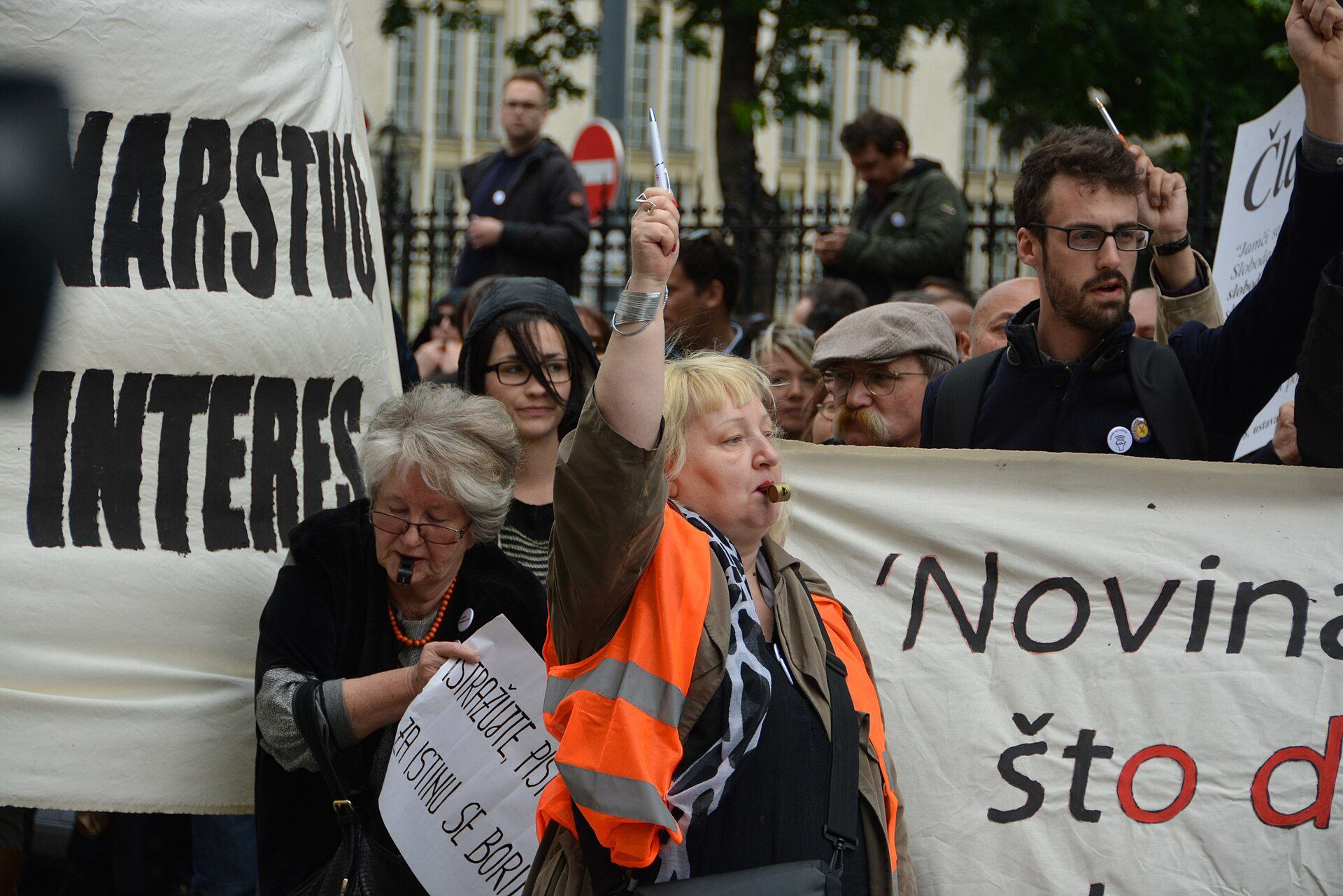
Primary documents and reporting listed in the fact base: rsf.org, un.org, legislative.gov.in. Lead image: Photo: Branko Radovanović, CC BY-SA 4.0, via Wikimedia Commons.
Free in the CLAT Gurukul app
These notes (as a PDF lesson) and the 10-question CBT are in the app under Current Affairs → 2 Nov 2026. Get the app on Google Play or open app.clatgurukul.com.
Practice Quiz — 10 CLAT-Style Questions
Click an option to reveal the answer and explanation.