
CURRENT AFFAIRS | 24 SEPTEMBER 2026
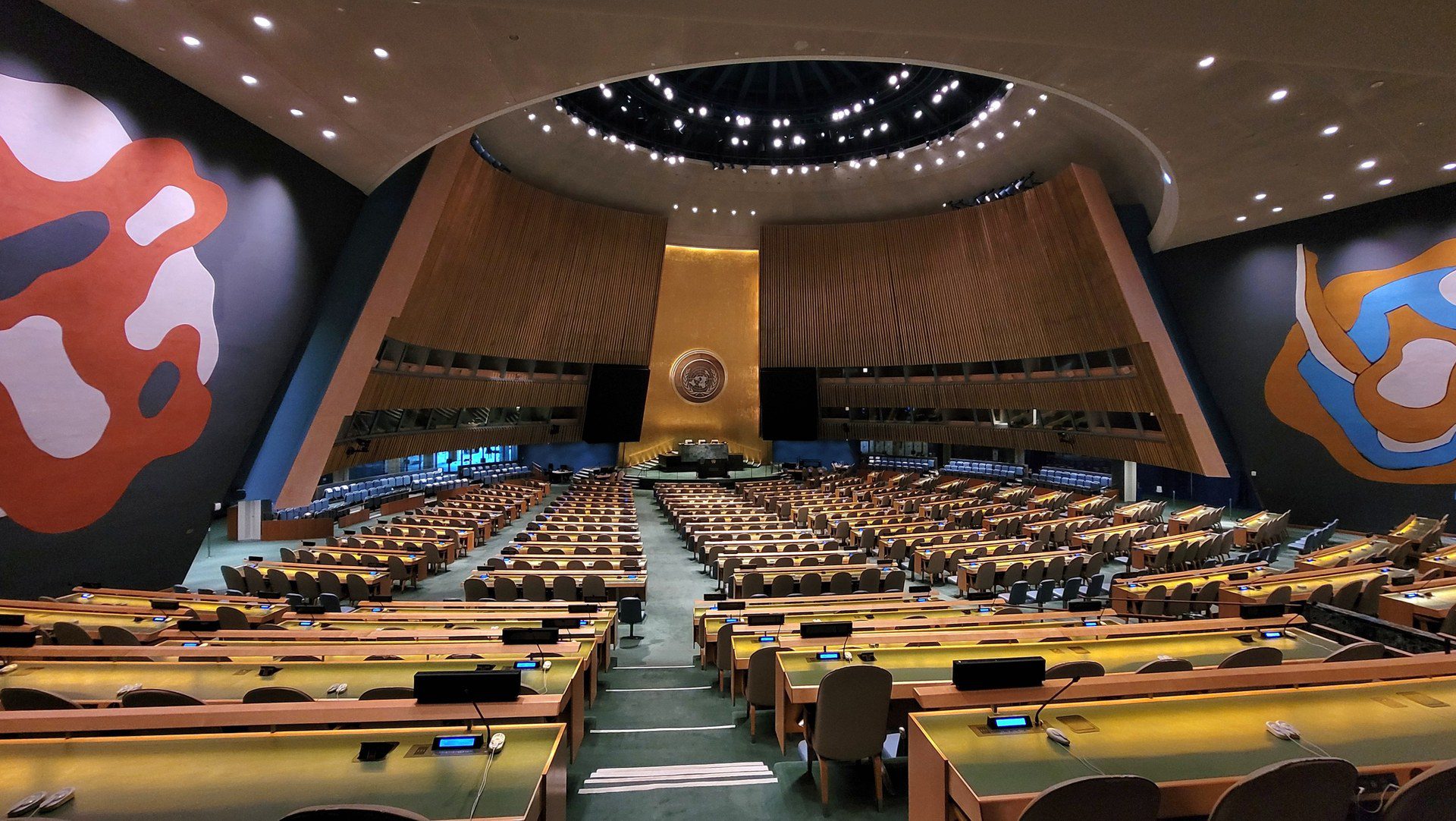
According to the report carried by News on AIR (All India Radio) on 24 September 2026, External Affairs Minister Dr S Jaishankar chaired the second Foreign Ministers’ Meeting of the Forum for India–Pacific Islands Cooperation (FIPIC) in New York on 23 September 2026, on the sidelines of the 81st session of the United Nations General Assembly. The meeting reaffirmed the commitment to strengthen the FIPIC partnership and to cooperate in regional and multilateral fora.
The headline here is not the minister; it is the institution. FIPIC is one of the few plurilateral groupings that India itself created, and it binds New Delhi to a set of states that are geographically remote, demographically tiny and diplomatically decisive. Understanding what FIPIC is, who belongs to it and why fourteen small island nations command sustained Indian attention is worth far more to a CLAT aspirant than memorising the guest list of a single meeting.
What FIPIC is
FIPIC was launched in November 2014 at Suva, Fiji, during the Indian Prime Minister’s visit, as a platform to deepen India’s engagement with the Pacific Island countries. It has fourteen member island states: Cook Islands, Fiji, Kiribati, Marshall Islands, the Federated States of Micronesia, Nauru, Niue, Palau, Papua New Guinea, Samoa, Solomon Islands, Tonga, Tuvalu and Vanuatu. Three leaders’-level summits have been held — the first in 2014 at Suva, the second in 2015 at Jaipur (the only one hosted in India), and the third in 2023 at Port Moresby, Papua New Guinea. The New York gathering was a Foreign Ministers’ Meeting, the second of its kind under the FIPIC framework, and therefore a working-level rather than a summit-level event.
The choice of venue matters. Convening on the margins of the General Assembly is a standard diplomatic economy: the foreign ministers of almost every member state are already in New York for the high-level week, so a grouping whose members are separated by thousands of kilometres of ocean can meet at near-zero travel cost. It is also a signal, because the UNGA corridor is where small states are at their most visible.
Background & Framework
The United Nations General Assembly is the principal deliberative organ of the UN, in which all member states have one vote each — the sovereign-equality principle that makes a state of eleven thousand people the formal equal of a state of a billion. Its annual session opens in September and features a high-level General Debate at which heads of state, heads of government and foreign ministers address the Assembly; the 2026 session is the 81st. India’s own national statement in the General Debate was still to be delivered when the FIPIC meeting took place. Most FIPIC members are Small Island Developing States (SIDS), a category the UN formally recognised as facing distinct social, economic and environmental vulnerabilities at the 1992 United Nations Conference on Environment and Development (the Rio Earth Summit), whose Agenda 21 devoted Chapter 17 to the oceans and to the sustainable development of small island states. Many are also members of the Alliance of Small Island States (AOSIS), formed in 1990 and now a 39-member negotiating bloc that consolidates the voice of island states in climate negotiations. On the Indian side, the relevant policy scaffolding is the Act East Policy and the Indo-Pacific Oceans Initiative (IPOI), launched by India at the East Asia Summit in Bangkok in November 2019 as a non-treaty, voluntary arrangement organised around seven pillars — maritime security; maritime ecology; maritime resources; capacity building and resource sharing; disaster risk reduction and management; science, technology and academic cooperation; and trade connectivity and maritime transport.
What the ministers discussed
Per the News on AIR report, the participants reviewed the outcomes of the FIPIC Summits and welcomed the progress in India–Pacific Island Countries cooperation, including under the 12-Point Action Plan announced by Prime Minister Narendra Modi in 2023. That Action Plan was unveiled at the third FIPIC Summit at Port Moresby; The Tribune’s report of the New York meeting describes it as spanning healthcare, renewable energy, connectivity, technology and capacity building. The ministers went on to discuss further cooperation in renewable energy, climate action, disaster resilience, education, healthcare and capacity building.
The attendance list is itself instructive about how small-state diplomacy works. The meeting was attended by the Deputy Prime Minister and Minister for Finance of Samoa; the Foreign Ministers of Fiji, the Marshall Islands, Palau, Papua New Guinea, the Solomon Islands and Tuvalu; and the Finance Minister of Tonga. Also present were the Secretary of the Department of Justice and Attorney General of the Federated States of Micronesia, the Health Minister of Vanuatu, the Deputy Foreign Minister of Nauru, and the Secretary-General of the Pacific Islands Forum, the region’s own premier intergovernmental organisation. Note how many delegations were led by finance, health or legal officials rather than foreign ministers: in very small states, a single minister often carries several portfolios, and the distinction between “foreign policy” and “development policy” is thinner than in large states.
The CLAT Angle
Current-affairs questions on groupings reward three things: founding year and venue, membership and the distinction between summit-level and ministerial-level meetings. Lock in “FIPIC — 2014, Suva, 14 island members, three summits (Suva 2014, Jaipur 2015, Port Moresby 2023)”. Setters love near-miss membership options, so check the trap names: Timor-Leste, Maldives, Mauritius, Seychelles and Sri Lanka are not FIPIC members, although several of them belong to AOSIS. A second family of questions tests grouping-versus-grouping: FIPIC is India’s forum with the Pacific islands, the Pacific Islands Forum is the region’s own body, and AOSIS is a global climate-negotiating coalition that also includes Caribbean, African and Indian Ocean states. For comprehension-style passages, the argumentative hook is sovereign equality: how should an institution that gives each state one vote treat states whose populations differ by five orders of magnitude? A passage can defend the rule on grounds of formal equality and the special stake island states have in climate outcomes, or attack it as disproportionate — and you may be asked to identify which assumption an author relies on.
Why fourteen small states matter to India
Three reasons, and they are separable. The first is multilateral arithmetic. Fourteen states are fourteen votes in the General Assembly and in the elections that fill seats on UN bodies. For a country that seeks a permanent seat on a reformed Security Council and campaigns regularly for positions across the UN system, a standing forum with fourteen members is not a courtesy; it is infrastructure.
The second is climate. SIDS face existential exposure to sea-level rise, ocean warming, cyclones and the salinisation of freshwater lenses; low-lying atoll states such as Tuvalu, Kiribati and the Marshall Islands are the most acute cases anywhere. That is why the FIPIC agenda is dominated by renewable energy, climate action and disaster resilience rather than by trade volumes, which are necessarily small. India’s pitch to these states is delivery-oriented — solar deployment, desalination, dialysis units, sea-ambulances, training slots — rather than ideological.
The third is the Indo-Pacific. The Pacific islands sit astride vast exclusive economic zones and the sea lanes that cross them, and the region has become an arena of external competition for ports, fisheries access and security agreements. India’s framing under the Act East Policy and the IPOI is to present itself as a development partner with no basing ambitions — a proposition that is easier to sustain precisely because India has no territorial stake in the Pacific.
Key Facts
- Event: second FIPIC Foreign Ministers’ Meeting, chaired by EAM Dr S Jaishankar in New York on 23 September 2026, on the sidelines of UNGA-81.
- Source: News on AIR (All India Radio) report of 24 September 2026, corroborated by The Tribune.
- FIPIC founded: November 2014 at Suva, Fiji.
- Members (14): Cook Islands, Fiji, Kiribati, Marshall Islands, Micronesia, Nauru, Niue, Palau, Papua New Guinea, Samoa, Solomon Islands, Tonga, Tuvalu, Vanuatu.
- Summits: 1st — Suva, Fiji (2014); 2nd — Jaipur, India (2015); 3rd — Port Moresby, Papua New Guinea (2023).
- 12-Point Action Plan: announced by PM Narendra Modi in 2023; progress under it was welcomed at this meeting.
- Agenda: renewable energy, climate action, disaster resilience, education, healthcare and capacity building.
- Attendance: Samoa’s Deputy PM and Finance Minister; Foreign Ministers of Fiji, Marshall Islands, Palau, PNG, Solomon Islands and Tuvalu; Tonga’s Finance Minister; Micronesia’s Attorney General; Vanuatu’s Health Minister; Nauru’s Deputy Foreign Minister; and the Secretary-General of the Pacific Islands Forum.
- SIDS: recognised as a distinct group at the 1992 Rio Earth Summit; Agenda 21, Chapter 17.
- AOSIS: formed in 1990; a 39-member coalition of small island and low-lying states in climate negotiations.
- IPOI: launched by India at the East Asia Summit, Bangkok, November 2019; seven thematic pillars; non-treaty and voluntary.
- UNGA: principal deliberative organ of the UN; one state, one vote; 2026 is the 81st session.
Reading the meeting
A ministerial meeting on the margins of the General Assembly rarely produces a treaty, and this one did not claim to. Its function is maintenance: keeping a forum alive between summits, converting announcements into reviewable commitments, and giving fourteen governments a fixed point in the calendar at which to raise what is not working. The single most quotable substantive element was the review of the 12-Point Action Plan — because an action plan that is reviewed is an action plan that can be audited, and the gap between announcement and delivery is the standard critique of every development partnership in the Pacific.
For the exam, hold two sentences. First, FIPIC is India’s own creation of 2014, a fourteen-member forum with the Pacific island states, whose agenda is climate, energy, health and capacity building. Second, its value to India is disproportionate to the size of its members, because in the General Assembly size is not what a vote measures.
Memory Hook / Mnemonic
For the summit sequence, use “S-J-P” — Suva 2014, Jaipur 2015, Port Moresby 2023. For the founding, remember that FIPIC was born in Fiji — both begin with F. For the agenda, run “RE-CD-EH-C”: Renewable Energy, Climate action, Disaster resilience, Education, Healthcare, Capacity building. And to separate the three look-alike groupings: FIPIC is India’s forum, the Pacific Islands Forum is theirs, and AOSIS is the world’s island climate bloc.
Practice Quiz — 10 CLAT-Style Questions
Click an option to reveal the answer and explanation.