
VIDEO EXPLAINER | 30 OCTOBER 2026
The 30-year India-Bangladesh Ganga Water Treaty, signed 12 December 1996, expires in December 2026 (12 Dec per most sources). Renewal talks had not formally begun as of the last official statements (Feb and Aug 2026); the mechanism is the Joint Rivers Commission.
What happened
The treaty was signed on 12 December 1996 by PM H. D. Deve Gowda and Bangladesh PM Sheikh Hasina for 30 years; it expires in December 2026 (12 Dec per Deccan Chronicle).
A proposed Teesta water-sharing agreement has not been signed.
Parliament’s Standing Committee on External Affairs (chair Shashi Tharoor) tabled a report on 30 July 2026 saying the government must start talks with Bangladesh.
Bangladesh Water Resources Minister Shahiduddin Chowdhury Anee called for aggressive bargaining; Bangladesh is reportedly seeking an assured-flow clause like the 1977 agreement.
MEA spokesperson Randhir Jaiswal said renewal talks will use existing bilateral mechanisms including the Joint Rivers Commission; discussions were ‘yet to commence’ (reported 4 Aug 2026).
JD(U) Rajya Sabha MP Sanjay Kumar Jha urged the Centre not to renew the treaty in its present form and wants Bihar at the table (20 Aug 2026).
Background and the rules behind it
Dry-season sharing 1 January to 31 May at Farakka Barrage (West Bengal), measured every 10 days.
Below 70,000 cusecs India and Bangladesh each get 50%; 11 March to 10 May each country is assured 35,000 cusecs for three alternating 10-day periods.
Joint Rivers Commission set up in 1972; India and Bangladesh share 54 rivers.
Treaty is also called the Farakka Treaty; Art. XII provides for renewal by mutual consent (from our topics brief; confirm).
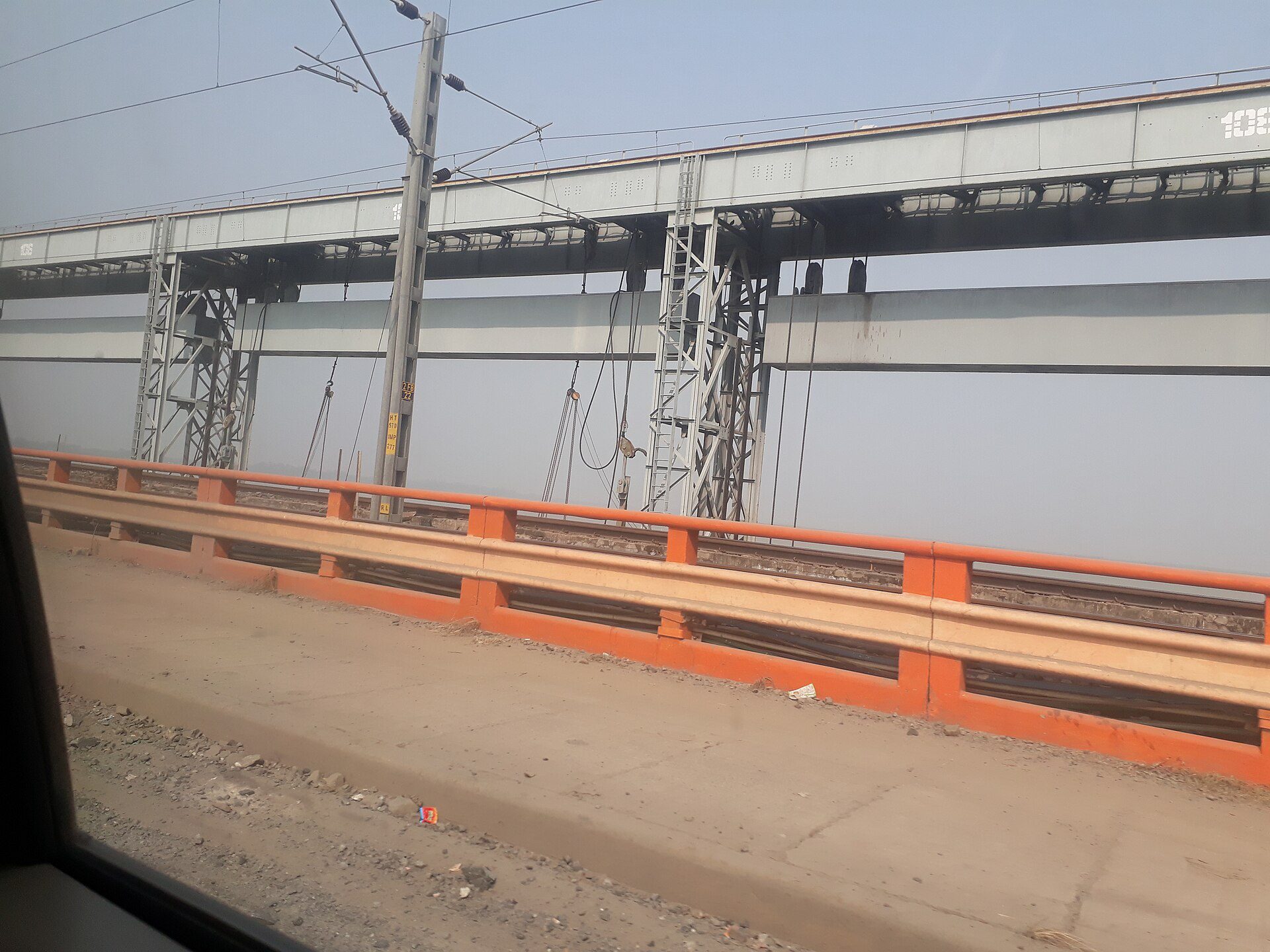
Farakka Barrage diverts Ganga water into the Bhagirathi-Hooghly to keep Kolkata port navigable.
How the sharing works, step by step
The treaty deals with one specific stretch: the Ganga water at Farakka Barrage in West Bengal. It does not cover every river the two countries share; India and Bangladesh share 54 rivers in all, and the Teesta agreement is a separate matter that has not been signed so far.
Sharing applies only in the dry season, from 1 January to 31 May each year. During this period the flow at Farakka is measured every 10 days, and each 10-day reading is used to apply the rules. When the flow is below 70,000 cusecs, India and Bangladesh each receive 50 percent. In addition, between 11 March and 10 May, the leanest weeks of the season, each country is assured 35,000 cusecs.
A cusec is a unit of river flow, cubic feet per second, so a figure such as 70,000 cusecs describes how much water passes the barrage every second. The treaty came into force on signing, and its 30-year term is what is now coming to an end.
Why Farakka Barrage matters
The barrage was built to send Ganga water into the Hooghly so that Kolkata port can stay operational. That purpose explains why West Bengal is central to the treaty, and why the dry-season flow numbers are watched so closely every year.
The renewal debate, in brief
As reported, renewal needs agreement between the two governments, and the talks are expected to use bilateral mechanisms such as the Joint Rivers Commission, which was set up in 1972. Different voices have raised different points: a parliamentary committee asked the government to start talks, an MP from Bihar wants his state represented because of low Ganga flow in Bihar between March and May, and Bangladesh’s minister spoke of aggressive bargaining. Whether talks have formally begun is a time-sensitive question, so check the latest official statement before relying on any date or status given here.
Quick revision points
- Treaty term: 30 years, due to end in December 2026 (12 Dec per most sources).
- Place: Farakka Barrage, West Bengal; season: 1 January to 31 May.
- Measurement: every 10 days; 50 percent each below 70,000 cusecs.
- 11 March to 10 May: 35,000 cusecs assured to each country.
- Joint Rivers Commission: 1972; shared rivers: 54.
Key terms
- Cusec: Cubic feet per second, unit of river flow.
Constitutional / Legal / Institutional framework
CLAT angle
- Treaty year, barrage, renewal mechanism, states affected.
Key facts
| Fact | Detail |
|---|---|
| 1972 | Joint Rivers Commission set up |
| 1977 | Earlier Ganga agreement (assured-flow clause) |
| 1996-12-12 | Ganga Water Treaty signed |
| 2026-12 | Treaty expires |
Mnemonic / memory hook
Remember the trap.
Researched 1 Nov 2026. Sources: Outlook India explainer + Deccan Chronicle (JD(U) MP) + ISAS Brief 1428 (unreadable PDF, existence only).
Sources
Primary documents and reporting listed in the fact base: outlookindia.com, deccanchronicle.com, en.wikipedia.org. Lead image: no ASSET-MANIFEST.json.
Free in the CLAT Gurukul app
These notes (as a PDF lesson) and the 10-question CBT are in the app under Current Affairs → 30 Oct 2026. Get the app on Google Play or open app.clatgurukul.com.
Practice Quiz — 10 CLAT-Style Questions
Click an option to reveal the answer and explanation.