VIDEO EXPLAINER | 30 OCTOBER 2026
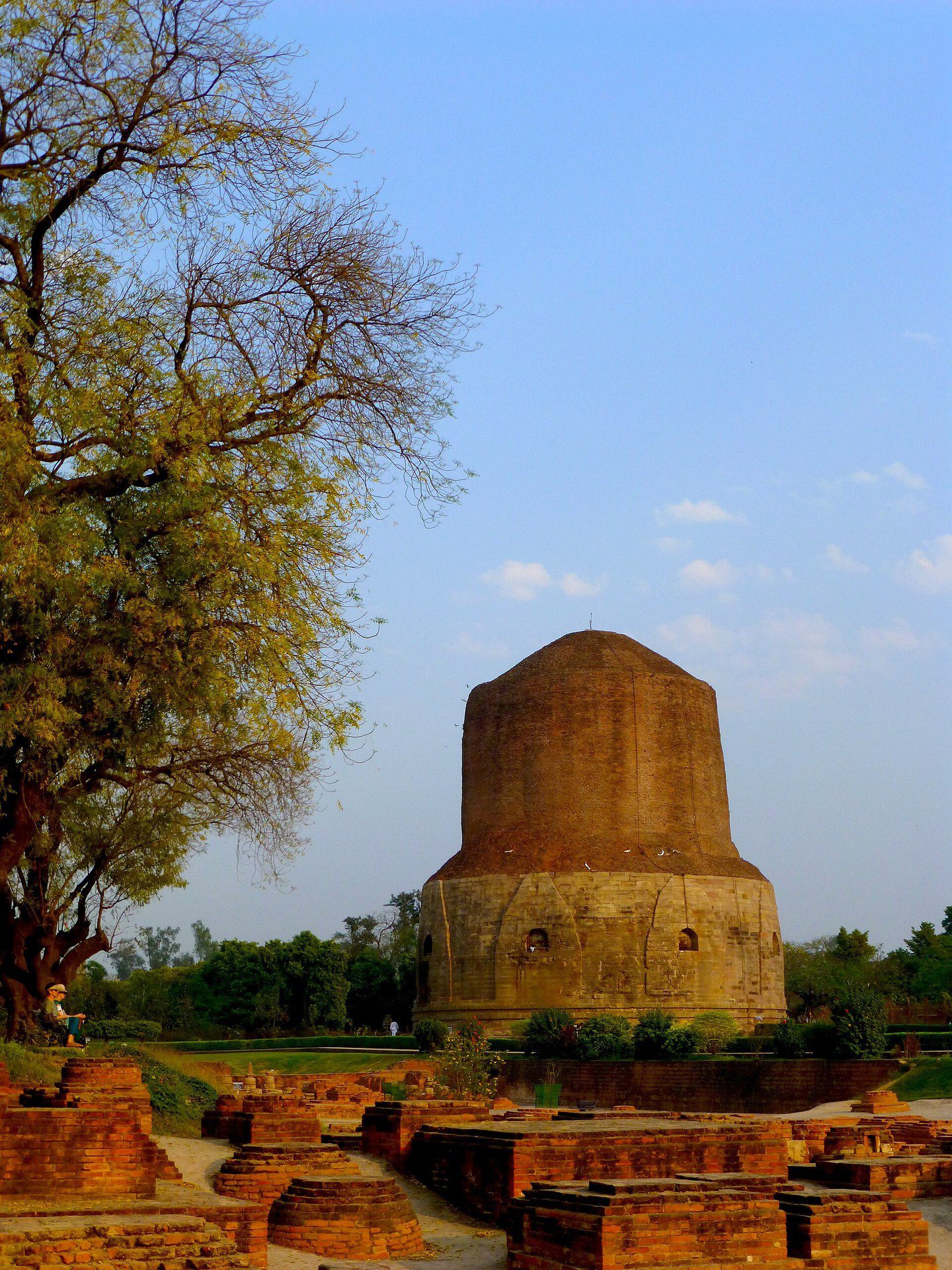
On 25 July 2026, at the 48th session of the UNESCO World Heritage Committee in Busan (Republic of Korea), the ‘Ancient Buddhist Site of Sarnath’ near Varanasi was inscribed on the World Heritage List, becoming India’s 45th property and Uttar Pradesh’s fourth. It was India’s official nomination for the 2025-26 cycle, cleared under cultural criteria (iii) and (vi) after an 18-month evaluation that included an ICOMOS mission in September 2025. The same Busan session added 25 new properties in all – among them France’s D-Day landing beaches, Greece’s Mount Olympus, Japan’s Asuka-Fujiwara capitals and South Sudan’s first-ever site – and came a year after the Maratha Military Landscapes of India were inscribed as India’s 44th.
What happened
South Sudan’s Boma-Badingilo Migratory Landscape, which hosts the largest terrestrial mammal migration on Earth, became that country’s first World Heritage Site at the Busan session.
Lebanon’s Mount Amel Castles – a serial property of five fortified sites in Jabal Amel (Beaufort, Toron, Dubieh, Maron and Chama castles) – and Palestine’s Sebastia, near Nablus, were taken up at Busan on 24 July 2026 on an emergency basis.
With Sarnath, three of the four principal Buddhist pilgrimage sites are now World Heritage properties: Lumbini (Nepal), the Mahabodhi Temple at Bodh Gaya (Bihar) and Sarnath (Uttar Pradesh).
India ranks sixth in the world by number of World Heritage Sites and second in the Asia-Pacific region.
Greece’s wider area of Mount Olympus (2,918 m, the country’s highest mountain) was inscribed on 26 July 2026 as a mixed – natural and cultural – World Heritage property.
Japan’s ‘Asuka-Fujiwara: Archaeological Sites of Japan’s Ancient Capitals and Related Properties’ was inscribed on 26 July 2026, covering the remains of Japan’s political and religious centre before the capital moved to Nara in 710 CE.
The Busan session produced first-ever inscriptions for three African states – Comoros, Sao Tome and Principe, and South Sudan.
The Committee at Busan also added six properties to the List of World Heritage in Danger.
Background and the rules behind it
The Convention Concerning the Protection of the World Cultural and Natural Heritage was adopted by the General Conference of UNESCO on 16 November 1972; 196 states are parties to it.
The World Heritage Committee is composed of representatives of 21 States Parties, elected from the 196 States Parties to the 1972 Convention, and meets once a year in ordinary session.
India accepted the World Heritage Convention on 14 November 1977, which made its sites eligible for the List.
The Lion Capital of the Ashokan pillar at Sarnath, excavated in 1904-06, was later adopted as India’s National Emblem and is preserved in the Sarnath Museum.
The Chaukhandi Stupa marks the spot where the Buddha is believed to have met his first five disciples; the Dhamek Stupa marks the site of the Dharma Chakra Pravartana, the first sermon, replacing an earlier structure commissioned by Ashoka; the Dharmarajika Stupa is traditionally ascribed to Emperor Ashoka.
Article 49 of the Constitution, a Directive Principle, obliges the State to protect every monument, place or object of artistic or historic interest declared to be of national importance from spoliation, disfigurement, destruction, removal, disposal or export.
Monuments in India are declared to be of national importance and protected under the Ancient Monuments and Archaeological Sites and Remains Act, 1958, administered by the ASI under the Ministry of Culture.
Key terms
- Outstanding Universal Value (OUV): Cultural or natural significance so exceptional that it transcends national boundaries and matters to all humanity.
- Serial property: A single World Heritage listing made up of two or more separate component sites linked by one theme.
- Buffer zone: An area around an inscribed property given extra legal protection to shield the site.
- Tentative List: A country’s own inventory of sites it intends to nominate; a site must sit here at least a year before nomination.
- Dharmachakra Pravartana: ‘Turning of the Wheel of the Law’ – the Buddha’s first sermon at Sarnath.
- ICOMOS: International Council on Monuments and Sites – UNESCO’s advisory body that evaluates cultural nominations.
Constitutional / Legal / Institutional framework
- Article 49, Constitution of India (Directive Principle): The State must protect monuments, places and objects of artistic or historic interest declared of national importance from spoliation, disfigurement, destruction, removal, disposal or export.
- Ancient Monuments and Archaeological Sites and Remains Act, 1958: Provides for declaring ancient monuments and archaeological sites to be of national importance, their protection by the ASI, and regulation of areas around them.
- Seventh Schedule, Union List Entry 67 / State List Entry 12: Monuments declared by Parliament to be of national importance are a Union subject; other monuments are with the States.
- World Heritage Convention 1972, Articles 1-2 and 11: Defines cultural and natural heritage and empowers the World Heritage Committee to maintain the World Heritage List and the List of World Heritage in Danger.
CLAT angle
- A news passage on the Busan session can be followed by count questions: India’s 45th site, UP’s fourth, the 44th (Maratha Military Landscapes), and the Convention year.
- Match-the-column: site to State (Sarnath-UP, Gingee Fort-Tamil Nadu, Khangchendzonga-Sikkim, Kalka-Shimla-Himachal Pradesh).
- Static-with-news: which body advises UNESCO on cultural nominations (ICOMOS), and how many States sit on the World Heritage Committee (21).
- Legal-reasoning style: a principle drawn from Article 49 or the AMASR Act 1958 applied to a site that is inscribed by UNESCO but not declared a monument of national importance (links to the Mangarh Dham story).
- Chronology: 1972 Convention, 1977 India’s accession, 1983 first Indian sites, 2024 Delhi session, 2025 Maratha forts, 2026 Sarnath.
Key facts
| Fact | Detail |
|---|---|
| 1972-11-16 | UNESCO General Conference adopts the World Heritage Convention |
| 1977-11-14 | India accepts the World Heritage Convention |
| 1983 | India’s first four sites inscribed: Ajanta, Ellora, Agra Fort, Taj Mahal |
| 1904 | Sarnath site museum established; Ashokan Lion Capital excavated 1904-06 |
| 1998-07-03 | Sarnath placed on India’s Tentative List |
| 1999 | Darjeeling Himalayan Railway inscribed; extended 2005 (Nilgiri) and 2008 (Kalka-Shimla) |
| 2024-07 | India hosts the 46th session of the World Heritage Committee in New Delhi |
| 2025-01 | Sarnath nomination dossier submitted for the 2025-26 cycle |
Mnemonic / memory hook
Remember the trap.
Do NOT write that Sarnath is ‘a UNESCO monument of national importance’ – World Heritage inscription and declaration as a monument of national importance under the AMASR Act 1958 are different things (see topic 10.23 on Mangarh Dham). Keep the two 2026 dates straight: 25 July for Sarnath, 26 July for the D-Day beaches, Mount Olympus and Asuka-Fujiwara. The session ran 19-29 July 2026 – do not date the whole session to 25 July. The Maratha Military Landscapes (India’s 44th) were inscribed in Paris at the 47th session, not at Busan.
Sources
Primary documents and reporting listed in the fact base: pib.gov.in, en.protothema.gr, japantimes.co.jp, africanparks.org, unesco.org, en.wikipedia.org, incredibleindia.gov.in, legislative.gov.in. Lead image: no ASSET-MANIFEST.json.
Free in the CLAT Gurukul app
These notes (as a PDF lesson) and the 10-question CBT are in the app under Current Affairs → 30 Oct 2026. Get the app on Google Play or open app.clatgurukul.com.
Practice Quiz — 10 CLAT-Style Questions
Click an option to reveal the answer and explanation.