VIDEO EXPLAINER | 30 OCTOBER 2026
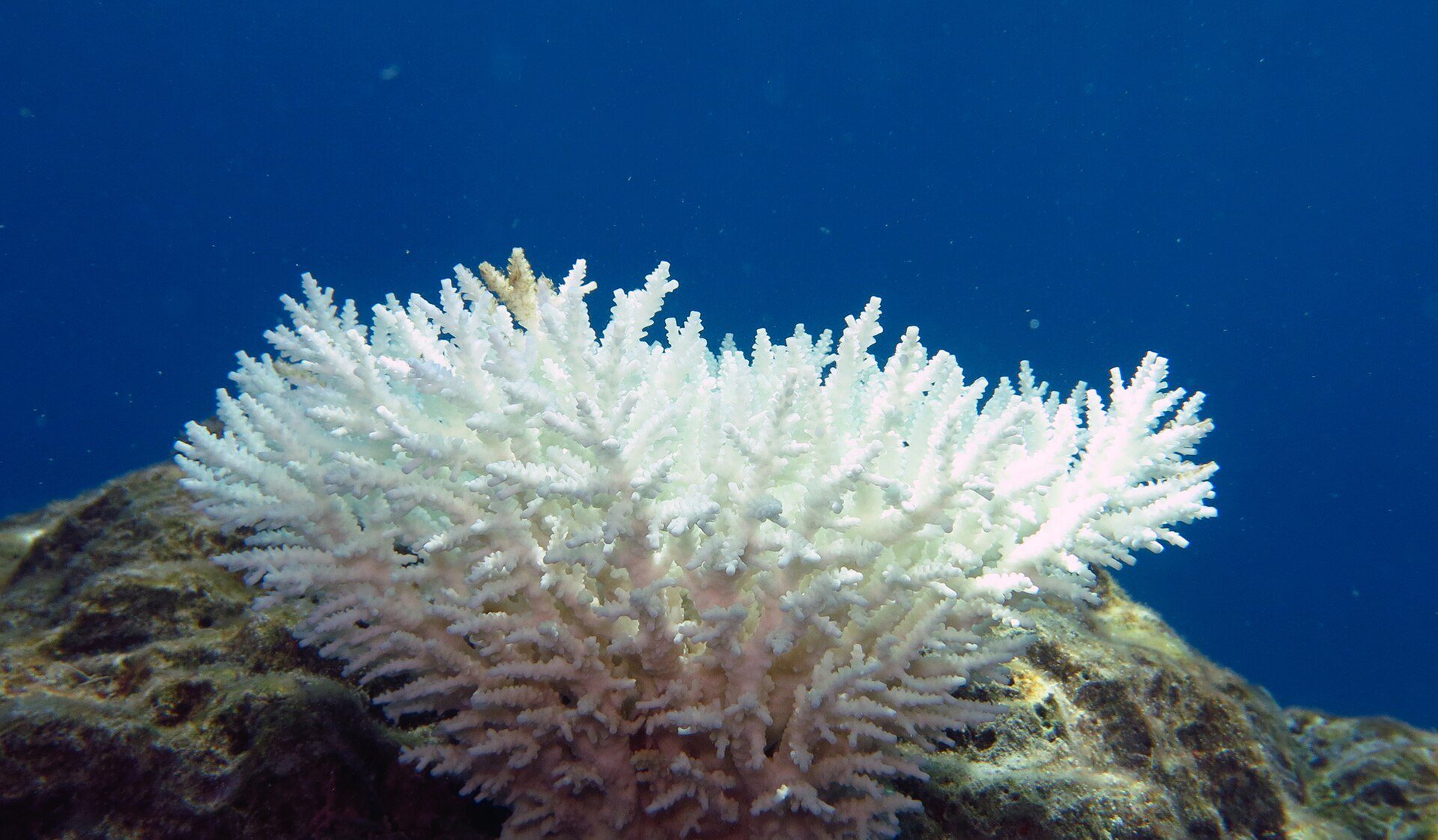
On 16 February 2026 a six-member National Green Tribunal bench refused to interfere with the 2022 environmental clearance for the Great Nicobar Island mega-project, citing its strategic importance and the safeguards in the clearance. In June 2026 monitoring-committee minutes and ZSI officials revealed the next step: about 16,150 coral colonies around the Galathea Bay transhipment-port site are to be moved to four sites on the island’s west coast, a plan that marine biologists call near impossible and that clashes with official maps showing no corals in the bay.
What happened
ZSI told the project’s biodiversity monitoring committee that coral colonies and giant clams from the Galathea Bay port area will be translocated to four new sites on the west coast of Great Nicobar.
ZSI said it would obtain approvals under the Wild Life (Protection) Act, 1972 before handling Schedule-I species such as coral colonies and giant clams.
The National Green Tribunal issued its order on 16 February 2026 refusing to interfere with the environmental clearance for the Great Nicobar project, saying ‘we do not find any good ground to interfere’.
The NGT bench had six members: Chairperson Justice Prakash Srivastava, Judicial Members Justices Dinesh Kumar Singh and Arun Kumar Tyagi, and Expert Members A. Senthil Vel, Afroz Ahmed and Ishwar Singh.
The NGT held that construction would be carried out only in CRZ-III areas and that no activity would take place in the most sensitive CRZ-IA areas, relying on site verification by the National Centre for Sustainable Coastal Management (NCSCM).
The NGT accepted that no coral reef exists within the project’s work area and approved the ZSI’s plan to translocate the scattered corals nearby.
Egis India holds the contract to design the project’s masterplan.
The project was initially driven by NITI Aayog; its implementing agency is now the Andaman and Nicobar Islands Integrated Development Corporation Ltd (ANIIDCO).
ZSI had submitted that it would translocate 16,150 coral colonies from Galathea Bay; 20,668 colonies lie in a 10-hectare area, and the remaining 4,518 are to be observed before a decision.
Background and the rules behind it
The Zoological Survey of India was established on 1 July 1916; its origin lies in the zoological section of the Indian Museum, Calcutta, set up in 1875.
The Shompen of Great Nicobar are hunter-gatherers numbering about 250 with little regular contact with outsiders; the Nicobarese are the island’s other indigenous community.
Vizhinjam in Kerala is India’s only operational transshipment port.
Key terms
- Coral translocation: Cutting coral colonies from a site that will be damaged and re-fixing them at a safer ‘recipient’ site.
- Transshipment port: A port where containers are moved from large ships to smaller vessels for onward delivery.
- CRZ-IA: Most ecologically sensitive coastal zone category (coral reefs, mangroves, turtle nesting grounds) where construction is barred.
- Capital dredging: Digging the seabed to create deep navigable channels for large ships; raises sediment and turbidity.
- Sundaland hotspot: Biodiversity hotspot covering the Malay peninsula, Sumatra, Borneo, Java and the Nicobar islands.
Constitutional / Legal / Institutional framework
- National Green Tribunal Act, 2010 s.14: NGT hears civil cases raising a substantial environmental question under Schedule I laws; six-month limitation plus 60 days.
- National Green Tribunal Act, 2010 s.20: NGT must apply sustainable development, precautionary and polluter-pays principles.
- National Green Tribunal Act, 2010 s.22: Appeal lies to the Supreme Court within 90 days.
- Wild Life (Protection) Act, 1972 (Schedule I): Corals and giant clams are Schedule-I species; handling them needs approval under the Act.
- Island Coastal Regulation Zone Notification, 2019: NGT held the project lies in CRZ-III and no work may occur in CRZ-IA areas.
CLAT angle
- Development-vs-ecology passage: strategic value vs coral reefs, turtles and the Shompen.
- Which forum cleared the project, bench size, date and the appeal route (s.22 NGT Act to the Supreme Court).
- Principles NGT must apply under s.20 — precautionary, polluter pays, sustainable development.
- Numbers: 16,150 colonies, four recipient sites on the west coast, Rs 81,000 crore, 130 sq km forest.
- Institution pairs: ZSI (1916, Kolkata, MoEFCC); NCSCM (Chennai); ANIIDCO; NITI Aayog origin.
Key facts
| Fact | Detail |
|---|---|
| 1916-07-01 | Zoological Survey of India established |
| 2010-06-02 | National Green Tribunal Act, 2010 enacted |
| 2013 | Great Nicobar Biosphere Reserve joins UNESCO MAB network |
| 2022-11-11 | MoEFCC grants environmental clearance |
| 2023-04-03 | NGT upholds EC on most counts, sets up high-powered committee |
| 2025-11-07 | Biodiversity committee’s 4th meeting: ZSI names four west-coast translocation sites |
| 2026-02-16 | Six-member NGT bench refuses to interfere with the project |
| 2026-06-10 | ANIIDCO makes the November minutes public |
Mnemonic / memory hook
Remember the trap.
The NGT order is dated 16 February 2026 — not June; the June 2026 news is the coral translocation plan. NGT Act Schedule I still names the ‘Forest (Conservation) Act, 1980’ in its original text, but that Act has been renamed the Van (Sanrakshan Evam Samvardhan) Adhiniyam, 1980 since 1 December 2023. The ZSI figure is 16,150 colonies (of 20,668 in a 10-ha area), not a round 16,000. The NGT found no coral ‘reef’ in the work area, only scattered corals — critics (Frontline) dispute this.
Sources
Primary documents and reporting listed in the fact base: downtoearth.org.in, indianexpress.com, tribuneindia.com, zsi.gov.in. Lead image: no ASSET-MANIFEST.json.
Free in the CLAT Gurukul app
These notes (as a PDF lesson) and the 10-question CBT are in the app under Current Affairs → 30 Oct 2026. Get the app on Google Play or open app.clatgurukul.com.
Practice Quiz — 10 CLAT-Style Questions
Click an option to reveal the answer and explanation.