VIDEO EXPLAINER | 30 OCTOBER 2026
The 2026 West Asia crisis – the US-Israel war on Iran, attacks on Red Sea shipping and a blockade of the Strait of Hormuz – put India’s energy defences to the test. India leaned on diversified crude sourcing (Russian crude crossed half of imports), the world’s fourth-largest refining system and its Strategic Petroleum Reserves, which were only about two-thirds full at 3.37 million tonnes of a 5.33 million tonne capacity. In July 2026 the Centre approved the Rs 84,084-crore Samudra Manthan scheme for offshore exploration, and the Indian National Science Academy proposed a four-pillar unified national energy policy – Adequacy, Access, Affordability and Appropriate Sustainability. The episode revives the lessons of the 1973 OAPEC embargo and the 1979 Iranian Revolution shock.
What happened
Coal remains India’s largest energy source: the IEA puts coal and coal products at about 48.4% of total energy demand in 2023, with crude oil second at 24.7%.
Even so, the top five suppliers – Russia, Iraq, Saudi Arabia, the UAE and the US – accounted for 82.7% of India’s crude in 2024-25, up from 75.23% in 2022-23, so the basket became more concentrated, not less.
India’s ethanol-blended petrol programme reached the 20% blending target in 2025-26, five years ahead of schedule, up from 1.5% in 2013-14.
The Indian National Science Academy (INSA) found that over 60 GW of commissioned renewable projects face transmission constraints, 25 GW of gas-based capacity is underused, and coal plants ran at only a 68.45% plant load factor in 2024-25.
West Asia still supplies roughly 60% of India’s energy import basket.
Rystad Energy estimated the US-Israel war on Iran damaged about US$58 billion of energy infrastructure – the single largest disruption of energy supplies ever recorded.
India’s renewable energy capacity rose 3.59 times, from 76.38 GW in March 2014 to 274.68 GW in March 2026; solar alone reached 162.15 GW by May 2026 (121.25 GW ground-mounted plus over 30 GW rooftop).
India’s imports of Russian crude rose from about 1 million barrels a day in February 2026 to a record 2.6 million bpd in June 2026, more than 50% of all oil imports.
On 31 July 2026 the government approved the Rs 84,084-crore ‘Samudra Manthan’ scheme to boost oil and gas exploration and production from India’s offshore basins.
Background and the rules behind it
IEA members must hold emergency oil stocks equal to at least 90 days of the previous year’s net oil imports.
India is an IEA Association country, a status it took on 30 March 2017; it is not a full member. The IEA has 32 members and 13 association countries.
OAPEC – the Organization of Arab Petroleum Exporting Countries, formed in 1968 and based in Kuwait – is a different body from OPEC, and it was OAPEC that imposed the 1973 embargo.
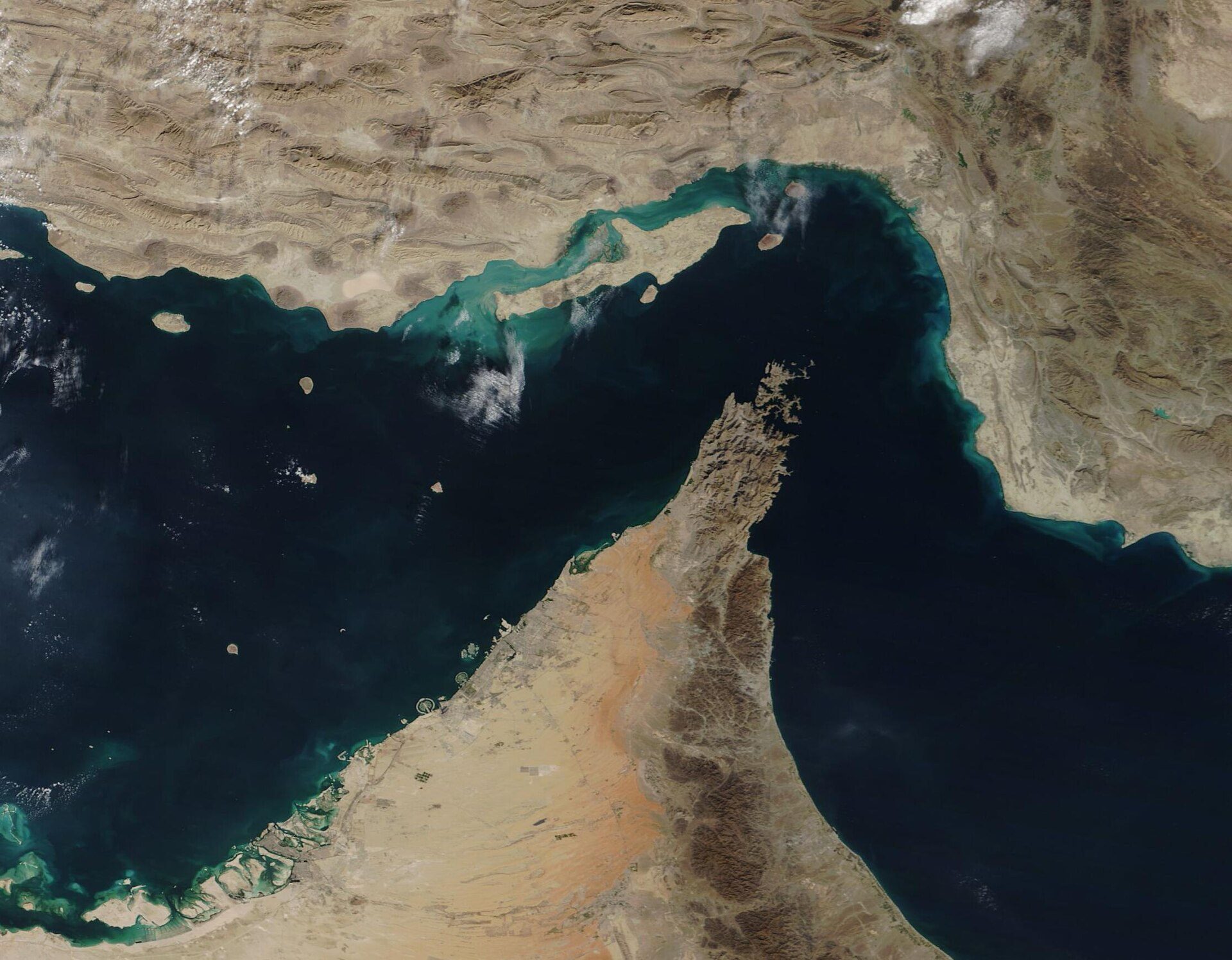
The Strait of Hormuz lies between Iran and Oman’s Musandam peninsula and is the only sea route from the Persian Gulf to the open ocean; about 25% of seaborne oil trade and 20% of the world’s LNG pass through it.
The Bab al-Mandab strait, between Yemen on one side and Djibouti and Eritrea on the other, links the Red Sea with the Gulf of Aden and the Indian Ocean and is only about 26 km wide at its narrowest.
The 1973 embargo was imposed in October 1973 by OAPEC – the ARAB oil exporters – on the US, the Netherlands and other states seen as backing Israel, and it ran until March 1974.
Key terms
- Strategic Petroleum Reserve: Government-owned emergency crude stored underground, released to cushion a sudden supply cut or price spike.
- Chokepoint: A narrow sea passage that carries a large share of trade, so closing it disrupts global supply – such as Hormuz or Bab al-Mandab.
- Import dependence: The share of a country’s consumption met by imports; India’s crude import dependence was about 88% in 2024-25.
- Ethanol blending: Mixing ethanol made from sugarcane, grain or biomass into petrol to cut crude imports and emissions; India reached 20% in 2025-26.
- Plant load factor: How much of a power plant’s capacity is actually used over a period; Indian coal plants ran at 68.45% in 2024-25.
- Second-generation ethanol: Ethanol made from crop residue, municipal waste or non-food biomass instead of sugarcane or food grain.
Constitutional / Legal / Institutional framework
- Oil Industry (Development) Act, 1974: Sets up the Oil Industry Development Board, which funds oil-sector development and is ISPRL’s parent.
- IEA emergency stockholding obligation (Agreement on an International Energy Program, 1974): Binds IEA members to hold oil stocks of at least 90 days of net imports and to release them jointly in a supply emergency. India, as an association country, is not bound by it.
- Essential Commodities Act, 1955 (India): Lets the Centre control the production, supply and distribution of essential commodities, including petroleum products, in a shortage.
CLAT angle
- Map-and-place question: the three SPR caverns are Visakhapatnam (Andhra Pradesh), Mangaluru and Padur (Karnataka); Chandikhol in Odisha is planned.
- Cause-and-effect passage: the 1973 embargo and the 1979 revolution, and how an oil shock passes into inflation, the import bill and the balance of payments.
- Organisation confusion to test: OPEC (1960, Vienna) vs OAPEC (the 1973 embargo) vs the IEA (1974, Paris, consumers’ body). India is in none of them as a full member.
- Numbers a passage can hang questions on: 88% import dependence (2024-25), 5.33 MT SPR capacity and 3.37 MT filled, 20% ethanol blending, 274.68 GW renewable capacity.
- Policy reasoning: why building capacity is not the same as building security – stranded renewable capacity, underused gas plants and a reserve only two-thirds full.
Key facts
| Fact | Detail |
|---|---|
| 1960-09 | OPEC founded at the Baghdad Conference |
| 1973 | OAPEC embargo during the Arab-Israeli war; prices jump 70% |
| 1974-11-18 | IEA created in response to the oil shock |
| 1979 | Iranian Revolution triggers the second oil shock; prices reach $34 by mid-1980 |
| 2004-06-16 | ISPRL incorporated to build India’s strategic reserves |
| 2017-03-30 | India becomes an IEA Association country |
| 2026-07-28 | Cabinet approves the Rs 84,084-crore Samudra Manthan offshore exploration scheme |
| 2026 | West Asia crisis: Hormuz blockade and Red Sea attacks test India’s energy defences |
Mnemonic / memory hook
Remember the trap.
(1) The INSA four pillars are Adequacy, Access, Affordability, Appropriate Sustainability – NOT ‘SPR, ethanol, renewables’. That is a common error in prep notes. (2) SPR capacity 5.33 MT is Phase I only, at THREE caverns; Chandikhol is planned, not built. (3) The 1973 embargo was imposed by OAPEC (Arab producers), not by OPEC as a whole – a favourite trap.
Sources
Primary documents and reporting listed in the fact base: UE Sep 2026 p.64, UE May 2026 p.18, UE May 2026 p.17-18, UE Sep 2026 p.65, UE May 2026 p.19 (citing the IEA), en.wikipedia.org. Lead image: no ASSET-MANIFEST.json.
Free in the CLAT Gurukul app
These notes (as a PDF lesson) and the 10-question CBT are in the app under Current Affairs → 30 Oct 2026. Get the app on Google Play or open app.clatgurukul.com.
Practice Quiz — 10 CLAT-Style Questions
Click an option to reveal the answer and explanation.