

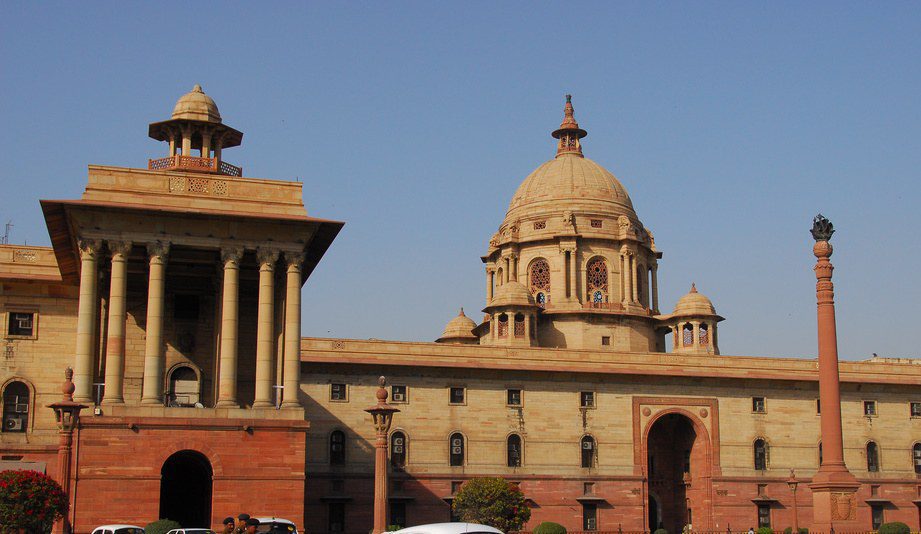
Watch the video explainer · open on YouTube
VIDEO EXPLAINER | 9 OCTOBER 2026
At its 57th meeting, held in New Delhi on 8 October 2026 under the chairpersonship of Union Finance Minister Nirmala Sitharaman, the GST Council recommended the complete withdrawal of arrest powers under GST by omitting section 69 of the CGST Act, 2017. It also recommended raising the monetary threshold for prosecution to ₹5 crore. The key point: this is a recommendation, not yet law. Tax officers’ power to arrest under section 69 remains on the statute book until Parliament amends the CGST Act.
What the Council recommended
According to the official release issued by the Press Information Bureau (Ministry of Finance) on 8 October, the Council recommended:
- Omission of section 69 of the CGST Act, which is the provision that gives the power to arrest.
- Raising the monetary threshold for prosecution “from ₹1 crore to ₹5 crore”.
- Other changes to section 132 (the offences section): omitting one offence clause, narrowing others, and “rationalizing the amount of punishment”.
- Cutting the maximum general penalty under section 125 from ₹25,000 to ₹10,000.
The release describes the aim as “a progressive and trust-based tax regime, while retaining effective deterrence against fraud and evasion”.
A note on the ₹1 crore figure. Since the Finance Act, 2023 (in force from 1 October 2023, on the recommendation of the 48th GST Council), prosecution for most offences already begins only above ₹2 crore; the ₹1 to 2 crore tier survives only for fake invoicing. So the safe way to state the change is: the Council recommended raising the prosecution threshold to ₹5 crore.
Why it is not yet law
The release itself says the recommendations “would be given effect through the relevant circulars/ notifications/ law amendments which alone shall have the force of law”. Section 69 is part of an Act of Parliament. Deleting it needs an amendment to the CGST Act by Parliament, and each State must amend its own SGST Act. The release does not say which legislative vehicle will be used, and it gives no effective date for the arrest or prosecution changes.
The constitutional reason is explained in Union of India v. Mohit Minerals (19 May 2022, a three-judge bench led by Justice D.Y. Chandrachud). The Supreme Court held that GST Council recommendations have only persuasive value and do not bind Parliament or the State legislatures, because Article 246A gives both a simultaneous power to tax and Article 279A contains no non-obstante clause. The recommendations do bind the government’s rule-making. The Council can recommend; only Parliament can delete section 69.
The law as it stands today
Under section 69(1), the Commissioner may, by order, authorise a central tax officer to arrest a person if he has “reasons to believe” that the person committed certain serious offences under section 132; in practice, evasion above ₹2 crore or a repeat offence. Under section 69(2), the person must be told the grounds of arrest and produced before a Magistrate within 24 hours.
Section 132 sets graded punishments: evasion above ₹5 crore can attract up to five years and a fine; above ₹2 crore up to ₹5 crore, up to three years; and the ₹1 to 2 crore tier, up to one year, only for fake invoices. Under section 132(5), the most serious offences above ₹5 crore are cognisable and non-bailable; under section 132(4), all other offences are non-cognisable and bailable.
What the Supreme Court said about arrest
In Radhika Agarwal v. Union of India (27 February 2025), a three-judge bench led by Chief Justice Sanjiv Khanna unanimously upheld the validity of sections 69 and 70 of the CGST Act, holding that Parliament’s power under Article 246A covers arrest and summons. But the Court built in safeguards: arrest cannot rest on mere suspicion; the Commissioner’s “reasons to believe” must be recorded and based on material; the arrest safeguards of the criminal procedure code (now the BNSS) apply to GST arrests; anticipatory bail is available even before an FIR; and GST officers are not “police officers”.
The GST Council in brief
The GST Council is a constitutional body under Article 279A, inserted by the Constitution (101st Amendment) Act, 2016, which also inserted Article 246A. GST came into force on 1 July 2017. The Union Finance Minister chairs the Council. Its members are the Union Minister of State for Revenue or Finance and each State’s Finance Minister (or a nominated minister). The quorum is one-half of the members. A decision needs at least three-fourths of the weighted votes of members present and voting, with the Centre’s vote worth one-third and all States together two-thirds. Neither side can carry a decision alone.
Constitutional and legal framework
- Article 279A: the GST Council (101st Amendment, 2016); chaired by the Union Finance Minister; three-fourths weighted vote (Centre one-third, States two-thirds).
- Article 246A: simultaneous power of Parliament and the States to tax goods and services.
- CGST Act, 2017, s.69: power to arrest on “reasons to believe”; Magistrate within 24 hours.
- CGST Act, 2017, s.132: graded offences and punishments; s.132(5) cognisable and non-bailable above ₹5 crore.
- Mohit Minerals (2022): Council recommendations are persuasive, not binding on legislatures.
- Radhika Agarwal (2025): arrest power upheld, with safeguards; no arrest on mere suspicion.
The CLAT angle
- Legal Reasoning: a passage may ask whether a Council recommendation, by itself, removes a statutory power. Apply Mohit Minerals: it does not; Parliament must amend the Act.
- Distinguish a recommendation from an amendment from a notification: only the last two carry the force of law.
- GK: Article 279A, the 101st Amendment (2016), the chair of the Council, and the one-third / two-thirds vote split.
- Safeguards on arrest from Radhika Agarwal are ideal material for a principle-and-facts question.
Key facts
| Fact | Detail |
|---|---|
| Meeting | 57th GST Council, New Delhi, 8 Oct 2026 |
| Chair | Union Finance Minister Nirmala Sitharaman |
| Arrest power | Council recommended omitting s.69 of the CGST Act, 2017 |
| Prosecution threshold | Recommended to rise to ₹5 crore |
| Legal status | Recommendation only; Parliament must amend the CGST Act (States, their SGST Acts) |
| s.69(2) safeguard | Grounds of arrest + Magistrate within 24 hours |
| Radhika Agarwal | 27 Feb 2025; three judges; arrest power upheld with safeguards |
| Mohit Minerals | 19 May 2022; Council recommendations not binding on legislatures |
| GST Council | Article 279A; 101st Amendment Act, 2016 |
| Voting | Three-fourths weighted vote; Centre one-third, States two-thirds |
Memory hook
“Council proposes, Parliament disposes.” The GST Council (Article 279A) can only recommend; after Mohit Minerals (2022), only Parliament can delete section 69 from the CGST Act. For the vote, remember “1/3 + 2/3, need 3/4”: the Centre alone (one-third) or the States alone (two-thirds) can never reach three-fourths.
Sources
Press Information Bureau, Ministry of Finance, “Recommendations of the 57th Meeting of the GST Council” (8 Oct 2026); PTI and India TV reports of 8 Oct 2026; the CGST Act, 2017 (sections 69, 125, 132); the Constitution of India (Articles 246A and 279A) and the Constitution (101st Amendment) Act, 2016; SC Observer on Radhika Agarwal v. Union of India (2025); analyses of Union of India v. Mohit Minerals (2022).
Free in the CLAT Gurukul app
These notes (as a PDF lesson) and the 10-question CBT are in the app under Current Affairs → 9 Oct 2026. Get the app on Google Play or open app.clatgurukul.com.
Practice Quiz — 10 CLAT-Style Questions
Click an option to reveal the answer and explanation.






