Watch the video explainer · open on YouTube
VIDEO EXPLAINER | 9 OCTOBER 2026
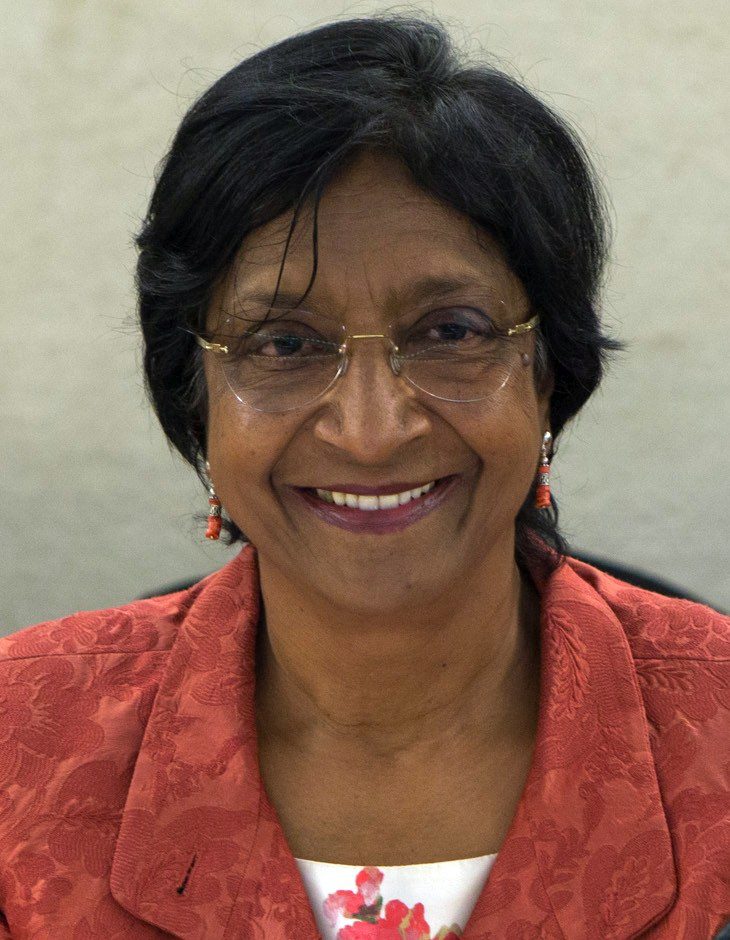
The Nobel Peace Prize 2026 has been awarded to Navanethem “Navi” Pillay of South Africa, a lawyer and judge whose family is of Indian Tamil origin. The Norwegian Nobel Committee announced the prize in Oslo on 9 October 2026, honouring her “efforts to promote peace and international law”. This explainer sets out who she is, why the Committee chose her, and the facts about the prize that exams like to test.
Who is Navi Pillay?
According to the Committee’s press release, Navi Pillay was born under apartheid in Durban, South Africa, into a family of Indian Tamil origin. Her early work as a lawyer was defending Nelson Mandela and others who stood up against apartheid. That beginning matters: her career started in a country where the law itself was used to divide people by race, and she spent it using the law to defend those who challenged that system.
From the courtroom to the world stage
Pillay then served as a judge at three levels:
- the High Court of South Africa;
- the International Criminal Tribunal for Rwanda (ICTR); and
- the International Criminal Court (ICC).
She was also the UN High Commissioner for Human Rights, and until recently she chaired the UN Commission of Inquiry on the Occupied Palestinian Territory. The press release adds that she now serves as a judge before the International Court of Justice in the genocide case concerning Myanmar.
Why the prize: the Rwanda tribunal
The Committee singled out one achievement. The Rwanda tribunal (ICTR) established that rape and sexual violence can constitute a crime against humanity and genocide, and the Committee said that “her influence was a significant factor” in this. In plain terms: sexual violence in war is not a side effect of conflict, it can be one of the gravest crimes known to international law, and those who commit it can be held to account on that basis.
This is the link between law and peace that the Committee chose to reward. Its citation does not speak of a ceasefire or a peace treaty; it speaks of peace and international law. The idea is that courts which hold individuals responsible for the worst crimes help build the conditions for lasting peace.
The prize itself: facts to remember
The Nobel Peace Prize is awarded in Oslo by the Norwegian Nobel Committee. The award ceremony is held on 10 December, the anniversary of Alfred Nobel’s death. The first Nobel Peace Prize was awarded in 1901, 125 years before the 2026 award.
How to revise an international-law laureate
For a GK question on a prize winner, build a four-line card and revise it until you can say it without looking:
- Who and where from: Navi Pillay, South Africa (Indian Tamil family; born in Durban).
- Why: efforts to promote peace and international law.
- Career markers: defended Mandela and other anti-apartheid activists; judge at the South African High Court, the ICTR and the ICC; UN High Commissioner for Human Rights.
- One standout fact: the ICTR established that rape and sexual violence can be genocide and a crime against humanity.
Then add the fixed facts about the prize: awarded by the Norwegian Nobel Committee, in Oslo, ceremony on 10 December, first awarded in 1901. Questions usually pair a laureate with a country, an institution or the citation wording, so learn those three links precisely.
Institutional framework
- Norwegian Nobel Committee, Oslo: awards the Peace Prize; ceremony on 10 December.
- International Criminal Tribunal for Rwanda (ICTR): Pillay served as a judge; established that rape and sexual violence can constitute genocide and a crime against humanity.
- International Criminal Court (ICC): Pillay served as a judge.
- UN High Commissioner for Human Rights: a post Pillay held.
- High Court of South Africa: where her judicial career began.
The CLAT angle
- GK: laureate, country and citation (“peace and international law”) are the most likely pairing.
- Legal Reasoning: a passage on international criminal law may test whether sexual violence can amount to genocide or a crime against humanity, the principle the ICTR established.
- Watch the institution names: ICTR (a tribunal for Rwanda), ICC (a permanent criminal court) and the UN human rights office are different bodies.
- Prize facts: Oslo, Norwegian Nobel Committee, 10 December, first awarded in 1901.
Key facts
| Fact | Detail |
|---|---|
| Laureate | Navanethem “Navi” Pillay |
| Country | South Africa (family of Indian Tamil origin) |
| Born | Durban, under apartheid |
| Citation | Efforts to promote peace and international law |
| Early work | Defended Nelson Mandela and other anti-apartheid activists |
| Judicial posts | High Court of South Africa; ICTR; ICC |
| UN role | UN High Commissioner for Human Rights |
| Announced | 9 Oct 2026, Oslo, by the Norwegian Nobel Committee |
| Ceremony | 10 December (Alfred Nobel’s death anniversary) |
| First Peace Prize | 1901, 125 years earlier |
Memory hook
“D-R-I-U: Durban, Rwanda, ICC, UN.” Her path in four letters: Durban (born under apartheid), Rwanda tribunal (rape as genocide), International Criminal Court (judge), UN (High Commissioner for Human Rights). And for the prize: “Oslo, 10 December, since 1901”.
Sources
The Norwegian Nobel Committee’s press release on the 2026 Nobel Peace Prize (NobelPrize.org, 9 Oct 2026); CBS News and France 24 (9 Oct 2026); NobelPrize.org facts on the award ceremony.
Free in the CLAT Gurukul app
These notes (as a PDF lesson) and the 10-question CBT are in the app under Current Affairs → 9 Oct 2026. Get the app on Google Play or open app.clatgurukul.com.
Practice Quiz — 10 CLAT-Style Questions
Click an option to reveal the answer and explanation.