CURRENT AFFAIRS | 07 OCTOBER 2026
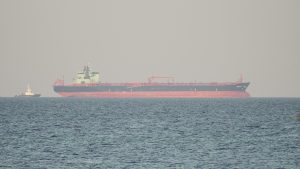
On Tuesday, 6 October 2026, the Panama-flagged commercial vessel MT On Peace (IMO 9893204) was struck by a projectile off the coast of Oman while transiting the Strait of Hormuz. According to the statement of the Ministry of External Affairs (MEA), as reported by The Hindu and PTI, the ship carried a crew of 19, of whom 17 were Indian nationals. The MEA said that 12 crew members were injured, including 11 Indian nationals. The injured seafarers were evacuated with the assistance of Omani authorities and were receiving medical treatment in Khasab, Oman.
India condemned the attack. The MEA described the continuing attacks on shipping in the region as a matter of deep concern and said that the targeting of commercial shipping, seafarers and civilian infrastructure in the region must end, and that navigation and commerce through international waterways must be restored at the earliest. The official statement did not name any attacker, and this article does not attribute the strike to any state or group. For an exam aspirant, the incident sits at the crossing point of four syllabus areas: world geography, the international law of the sea, India’s energy security and the welfare of Indian seafarers abroad.
What happened, in sequence
The sequence, as officially stated, is simple and worth memorising accurately. A merchant tanker flying the flag of Panama was transiting the Strait of Hormuz when it was hit. Most of its crew were Indian. Twelve sailors were hurt, eleven of them Indian. Oman, the coastal state on the southern side of the strait, helped evacuate them, and they were taken to Khasab for treatment. New Delhi’s response came through the MEA, the ministry responsible for consular protection of Indian nationals abroad. The statement did three things: it condemned the attack, it recorded the crew and injury figures, and it called for freedom of navigation to be restored.
Notice what the statement does not do. It does not identify who fired the projectile. Careful reading of official text — separating what is stated from what is merely assumed — is precisely the skill the CLAT current-affairs section tests. A question that asks “which country attacked the vessel” would have no answer in the passage, and the correct inference would be that the passage is silent on it.
The geography: why Hormuz matters
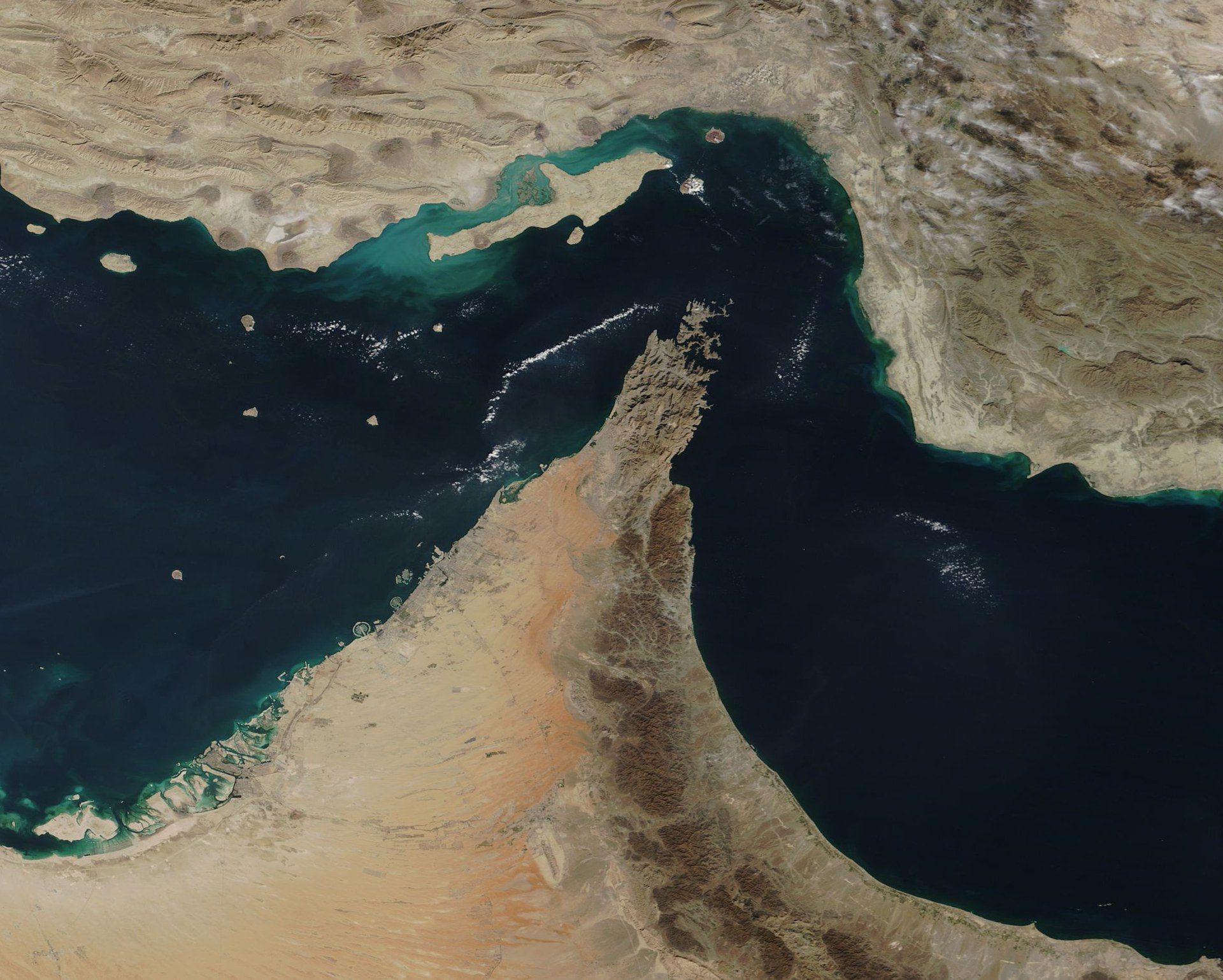
The Strait of Hormuz is the narrow sea passage that connects the Persian Gulf with the Gulf of Oman, which in turn opens into the Arabian Sea and the wider Indian Ocean. On its northern shore lies Iran; on its southern shore lies the Musandam Peninsula, an exclave of Oman separated from the rest of the country by territory of the United Arab Emirates. Khasab, where the injured sailors were treated, is the principal town of Musandam. This explains why Omani authorities were the natural first responders.
The strait is the only sea outlet for the oil and gas exports of the Gulf producers located inside the Persian Gulf. That makes it one of the world’s most important energy chokepoints — a narrow passage through which a large share of seaborne crude oil and liquefied natural gas must move. Any disruption raises freight and insurance costs and pushes up energy prices for importing countries. India, which imports most of the crude oil it consumes and sources a large part of it from West Asian suppliers, is directly exposed to that risk.
Constitutional / Legal Framework
The governing treaty is the United Nations Convention on the Law of the Sea, 1982 (UNCLOS), often called the “constitution of the oceans”. India ratified UNCLOS in 1995. UNCLOS sets a territorial sea of up to 12 nautical miles, a contiguous zone up to 24 nautical miles and an Exclusive Economic Zone (EEZ) up to 200 nautical miles from the baselines. Where a strait used for international navigation is overlapped by the territorial seas of the coastal states — as at Hormuz — Part III of UNCLOS grants all ships and aircraft the right of transit passage: continuous and expeditious passage that the coastal states may not suspend. This is stronger than the ordinary right of innocent passage through a territorial sea, which can be temporarily suspended for security reasons. A ship has the nationality of the state whose flag it flies (Article 91), and the flag state exercises jurisdiction and control over it (Article 94). That is why the vessel is described as “Panama-flagged” even though most of its crew were Indian: Panama is the flag state, while India’s role is the consular protection of its nationals on board.
Flags of convenience and Indian seafarers
The case also illustrates the practice of open registries, popularly called “flags of convenience”. Panama runs one of the largest ship registries in the world, and ships owned or operated from many countries register there. The result is a common pattern in modern shipping: the owner, the flag state and the crew may each belong to a different country. For India, the crew is the decisive link. India is among the world’s major suppliers of trained seafarers, and Indian officers and ratings serve on foreign-flagged ships across the Gulf trade. When such a ship is attacked, the flag state carries the legal responsibility, but the welfare of the crew becomes a matter for India’s diplomatic missions and the MEA.
This is why the statement focused so specifically on the number of Indian nationals on board and injured. The crew figures — 19 on board, 17 Indian; 12 injured, 11 Indian — are the hard numbers of the story and are exactly the sort of figures a GK question would test.
Analysis: freedom of navigation and India’s interests
India’s position, as expressed in the statement, rests on a principle it has consistently backed in multilateral forums: freedom of navigation and the security of international sea lanes. As a major trading nation that depends on sea routes for both energy imports and exports, India has a structural interest in keeping waterways such as Hormuz, Bab-el-Mandeb and the Malacca Strait open. An attack on a commercial vessel, whoever carries it out, threatens three Indian interests at once — the lives of Indian sailors, the price and availability of energy, and the predictability of trade.
There is also a legal point that a reasoning passage could draw out. Transit passage under UNCLOS is a right that coastal states may not suspend; but the Convention is a framework for peacetime navigation and does not by itself prevent armed attacks. Where the attacker is unidentified, attribution — and therefore state responsibility — becomes the central difficulty. A passage could ask a candidate whether the injured crew’s home state, the flag state or the coastal state is best placed to act, and the answer would depend on which principle the passage applies: nationality of the ship (flag state), nationality of the persons (India) or territorial location (the coastal state).
The CLAT Angle
Expect two kinds of questions. Direct GK: which two water bodies the Strait of Hormuz connects (Persian Gulf and Gulf of Oman); which country’s authorities evacuated the crew (Oman); where they were treated (Khasab); the vessel’s flag (Panama); how many Indians were injured (11). Legal reasoning: a passage on UNCLOS may define transit passage and innocent passage and ask which applies to a strait used for international navigation, or may state the flag-state principle and ask which country has jurisdiction over a ship whose crew is largely foreign. Read the official statement carefully — it does not name an attacker, and an option that does so would be an unsupported inference.
Key Facts
- Date: Tuesday, 6 October 2026.
- Vessel: MT On Peace (IMO 9893204), a Panama-flagged commercial vessel.
- Location: off the coast of Oman, while transiting the Strait of Hormuz.
- Cause: struck by a projectile; the attacker was not named in the MEA statement.
- Crew: 19 in total, including 17 Indian nationals.
- Injured: 12 crew members, including 11 Indian nationals.
- Evacuation: with the assistance of Omani authorities; treatment in Khasab, Oman.
- India’s response: the MEA condemned the attack and called for navigation through international waterways to be restored.
- Geography: Hormuz links the Persian Gulf with the Gulf of Oman; Iran to the north, Oman’s Musandam Peninsula to the south.
- Law: UNCLOS 1982 (ratified by India in 1995); transit passage in straits under Part III; flag state jurisdiction under Articles 91 and 94.
Bottom line
The attack on MT On Peace is a reminder that India’s security interests extend well beyond its land borders — into the sea lanes that carry its energy and the merchant fleets that employ its sailors. For the exam, anchor the event in three layers: the facts (19/17 crew, 12/11 injured, Panama flag, Khasab), the geography (Persian Gulf to Gulf of Oman, Musandam) and the law (UNCLOS, transit passage, flag state). Each layer can produce an independent question, and together they make a strong legal-reasoning passage.
Memory Hook / Mnemonic
“19-17, 12-11, Panama flag, Oman help” — 19 crew, 17 Indian; 12 injured, 11 Indian; flag Panama; Omani evacuation to Khasab. For the strait, remember “P-H-O”: Persian Gulf → Hormuz → Gulf of Oman. For the law: “Straits get TRANSIT, seas get INNOCENT”.
Practice Quiz — 10 CLAT-Style Questions
Click an option to reveal the answer and explanation.