

VIDEO EXPLAINER | 12 OCTOBER 2026
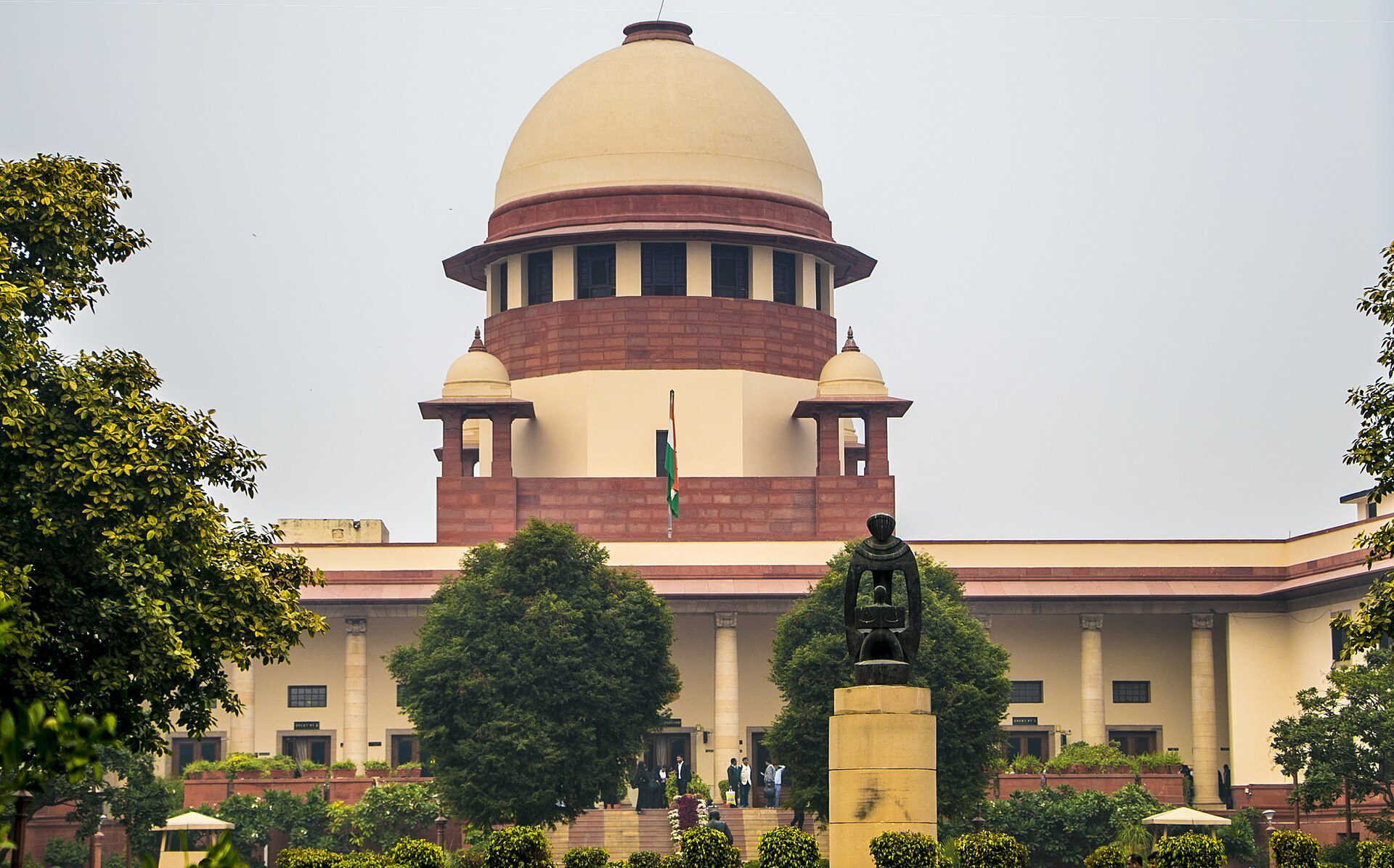
On Sunday, 11 October 2026, the Supreme Court of India held a special hearing on protest-related detentions and curbs in Delhi. A bench of Justice Joymalya Bagchi and Justice V. Mohana heard a contempt petition and a habeas corpus petition, issued notice, and directed: “There shall be no illegal detention, particularly in cases of peaceful unarmed assemblage of people beyond the area where Section 163 BNSS is in operation.” The matter is listed again on 13 October 2026. The order raises a basic question every citizen should be able to answer: how long can the police hold you, and what are your rights?
1. What the Supreme Court did on 11 October
The Court heard (i) a contempt petition alleging violation of its own order of 9 October 2026 on metro, rail and traffic curbs, and (ii) a writ petition (criminal) in the nature of habeas corpus. It issued notice to the alleged contemnors, who must file a counter affidavit and a compliance report by 13 October, and “similarly” issued notice in the habeas corpus petition. Among its directions: metro and rail services to run normally unless regulated under Article 19(2), internet services to function unhindered, and no illegal detention of peaceful, unarmed assemblies outside the area of the Section 163 BNSS prohibitory order. The Court made no finding that anyone had been illegally detained; the Union’s law officer denied the allegation.
2. Article 22: rights on arrest
Article 22(1): a person who is arrested must be informed, as soon as may be, of the grounds of arrest, and cannot be denied the right to consult and be defended by a legal practitioner of his choice. Article 22(2): every arrested person must be produced before the nearest magistrate within 24 hours, excluding the time needed for the journey, and cannot be kept in custody beyond that without a magistrate’s authority. Article 22(3) excludes two groups from these two clauses: an enemy alien, and a person held under a preventive detention law.
3. BNSS: the 24-hour rule in the new code
The Bharatiya Nagarik Suraksha Sanhita, 2023 (BNSS), in force from 1 July 2024, carries the same rule. Section 58 (“Person arrested not to be detained more than twenty-four hours”) bars detention beyond 24 hours, excluding journey time, without a special order of a Magistrate under Section 187. Section 47 requires the arrested person to be told the grounds of arrest and, for a bailable offence, the right to bail; Section 48 requires a relative or friend to be informed; Section 38 allows meeting an advocate during interrogation, though not throughout. For crowd situations, Section 172 lets police detain or remove a person who disregards lawful directions, but in petty cases the person must be released as soon as possible within 24 hours.
4. Preventive detention is different
Preventive detention holds a person to prevent a future act, not to try a past offence. Article 22(4): no such law may authorise detention beyond 3 months unless an Advisory Board (persons qualified to be High Court judges) reports sufficient cause before the 3 months expire. Article 22(5): the grounds must be communicated as soon as may be, with the earliest opportunity to make a representation.
5. Three landmark judgments
Joginder Kumar v. State of U.P. (1994): “No arrest can be made because it is lawful for the police officer to do so.” The existence of the power to arrest is one thing; the justification for using it is another. The arrested person may have a friend or relative informed.
D.K. Basu v. State of West Bengal (decided December 1996, reported (1997) 1 SCC 416) laid down 11 requirements for every arrest, including visible name tags, a witnessed and countersigned arrest memo with date and time, informing a friend or relative, and a medical examination every 48 hours in custody. Non-compliance invites departmental action and contempt.
Arnesh Kumar v. State of Bihar (2014): for offences punishable with up to 7 years, police must not arrest automatically and magistrates must not authorise detention “casually and mechanically”; a checklist and a notice of appearance are required. The BNSS now writes these safeguards into the statute (Sections 35, 36, 38 and 48).
6. The remedy: habeas corpus
If a detention is illegal, the remedy is the writ of habeas corpus (“produce the body”): the court asks the authority to produce the person and justify the detention. The Supreme Court issues it under Article 32 to enforce fundamental rights; High Courts issue it under Article 226, which also covers “any other purpose” and is therefore wider. All of this protects Article 21: no person shall be deprived of personal liberty except according to procedure established by law.
Constitutional and legal framework
- Article 21: life and personal liberty, only by procedure established by law.
- Article 22(1)–(2): grounds, lawyer of choice, magistrate within 24 hours.
- Article 22(4)–(7): preventive detention, 3 months, Advisory Board, grounds and representation.
- Articles 32 and 226: writs including habeas corpus (Supreme Court and High Courts).
- BNSS, 2023: ss. 35, 36, 38, 47, 48, 58, 163, 172, 187.
- Cases: Joginder Kumar (1994), D.K. Basu ((1997) 1 SCC 416), Arnesh Kumar (2014).
CLAT angle
- Legal reasoning: apply Article 22(2) to a fact pattern: was the person produced within 24 hours, excluding journey time?
- Arrest vs preventive detention: Article 22(3) takes preventive detention out of clauses (1) and (2); 22(4)–(7) give separate safeguards.
- Article 32 vs Article 226: 226 is wider because it extends to “any other purpose”.
- Old vs new code: CrPC 144 is now BNSS s.163; the 24-hour rule is BNSS s.58; police remand is s.187.
Key facts
| Fact | Detail |
|---|---|
| Supreme Court hearing | Sunday, 11 October 2026 (special sitting) |
| Bench | Justice Joymalya Bagchi and Justice V. Mohana |
| Key direction | No illegal detention, particularly of peaceful unarmed assemblies outside the s.163 BNSS area |
| Next hearing | 13 October 2026 |
| Article 22(2) | Magistrate within 24 hours, excluding journey time |
| BNSS s.58 | No detention beyond 24 hours without a Magistrate’s order |
| Article 22(4) | Preventive detention beyond 3 months needs Advisory Board |
| D.K. Basu | 11 requirements; medical exam every 48 hours |
| Arnesh Kumar (2014) | No automatic arrest for offences up to 7 years |
| Habeas corpus | Art 32 (Supreme Court), Art 226 (High Courts) |
Mnemonic
“22 → 24, and 58 = 24”: Article 22 promises the magistrate within 24 hours, and BNSS Section 58 is the 24-hour section. For the writs: “32 is the top court, 226 is the wider door”.
Sources
Supreme Court of India, record of proceedings dated 11 October 2026 (signed order), and LiveLaw live coverage (11 October 2026); Constitution of India, Articles 21, 22, 32 and 226; Bharatiya Nagarik Suraksha Sanhita, 2023 (Gazette of India, 25 December 2023); judgments in Joginder Kumar v. State of U.P. (1994), D.K. Basu v. State of West Bengal (1997) and Arnesh Kumar v. State of Bihar (2014).
Free in the CLAT Gurukul app
These notes (as a PDF lesson) and the 10-question CBT are in the app under Current Affairs → 12 Oct 2026. Get the app on Google Play or open app.clatgurukul.com.
Practice Quiz — 10 CLAT-Style Questions
Click an option to reveal the answer and explanation.






