CURRENT AFFAIRS | 31 JULY 2026
India has stepped into a leadership role on the world stage: it holds the BRICS Chairmanship for 2026, taking the baton from Brazil, and will host the 18th BRICS Summit in New Delhi. India assumed the chair on 1 January 2026 under the theme “BRICS: Building for Resilience, Innovation, Cooperation and Sustainability” — whose keywords deliberately spell out the acronym B-R-I-C-S. The summit is scheduled for 12–13 September 2026, and India has framed its presidency around a “Humanity First” approach and the interests of the Global South.
For CLAT, this is a classic international-organisation topic that blends static GK (BRICS history, its institutions) with current affairs (India’s priorities, BRICS+ expansion, and the push for multilateral reform). Let us build a complete picture.
What is BRICS?
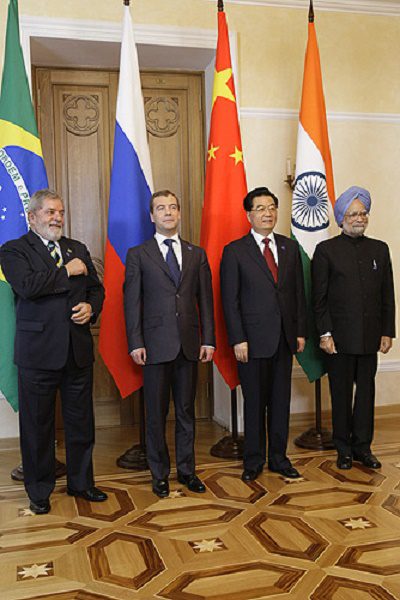
The acronym BRIC was coined by economist Jim O’Neill of Goldman Sachs in 2001 to describe four fast-growing emerging economies — Brazil, Russia, India and China. The grouping held its first summit at Yekaterinburg, Russia, in 2009. South Africa joined in 2010, turning BRIC into BRICS. Unlike the UN or the WTO, BRICS is not a treaty-based organisation with a permanent secretariat; it is a plurilateral consultative forum whose chairmanship rotates annually among members, each hosting a leaders’ summit.
In recent years BRICS has expanded — the BRICS+ phase — admitting new members including Egypt, Ethiopia, Iran, the United Arab Emirates, Saudi Arabia and Indonesia. This enlargement gives the bloc a far larger share of the world’s population, energy resources and economic output, sharpening its claim to speak for the developing world.
Constitutional / Legal Framework
BRICS operates through consensus-based, non-binding declarations rather than a founding charter, which distinguishes it from formal international organisations created by treaty. Its two flagship institutions are the New Development Bank (NDB) — headquartered in Shanghai, established 2015, first President Indian banker K.V. Kamath — which finances infrastructure and sustainable-development projects in member and developing states; and the Contingent Reserve Arrangement (CRA), a currency-swap safety net to help members cope with balance-of-payments pressures. Together they offer an alternative to the Bretton Woods institutions (the IMF and World Bank), which BRICS argues under-represent the Global South.
India’s priorities as chair
India’s chairmanship is organised around four pillars that map onto the theme: Resilience (economic and supply-chain security), Innovation (technology, digital public infrastructure and start-ups), Cooperation (South–South collaboration and connectivity), and Sustainability (climate action and clean energy). Cutting across all four is India’s ambition to be a bridge between the Global South and the developed world, and to press for reform of the institutions of global governance.
Reform is the headline. India uses the BRICS platform to argue that bodies designed in 1945 no longer reflect present-day realities: it seeks reform of the UN Security Council (where India has long sought a permanent seat), and a fairer voice for developing nations in the IMF, World Bank and WTO. The bloc also debates reducing dependence on the US dollar in trade (the “de-dollarisation” conversation) and boosting local-currency settlement, though India has been careful to frame this as diversification rather than confrontation.
The CLAT Angle
Static hooks are exam-gold here: Who coined “BRIC”? (Jim O’Neill, 2001.) Where was the first BRICS summit? (Yekaterinburg, 2009.) Where is the New Development Bank headquartered? (Shanghai.) The current-affairs layer tests the 2026 theme, the fact that India took over from Brazil, and the reform agenda targeting the UN, IMF, World Bank and WTO. A comprehension passage may ask you to identify India’s role as a “bridge” for the Global South, or to distinguish BRICS (a consensus forum) from a treaty-based organisation. Note the mnemonic value of the theme itself — its initials spell BRICS.
The Global South and multipolarity
The reform agenda has a concrete institutional edge too. The New Development Bank has already lent billions for roads, renewable energy, water and urban-transport projects across member states, positioning itself as a nimbler alternative to the older multilateral lenders. India argues that if the World Bank and IMF will not reform their voting shares to reflect the rise of emerging economies, institutions like the NDB will fill the gap. Similarly, on the currency question, India favours expanding local-currency trade settlement to reduce transaction costs and dollar dependence, while stopping short of any call for a single BRICS currency — a proposal it regards as impractical given the members’ divergent economies. This calibrated stance lets India push reform without triggering a confrontation that would harm its own interests.
The phrase “Global South” broadly denotes the developing countries of Asia, Africa and Latin America. India has positioned itself as their spokesperson — hosting “Voice of the Global South” summits and championing causes such as debt relief, fair technology access, climate finance and food security. BRICS is central to this project because it offers an institutional counterweight in a world India describes as multipolar rather than dominated by any single power. The 2026 chairmanship lets India convert diplomatic goodwill into agenda-setting, shaping declarations that carry the weight of the enlarged bloc.
Key Facts
| Term coined | “BRIC” by Jim O’Neill, 2001 |
| First summit | Yekaterinburg, Russia, 2009 |
| India assumed chair | 1 January 2026 (from Brazil) |
| 18th Summit | New Delhi, 12–13 September 2026 |
| Theme | Building for Resilience, Innovation, Cooperation, Sustainability |
| New Development Bank | HQ Shanghai; est. 2015 |
| Reform push | UN Security Council, IMF, World Bank, WTO |
BRICS+ and the challenges of a bigger bloc
Enlargement is a double-edged sword. On one hand, adding Egypt, Ethiopia, Iran, the UAE, Saudi Arabia and Indonesia hands BRICS a commanding share of the world’s crude-oil production and a still larger slice of humanity, boosting its bargaining power against the West. On the other hand, a bigger, more heterogeneous group is harder to steer by consensus — members range from close US partners like the UAE to adversaries like Iran, and long-standing rivals such as India and China sit at the same table. India’s task as chair is therefore diplomatic engineering: keeping the agenda focused on shared developmental goals — food and energy security, digital public infrastructure, climate finance — while preventing the forum from being cast purely as an anti-Western club, which would jeopardise India’s parallel partnerships with the United States, the European Union and Japan.
This is where India’s distinctive foreign-policy posture of strategic autonomy and multi-alignment becomes visible. India sits simultaneously in BRICS and in the Quad (with the US, Japan and Australia), in the Shanghai Cooperation Organisation and in the G20, refusing to be boxed into any single bloc. Chairing BRICS in 2026 lets India demonstrate that a rising power can champion the Global South without abandoning its Western partnerships — a balancing act that itself is worth understanding as a template of modern Indian diplomacy.
Why it matters for 2027 aspirants
India’s BRICS year is more than ceremony. It tests whether an enlarged, diverse grouping can act coherently, and whether India can steer it towards constructive reform rather than mere rhetoric against the West. For a law aspirant, the topic rewards clarity on the difference between a treaty-based organisation and a consensus forum, familiarity with BRICS institutions, and an understanding of why the architecture of global governance is contested. These are the building blocks of both GK sections and legal-reasoning passages on international law and organisations.
Memory Hook / Mnemonic
The theme is the mnemonic: Building for Resilience, Innovation, Cooperation and Sustainability → BRICS. For the institutions, remember “NDB in Shanghai, CRA the rainy-day fund.” And the origin story: “O’Neill named it (2001), Yekaterinburg hosted it (2009), South Africa completed it (2010).”
Practice Quiz — 10 CLAT-Style Questions
Click an option to reveal the answer and explanation.