CURRENT AFFAIRS | 08 OCTOBER 2026
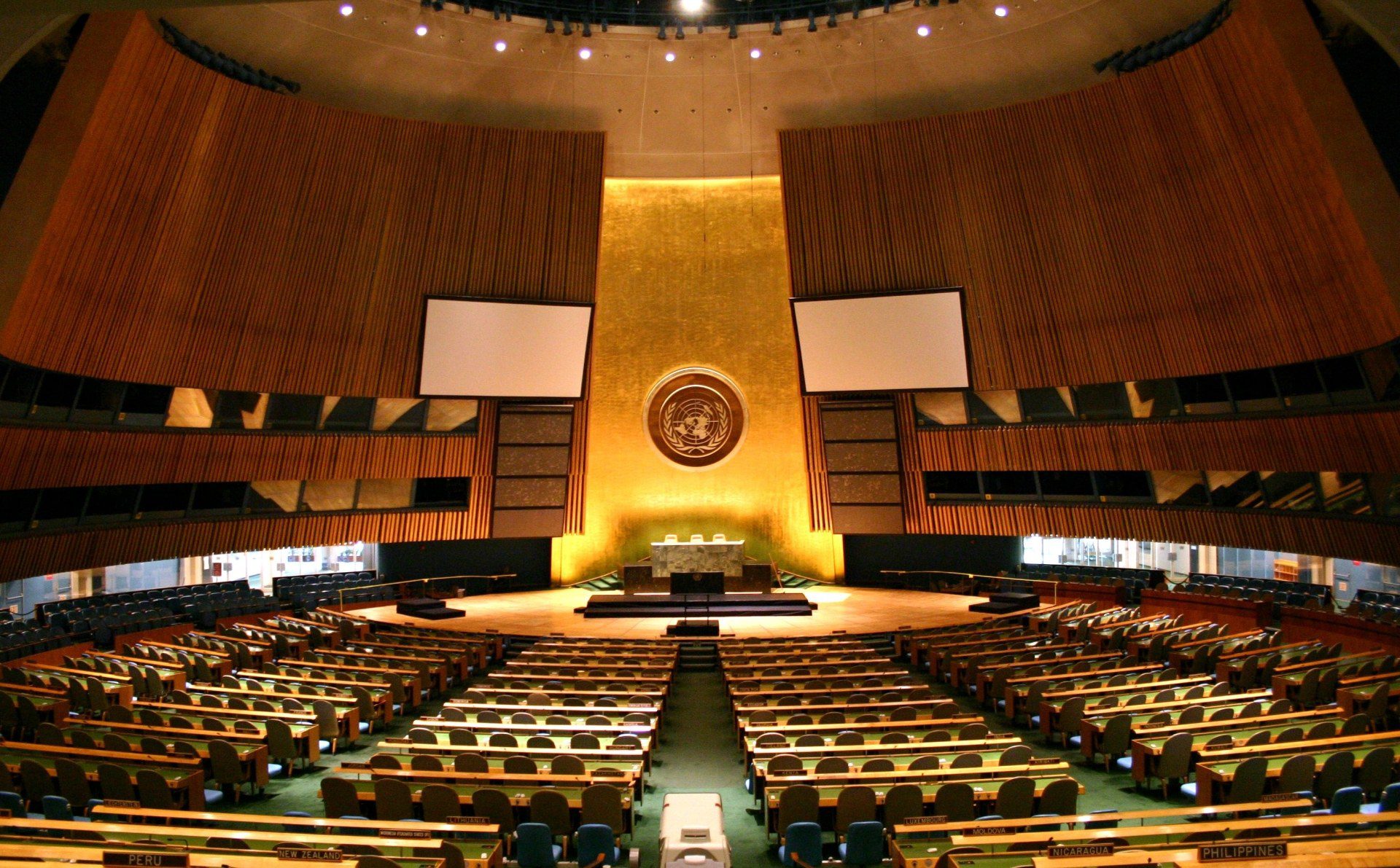
On Tuesday, 6 October 2026, India rejected remarks made on behalf of the Organisation of Islamic Cooperation (OIC) concerning Jammu and Kashmir, telling the Sixth Committee of the UN General Assembly that the grouping was “unable to distinguish between the victim and perpetrator”. According to The Hindu’s report of 7 October, India’s national statement in the debate on “Measures to Eliminate International Terrorism” was delivered by Biplab Kumar Deb, the Lok Sabha MP from West Tripura and a former Chief Minister of Tripura. He was part of a visiting delegation of 15 MPs attending a UN familiarisation week during the 81st session of the General Assembly.
The exchange is a useful window into how states use the UN’s legal committee — a forum meant for treaty-making and codification — to set out their positions on terrorism, sovereignty and self-defence. It also brings back into focus India’s long-running push for a Comprehensive Convention on International Terrorism (CCIT), which India first circulated in draft form in 1996.
What was said
The OIC statement was delivered by Saudi Arabia, as the chair of the grouping. The Hindu reports that the statement referred to “unjustified strikes” on multiple locations in Pakistan and to UN Security Council resolutions on Jammu and Kashmir, but did not name India.
Responding, Mr. Deb said he was addressing the OIC chair’s statement on India’s “focused and measured actions against terror infrastructure” in Pakistan and Pakistan-occupied Jammu and Kashmir, from where, he said, terrorist attacks against India were planned and directed. He called it regrettable that those delivering the statement were “unable to separate fact from fiction”. He rejected the OIC’s “unwarranted reference” to the Union Territory of Jammu and Kashmir, asserted India’s right to defend its people against cross-border terrorism, and pointed to protests and a crackdown in Rawalakot in Pakistan-occupied Kashmir.
Beyond the rebuttal, the statement set out India’s broader counter-terrorism position:
- Terrorism “in all its forms and manifestations, including cross-border terrorism” is among the gravest threats to humanity, and there is “no distinction between good and bad terrorism”.
- The Pahalgam attack of 22 April 2025, in which 26 civilians were killed, was cited as evidence of the human cost of terrorism; India responded in May 2025 with Operation Sindoor against terror infrastructure.
- Terror groups increasingly exploit emerging technologies for recruitment, radicalisation, propaganda and financing.
- A “key gap” in the global framework remains the absence of the CCIT; India called for its early conclusion.
- The New Delhi Declaration of the BRICS Leaders’ Summit, adopted in September 2026, condemned the Pahalgam attack and terrorism as criminal and unjustifiable.
Background & Framework
The UN General Assembly does most of its detailed work through six Main Committees: the First (Disarmament and International Security), Second (Economic and Financial), Third (Social, Humanitarian and Cultural), Fourth (Special Political and Decolonization), Fifth (Administrative and Budgetary) and Sixth (Legal). Every UN member state is represented on each committee. The Sixth Committee is the primary forum for legal questions and is linked to the Assembly’s mandate under Article 13(1)(a) of the UN Charter to encourage the progressive development of international law and its codification. It considers the annual report of the International Law Commission.
“Measures to eliminate international terrorism” is a standing item on its agenda — listed as agenda item 112 for the 81st session on the UN’s Sixth Committee webpage, with its debate scheduled for 5 and 6 October 2026. The negotiation of the CCIT has been carried on through an Ad Hoc Committee set up by the General Assembly in 1996 and through a working group of the Sixth Committee. The main sticking point has long been the definition of terrorism.
The OIC: a quick profile
The Organisation of Islamic Cooperation (formerly the Organisation of the Islamic Conference, renamed in 2011) was founded in 1969 at a summit in Rabat, Morocco. It has 57 member states across four continents and describes itself as the collective voice of the Muslim world. Its General Secretariat is in Jeddah, Saudi Arabia. India is not a member. The OIC frequently makes statements on Jammu and Kashmir at UN forums, and India has consistently rejected them as interference in its internal affairs. In June 2026, for instance, India exercised its right of reply at the UN Human Rights Council in Geneva against references made by Pakistan and the OIC.
Why the Sixth Committee matters
Political statements at UN bodies are often dismissed as rhetoric, but the Sixth Committee is where binding international law begins. Conventions on diplomatic relations, the law of treaties and the suppression of terrorist bombings and terrorist financing have all moved through UN legal processes. India’s argument is that sector-specific treaties leave gaps, and that a single comprehensive convention with an agreed definition would close them — denying safe haven, requiring states to either prosecute or extradite, and removing political justifications for attacks on civilians.
The other half of the debate concerns self-defence. Article 51 of the UN Charter preserves the “inherent right of individual or collective self-defence” if an armed attack occurs. Whether and how that right extends to action against non-state actors operating from another state’s territory remains contested in international law. India’s description of its actions as “focused and measured” strikes on “terror infrastructure” speaks to the principles of necessity and proportionality that customary law attaches to self-defence. A neutral reader should note that each side frames the same events through different legal lenses — which is precisely why the definitional question in the CCIT has proved so hard to settle.
The CLAT Angle
This story sits at the meeting point of international organisations and international law — two areas CLAT’s GK passages return to often. Expect direct questions such as: which Main Committee of the UNGA deals with legal matters (Sixth); which country proposed the CCIT and when (India, 1996); where the OIC is headquartered (Jeddah) and how many members it has (57). A legal-reasoning passage could go further: given a principle that self-defence must be necessary and proportionate, would a strike on a specific target be justified? Or: if a convention requires states to “prosecute or extradite”, what follows when a state does neither? Read the facts of the passage carefully — such questions are answered from the principle supplied, not from personal views on the dispute.
Analysis
India’s choice of a sitting MP to deliver the statement reflects the parliamentary familiarisation programme rather than a change in diplomatic level; the substance followed India’s established line at UN forums: Jammu and Kashmir is an internal matter, cross-border terrorism is the core issue, and the CCIT is overdue. For students, the lasting takeaway is structural: a political disagreement played out inside a legal committee whose real work — codifying a definition of terrorism — remains unfinished three decades after India’s draft.
Key Facts
- India’s statement was delivered on 6 October 2026 at the UNGA Sixth Committee, during the 81st session.
- Debate topic: “Measures to Eliminate International Terrorism” (agenda item 112).
- Delivered by Biplab Kumar Deb, Lok Sabha MP (West Tripura), part of a 15-MP delegation.
- The OIC statement was delivered by Saudi Arabia as OIC chair.
- India: the OIC is “unable to distinguish between the victim and perpetrator”.
- India called for early conclusion of the CCIT, a draft India circulated in 1996.
- The Sixth Committee is the UNGA’s Legal committee; it considers the International Law Commission’s report.
- OIC: founded 1969 (Rabat); 57 member states; secretariat in Jeddah.
- Pahalgam attack: 22 April 2025, 26 civilians killed; Operation Sindoor followed in May 2025.
- Article 51 of the UN Charter: inherent right of self-defence.
Memory Hook / Mnemonic
Remember the UNGA committees as “D-E-S-S-A-L”: Disarmament, Economic, Social, Special Political, Administrative, Legal — the sixth is the law. For the OIC: “69 in Rabat, 57 in Jeddah”. And for the CCIT: “India drafted it in ’96”.
Practice Quiz — 10 CLAT-Style Questions
Click an option to reveal the answer and explanation.