
CURRENT AFFAIRS | 08 OCTOBER 2026
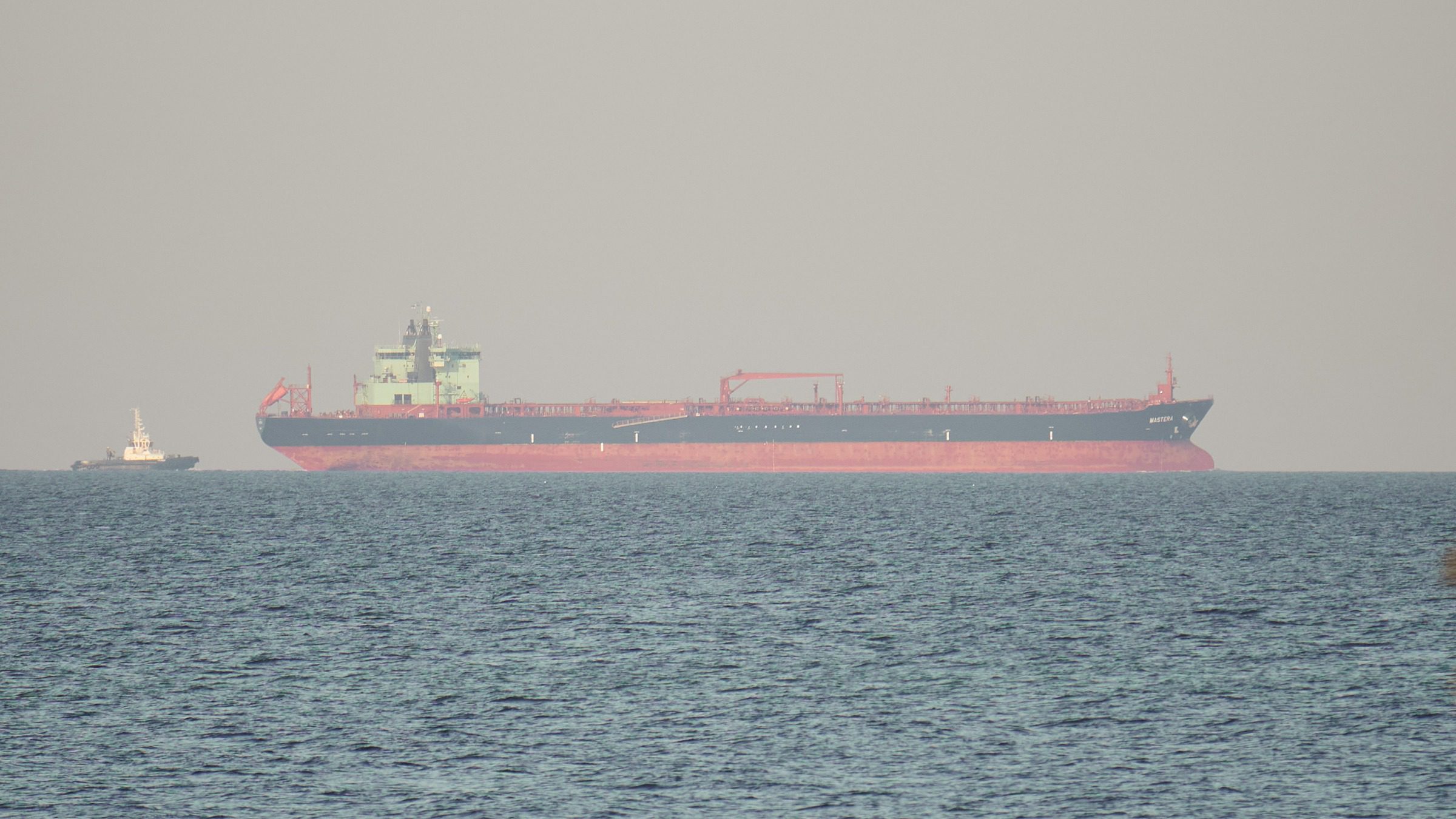
On Tuesday, 6 October 2026, the oil tanker Aframax Rio, a Liberia-flagged vessel, came under attack by unmanned surface vessels (USVs), or “drone boats”, off Sochi on Russia’s Black Sea coast. According to the Russian Transport Ministry, quoted by the state news agency TASS and reported by The Hindu (7 October 2026), the tanker’s entire crew of 23 Indian nationals was saved and evacuated to shore, and none was hurt according to preliminary data. The Indian Express, reporting the same day, also said all 23 Indians had been rescued with no injuries reported. Both newspapers carried the incident as a Ukrainian drone strike; the Russian authorities described the attackers as naval drones. Ukraine’s own position on this particular vessel was not part of either report, so this article attributes the attack to the Russian account rather than stating it as settled fact.
The fire that followed was severe. Russian officials said crude oil was burning openly on the water, so intensely that firefighting could not begin at first; rescue vessels could approach only once the blaze subsided. Russia’s Transport Minister Andrey Nikitin convened an emergency headquarters, and Sochi’s mayor Andrey Proshunin temporarily closed the city’s beaches and sea embankments as a precaution. The Indian Express added that later monitoring in Sochi found pollutant levels below permitted limits.
For India, the story is less about who fired and more about who was on board. India supplies a large part of the world’s merchant-navy crews, and its seafarers serve on ships flying many flags. A Liberian-flagged ship with an all-Indian crew, struck in a war zone thousands of kilometres from home, is a compact illustration of how the Russia–Ukraine conflict reaches Indian households.
India’s response: de-escalation and safe navigation
The Ministry of External Affairs (MEA) said India viewed attacks on commercial shipping and seafarers with grave concern. It said that targeting traffic in international waterways severely undermines global commerce and the welfare of people worldwide, and repeated India’s call for dialogue and diplomacy to end the ongoing conflicts. The Hindu also noted that, on Sunday, 4 October 2026, External Affairs Minister S. Jaishankar said India had stepped up efforts to help resolve the Ukraine conflict by engaging with both Kyiv and Moscow.
This position is consistent with India’s long-standing approach to the war: no endorsement of either side’s military action, insistence on respect for international law and freedom of navigation, and a focus on the safety of Indian nationals. The Rio attack was not isolated. The Hindu reported that two days earlier a Russian drone strike set fire to a Turkish-owned civilian cargo vessel in the Black Sea, killing at least two people and injuring crew members including one Indian. The Indian Express reported that on 6 October two commercial vessels were also struck by drones inside Bulgaria’s exclusive economic zone; Bulgaria said the origin of the drones was under investigation, while Ukraine’s President Volodymyr Zelenskyy blamed Russia for those strikes.
Background & Framework
The Black Sea is an inland sea bordered by six countries: Turkey, Bulgaria, Romania, Ukraine, Russia and Georgia. Its only outlet to the open ocean runs through the Turkish Straits: the Bosporus links the Black Sea to the Sea of Marmara, and the Dardanelles links the Sea of Marmara to the Aegean Sea and on to the Mediterranean. In the north-east, the Kerch Strait connects the Black Sea to the Sea of Azov.
The Montreux Convention (1936) governs passage through the Turkish Straits. It gives Turkey control over the straits, guarantees merchant ships freedom of passage in peacetime, and places restrictions on warships, especially those of states that do not border the Black Sea. UNCLOS (1982) provides the wider law of the sea, including the 200-nautical-mile exclusive economic zone. Under maritime law every ship has a flag state; Liberia runs one of the world’s largest “open registries”, which is why a ship can fly the Liberian flag while carrying an entirely Indian crew.
What “Aframax” means
“Aframax” is not a ship’s name but a size class of tanker. The term comes from AFRA (Average Freight Rate Assessment), a freight-rate system, and describes medium-sized crude carriers of roughly 80,000 to 120,000 deadweight tonnes. Aframax tankers are popular in enclosed and semi-enclosed seas such as the Black Sea, the Baltic and the Mediterranean, because they can use ports and channels too small for the giant VLCCs (very large crude carriers). Hence the vessel in the news is reported as “the Aframax Rio” or “the Aframax tanker Rio”.
Why the Black Sea matters to the world
The Hindu described the Black Sea as a critical global trade choke point now facing severe disruption from attacks on commercial shipping and port infrastructure. Ukraine and Russia are both major grain exporters, and Russian crude and refined products also move through Black Sea ports. Earlier in the war, the Black Sea Grain Initiative (July 2022), brokered by the United Nations and Turkey, allowed Ukrainian grain to be shipped through a safe corridor; Russia withdrew from it in July 2023. Every new attack on merchant vessels raises war-risk insurance premiums and freight costs, and those costs eventually show up in food and fuel prices far from the region, including in India.
Sochi itself is a well-known resort city on the Russian Black Sea coast and hosted the 2014 Winter Olympics. The Indian Express noted that beaches in the nearby federal territory of Sirius were also closed temporarily.
The CLAT Angle
GK questions are most likely on geography and law of the sea: which strait links the Black Sea to the Sea of Marmara (Bosporus), which treaty governs the Turkish Straits (Montreux, 1936), which countries border the Black Sea, and what an Aframax is. Expect a match-the-strait question pairing Bosporus, Dardanelles and Kerch with the water bodies they connect.
Legal reasoning passages could use the incident to test the idea of the flag state (which country’s law applies on board?), the rights of coastal states in their EEZ, or the principle that civilian vessels and crews are protected under international humanitarian law. A careful reader should also notice the difference between attribution and fact: “Russian authorities said the tanker was attacked by naval drones” is a reported claim, not a finding. CLAT inference questions regularly punish answers that convert a claim into a certainty.
Analysis: the Black Sea tanker attack and the seafarer question
Indian seafarers are among the most exposed civilians in today’s conflicts at sea, from the Black Sea to the Red Sea and the Gulf of Oman. Their safety depends on agencies outside India’s direct control: the flag state that registers the ship, the coastal state whose waters it is in, the shipowner and the manning agency. India’s tools are mainly diplomatic: consular support through its missions, advisories issued by the Directorate General of Shipping, and steady public calls for freedom of navigation. The MEA’s wording here, which says the attacks harm commerce and people worldwide rather than blaming either side, shows how India keeps its humanitarian concern separate from taking sides in the war.
There is also an environmental dimension. Open burning of crude at sea releases smoke and leaves residues that can harm marine life and coastal tourism. Sochi’s precautionary beach closure is a reminder that attacks on tankers carry costs well beyond the ship itself.
Key Facts
- Date of attack: Tuesday, 6 October 2026, near Sochi, Russia’s Black Sea coast.
- Vessel: Aframax tanker Rio, flagged in Liberia, carrying oil.
- Crew: 23, all Indian nationals; all saved, none hurt (Russian Transport Ministry, preliminary data).
- Weapon (as reported by Russia): unmanned surface vessels, or naval drones.
- Russian officials named: Transport Minister Andrey Nikitin; Sochi Mayor Andrey Proshunin.
- India’s stand (MEA): grave concern over attacks on shipping and seafarers; call for dialogue and diplomacy.
- Same day: two commercial vessels struck by drones in Bulgaria’s EEZ (Indian Express).
- Bosporus: Black Sea to Sea of Marmara; Dardanelles: Marmara to Aegean.
- Montreux Convention, 1936: regime of the Turkish Straits.
- Black Sea littoral states: Turkey, Bulgaria, Romania, Ukraine, Russia, Georgia.
- Aframax: tanker size class named after AFRA (Average Freight Rate Assessment).
Memory Hook / Mnemonic
“RIO 23, SOCHI SEA”: Rio tanker, Indian crew, October 6; 23 saved; near Sochi, in the Black Sea.
For the straits, remember “B-M-D-A”, read north to south: Black Sea → (Bosporus) → Marmara → (Dardanelles) → Aegean. And “Montreux = 1936 = Turkey’s keys”.
Practice Quiz — 10 CLAT-Style Questions
Click an option to reveal the answer and explanation.