CURRENT AFFAIRS | 01 OCTOBER 2026
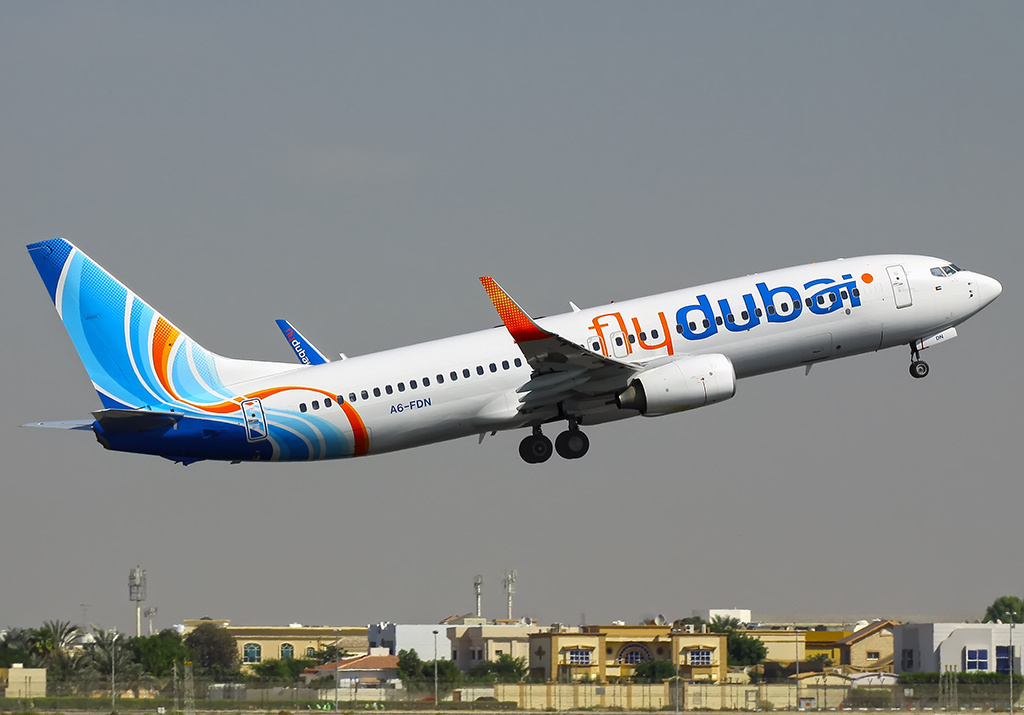
Indian Pilot Captain Smit Machchhar Saves 174 Lives After Co-Pilot’s Attack — FlyDubai FZ1073 | Chicago Convention Explainer
In one of the most dramatic aviation incidents of 2026, Indian pilot Captain Smit Machchhar fought back despite being stabbed by his co-pilot and safely diverted FlyDubai flight FZ1073 to Tabuk airport in Saudi Arabia, saving the lives of all 174 passengers and crew on board. Israeli Prime Minister Benjamin Netanyahu publicly praised Captain Machchhar, calling it an act of “extraordinary bravery.” The incident triggered immediate reviews of aviation security protocols globally and brings into sharp focus the body of international aviation law — from the Chicago Convention 1944 to the Tokyo Convention 1963 — that governs in-flight crimes.
- Route: Dubai → Tel Aviv (Boeing 737 MAX) | 174 aboard
- ~2.5 hours after takeoff: Co-pilot stabbed Captain Smit Machchhar, attempted to crash the aircraft
- Rapid descent: Aircraft descended from 33,000 ft to 17,000 ft in approximately 1 minute; erratic circle near Jordanian border
- 8:44 AM local: Aircraft issued emergency/distress alert
- Crew and passengers subdued the attacker and broke into the cockpit
- 9:45 AM local: Safe landing at Tabuk airport, Saudi Arabia
- Outcome: Co-pilot arrested by Saudi authorities; Captain Machchhar hospitalised in stable condition
- Israeli PM Netanyahu: “Indian captain…fought back despite being stabbed…saved lives of 174 people”
The Chicago Convention 1944: The Constitution of Global Aviation
The Convention on International Civil Aviation, signed in Chicago on December 7, 1944, is the foundational treaty of international civil aviation. It has 193 contracting states and established the International Civil Aviation Organization (ICAO) — a UN specialised agency headquartered in Montreal, Canada. Key articles relevant to this incident:
- Art. 1: Every state has complete and exclusive sovereignty over the airspace above its territory
- Art. 3 bis: States must not use weapons against civil aircraft in flight; interception must not endanger aircraft safety
- ICAO Annex 6: Standards for aircraft operations including crew qualification
- ICAO Annex 17: Aviation security — standards for protecting civil aviation against unlawful interference
- ICAO Annex 19: Safety management systems
The Tokyo Convention 1963 (Convention on Offences and Certain Other Acts Committed on Board Aircraft) is the primary treaty governing in-flight crimes. Key provisions:
- Art. 3: The state of registration of the aircraft has jurisdiction over offences committed on board in flight
- Art. 6: The aircraft commander has the authority to restrain any person on board who the commander has reasonable cause to believe has committed or is about to commit a serious offence — this is the legal basis for the crew’s action in subduing the co-pilot
- Jurisdiction question in FZ1073: The aircraft is registered in the UAE (FlyDubai is a UAE carrier). The offence occurred over Saudi or Jordanian airspace. The aircraft landed in Saudi Arabia where the co-pilot was arrested. Multiple states have jurisdiction; the Tokyo Convention gives UAE primary claim as the state of registration
- 2014 Montreal Protocol amended Tokyo Convention to extend state of landing jurisdiction
Hague Convention 1970 and Montreal Convention 1971
The Hague Convention 1970 specifically addresses unlawful seizure of aircraft (hijacking) — seizing or exercising control of an aircraft by force, threat, or intimidation. It establishes the principle of aut dedere aut judicare — extradite or prosecute. Every contracting state must either extradite the hijacker or submit the case to its prosecutorial authorities. The Montreal Convention 1971 extends coverage to acts of sabotage and violence on board or against aviation infrastructure. The FZ1073 attack may be charged under both conventions.
Aircraft Rules 1937 and Aircraft Security Rules 2011: India’s domestic aviation framework includes the Aircraft Security Rules 2011 (governing security at airports and aboard Indian-registered aircraft), implemented by the Bureau of Civil Aviation Security (BCAS) under the Ministry of Civil Aviation.
DGCA (Directorate General of Civil Aviation): India’s aviation regulator issues Civil Aviation Requirements (CARs) which govern crew training, type ratings, and security protocols for Indian-registered aircraft and Indian pilots flying foreign carriers.
Extraterritorial criminal jurisdiction: The Indian Penal Code’s Sections on offences by Indian citizens abroad (Section 4 IPC) could apply if charges are brought in India against the co-pilot — though Saudi Arabia, as the state of landing and arrest, has primary jurisdiction under international law.
Sovereign Airspace and the In-Flight Jurisdiction Problem
FZ1073’s flight path — Dubai to Tel Aviv, diverting over Jordanian territory to land in Saudi Arabia — created a complex jurisdictional puzzle. Under the Chicago Convention’s Art. 1, every state has sovereignty over airspace above its territory. The rapid descent near the Jordanian border and the emergency landing in Saudi Arabia mean that four states’ airspaces were involved (UAE origin, Saudi-Jordanian border area, Saudi Arabia landing). Jurisdictional competence depends on the applicable convention: Tokyo Convention points to UAE (state of registration); domestic criminal law of Saudi Arabia applies to the arrest and initial proceedings at Tabuk.
The incident is a reminder of the professionalism and courage of Indian aviation professionals. India has one of the fastest-growing civil aviation sectors globally, with DGCA overseeing 700+ airline pilots trained and certified annually. The FZ1073 incident will likely accelerate ICAO-driven discussions on cockpit crew psychological evaluation, enhanced background checks for co-pilots, and reinforced cockpit door protocols — which are governed by ICAO Annex 6 and each state’s national BCAS/DGCA requirements. For CLAT 2027, this story combines international law, sovereignty, criminal jurisdiction, constitutional rights (Art. 21, Art. 19 restrictions) and India’s place in global affairs.
Practice Quiz — 10 CLAT-Style Questions
Click an option to reveal the answer and explanation.