VIDEO EXPLAINER | 7 NOVEMBER 2026
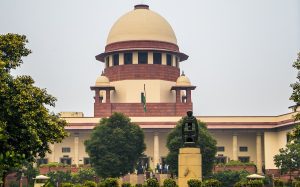
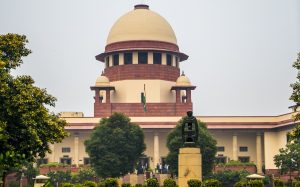
As per the video, the Supreme Court has treated internet access as a fundamental right. The order is dated 15 October, and the Court reached the right by reading Article 21 and Article 19 together. The bench consisted of Justice Pardiwala and Justice Vinod Chandran. The same matter also directs the Union to build a database of child sexual abuse material and URLs whose entries are human verified.
What happened
The video’s headline point is simple: the Supreme Court has said that access to the internet is a fundamental right. The Court did not find a single article that says so in terms. Instead, it read the right out of two articles combined, Article 21 and Article 19.
The order is dated 15 October, as per the video. The bench was Justice Pardiwala and Justice Vinod Chandran, and the matter is still being heard, so the video promises updates as the hearing goes on.
The second part of the order concerns child safety online. As per the video, the Union has to create a database of child sexual abuse material and URLs. The video stresses that the entries in this database will be human verified, which means a person checks each entry rather than leaving it to an automatic process.
The video also notes that reporting is mandatory under POCSO, linking the database direction to the existing child protection law.
The articles and the earlier cases
Article 19 gives freedom of speech. The video explains that a restriction on this freedom can be imposed only on the grounds that are listed in the Constitution itself. That is the test any internet restriction has to pass.
In 2020 the judgment in Anuradha Bhasin gave constitutional protection to speech and trade on the internet. The video adds that restrictions are allowed but they must be proportionate.
In 2015 Shreya Singhal struck down Section 66A of the IT Act completely, declaring it unconstitutional.
The video is careful to add what the Court did not do. It did not strike down Section 69A, the provision on website blocking. So the power to block websites continues to exist alongside the fundamental right to access.
How to hold the pieces together
Think of the order as three layers. The first layer is the right itself, read from Article 21 and Article 19 together. The second layer is the limit on that right, which has to follow the listed grounds in Article 19 and the proportionality idea from Anuradha Bhasin. The third layer is the child safety direction, with a human verified database and mandatory reporting under POCSO.
Key terms
- Fundamental right: A right protected by the Constitution and enforceable against the State. In this order the Court read internet access as one.
- Reading Articles 21 and 19 together: The Court did not rely on one article alone; it combined the two to reach the right, as per the video.
- Proportionate restriction: A limit on a right that is not excessive. Anuradha Bhasin (2020) accepted restrictions on internet speech and trade only in this form, as per the video.
- Section 66A, IT Act: Struck down completely in Shreya Singhal (2015), as per the video.
- Section 69A: The website blocking provision, which the Court did not strike down, as per the video.
- Human verified entries: Each entry in the child sexual abuse material and URL database is checked by a person, as per the video.
Constitutional / Legal / Institutional framework
- Article 21 and Article 19 together are the source of the right, as per the video.
- Article 19 allows restrictions on speech only on the grounds listed in it.
- Anuradha Bhasin (2020) and Shreya Singhal (2015) are the two earlier judgments the video connects to this order.
- Section 69A on website blocking was not struck down, so blocking power survives within the limits the Court describes.
CLAT angle
- Articles 21 and 19 read together: the right to internet access.
- Anuradha Bhasin 2020: protection for speech and trade on the internet, restrictions must be proportionate.
- Shreya Singhal 2015: Section 66A of the IT Act struck down completely.
- Section 69A was not struck down. Do not confuse it with 66A.
- Union has to build a child sexual abuse material and URL database with human verified entries.
Key facts
| Fact | Detail |
|---|---|
| 15 October | Date of the Supreme Court order, as per the video |
| Articles 21 and 19 | Read together to reach the right to internet access |
| Bench | Justice Pardiwala and Justice Vinod Chandran |
| 2020 | Anuradha Bhasin: constitutional protection to speech and trade on the internet, proportionate restrictions |
| 2015 | Shreya Singhal: Section 66A of the IT Act declared unconstitutional |
| Section 69A | Website blocking provision, not struck down |
| POCSO | Reporting is mandatory |
| Database | Child sexual abuse material and URLs, human verified entries |
Mnemonic / memory hook
66A gone, 69A stays.
Shreya Singhal in 2015 removed Section 66A completely. The new order did not remove Section 69A, the website blocking provision. Anuradha Bhasin in 2020 is the case for proportionate restrictions.
Two articles, one right: 21 plus 19.
Why this matters for exams
Questions on this topic usually test which article or case gives which idea. The safe method is to attach one phrase to each: Articles 21 and 19 for the right, Anuradha Bhasin for proportionate restrictions, Shreya Singhal for Section 66A, and 69A for blocking.
Also remember what the Court left alone. A statement such as the Court struck down website blocking would be wrong, because the video says Section 69A was not struck down.
The matter is still being heard, so treat this as the position given in the video and follow the official order for later developments.
Source
This article summarises the video explainer. It reflects the facts as stated in the video; check the official judgment or Gazette text for the exact wording.
Free in the CLAT Gurukul app
These notes (as a PDF lesson) and the 10-question CBT are in the app under Current Affairs → 7 Nov 2026. Get the app on Google Play or open app.clatgurukul.com.
Practice Quiz — 10 CLAT-Style Questions
Click an option to reveal the answer and explanation.