
CURRENT AFFAIRS | 30 JULY 2026
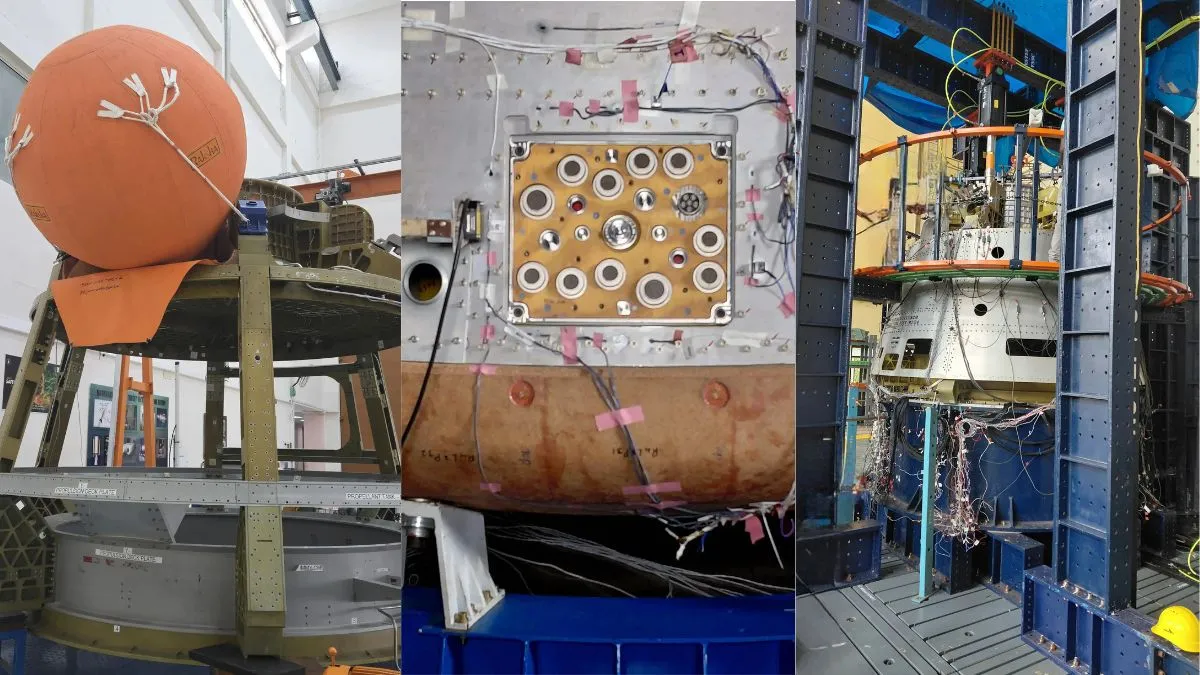
The Indian Space Research Organisation (ISRO) has completed three major qualification tests for the Gaganyaan crew module, covering water-recovery and module-separation systems. The milestone pushes India closer to its uncrewed orbital test flight (G1) planned for later in 2026 — a flight that will carry the humanoid robot Vyommitra to rehearse the journey before any astronaut climbs aboard.
India’s first human spaceflight programme
Gaganyaan is India’s maiden effort to send its own astronauts (called Gaganyatris) into low-Earth orbit aboard an indigenous spacecraft. Before humans fly — targeted around 2027 — ISRO must prove every system works through a sequence of uncrewed tests. The recent qualification tests validated how the crew module separates from the rocket and how it is recovered from the sea after splashdown.
Technical & Conceptual Framework
A Gaganyaan spacecraft has two main parts: the crew module (where astronauts sit) and the service module (carrying propulsion and support systems). A dedicated Crew Escape System can pull the crew module clear of the rocket within seconds if something goes wrong at launch. The mission rides on the HLVM3 — the Human-Rated LVM3 launch vehicle, re-engineered to meet the higher safety standards demanded for human flight. The programme builds on ISRO’s heritage from the Chandrayaan lunar missions and the Aditya-L1 solar observatory.
Vyommitra: the robot who goes first
Vyommitra is a half-humanoid robot designed to sit in the astronaut’s seat during the uncrewed G1 flight. It can monitor cabin parameters, respond to instructions, and run experiments in microgravity, giving engineers confidence that the life-support and control systems behave as expected before a crewed launch.
The CLAT Angle — why it matters for the exam
Space GK is high-frequency in CLAT and other entrances. Examiners love clean, factual hooks: the name of the programme (Gaganyaan), the robot (Vyommitra), the launch vehicle (HLVM3), and the target year. Distinguishing the uncrewed test (G1, robot first) from the crewed flight is a favourite MCQ trap.
Key Facts
| Programme | Gaganyaan (India’s first human spaceflight) |
| Agency | ISRO |
| Uncrewed flight | G1, carrying Vyommitra (2026) |
| Launch vehicle | HLVM3 (Human-Rated LVM3) |
| Crewed target | Around 2027 |
| Longer roadmap | Bharatiya Antariksh Station (2035 target) |
Memory Hook
“Vyommitra flies FIRST (uncrewed G1), humans NEXT.” The robot is the trailblazer; the astronauts follow once every system is proven.
The bigger picture
Gaganyaan is more than a single mission — it is the foundation for India’s long-term ambition of the Bharatiya Antariksh Station (BAS), targeted by 2035. Together with a high-cadence launch year, these steps signal India’s growing capability across launch, life-support and recovery technologies, placing it among a small club of nations pursuing independent human spaceflight.
Practice Quiz — 10 CLAT-Style Questions
Click an option to reveal the answer and explanation.