CURRENT AFFAIRS | 21 SEPTEMBER 2026
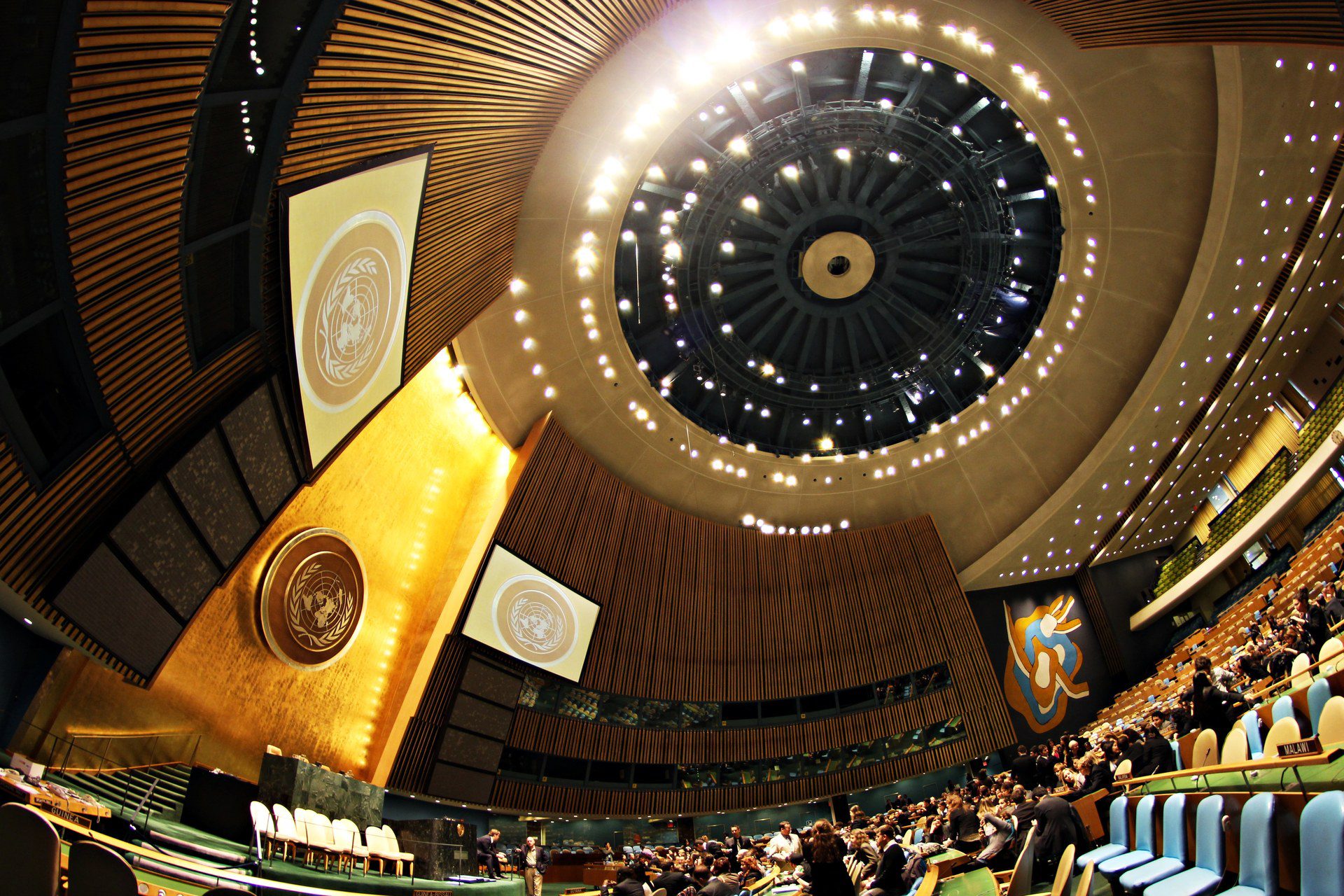
External Affairs Minister S Jaishankar will lead India’s delegation to the High-Level Week of the 81st session of the United Nations General Assembly (UNGA 81) in New York. Announcing the visit on Sunday, 20 September 2026, the Ministry of External Affairs (MEA) said: “EAM’s address at the High Level Session of the 81st United Nations General Assembly is scheduled for September 26. During the visit, EAM will also attend various plurilateral and bilateral meetings.” According to a revised provisional list of speakers cited by The Indian Express, he is scheduled to address the General Debate in the afternoon session on 26 September.
The trip comes only days after US President Donald Trump signed into law the Lindsey O. Graham Sanctioning Russia and Iran Act of 2026 on 18 September 2026. The law lets Washington impose steep tariffs on the biggest buyers of Russian energy — a category that includes India. The Indian Express reports that the New York visit offers a window for the two sides to discuss the issue on the sidelines. For CLAT aspirants, the story ties together three recurring themes: the United Nations system, secondary sanctions in international law and politics, and India’s doctrine of strategic autonomy.
What the US law does
According to a legal analysis published by the law firm Baker McKenzie and reporting by NBC News, the Act passed the Senate 86–11 on 7 August and the House of Representatives 262–159 on 16 September before being signed. Its key elements are:
- Tariffs on energy buyers: tariffs of up to 100% on goods from the five largest importers of Russian crude oil or natural gas, and on five countries found to facilitate sanctions evasion. Rates are to be adjusted depending on whether a country increases or reduces its Russian energy purchases.
- An exception: countries that import less than 15% of Russia’s natural gas exports and have taken significant steps to reduce those imports.
- Duties on Russia itself: duties on Russian goods and services of at least 500% of their value.
- Targeted sanctions: on Russian officials, state-controlled banks and the “shadow fleet” of tankers that moves Russian oil, with secondary sanctions authorised against foreign banks doing significant business with them.
- Presidential flexibility: the President may waive sanctions by certifying that a waiver is in the national interest, and may terminate them after a Russia–Ukraine peace agreement, subject to congressional review. The Act also extends existing Iran sanctions.
It is important not to overstate what has happened. The law authorises and directs tariffs; it does not by itself mean that a 100% tariff has already been imposed on Indian goods. How it is applied, whether waivers are used, and which countries are finally named are matters of executive implementation still to come.
India’s response
After the House vote, the MEA said on 17 September: “As stated on several earlier occasions, India remains firmly committed to ensuring energy security for its 1.4 billion people. It will continue to do so through diversified sourcing and on the basis of evolving market dynamics.” It added that the law’s “potential implications for not just the bilateral relationship but also the international energy market have been very clearly articulated by the Indian side,” that the issue had been discussed at high levels with various US interlocutors in recent months, and that the government would work closely with Indian trade and industry bodies to deal with the implications.
The language is carefully calibrated. It does not threaten retaliation, but it frames energy purchases as a matter of national interest and consumer welfare — the welfare of 1.4 billion people — rather than of alignment with any bloc. That is the vocabulary of strategic autonomy.
Background & Framework
The UN General Assembly is one of the six principal organs of the United Nations and is dealt with in Chapter IV (Articles 9–22) of the UN Charter. All 193 Member States are represented, each with one vote; decisions on “important questions” such as peace and security recommendations and budgetary matters need a two-thirds majority of members present and voting. The General Debate of the High-Level Week is where heads of state and government, or their ministers, set out national positions. UNGA 81 is presided over by Bangladesh’s Foreign Minister Khalilur Rahman, elected in June. India is a founding member of the UN, having signed the UN Charter in 1945.
Sanctions law: “Primary” sanctions bar a country’s own persons from dealing with a target; “secondary” sanctions penalise third countries or their firms for dealing with the target. The new Act uses tariffs as a secondary lever. India has faced this kind of pressure before, notably under the US Countering America’s Adversaries Through Sanctions Act (CAATSA), 2017, in the context of its purchase of the Russian S-400 air-defence system.
The trade negotiations in the background
The sanctions law lands in the middle of India–US trade talks. A White House fact sheet of 9 February 2026 announced a framework for an interim trade agreement, under which the US lowered its reciprocal tariff on India from 25% to 18% and removed an additional 25% tariff; the fact sheet linked that removal to what it described as India’s commitment to stop purchasing Russian oil. Negotiations toward a fuller Bilateral Trade Agreement (BTA) have continued since. On 4 September 2026, Commerce Minister Piyush Goyal said India would finalise the agreement “as soon as the US is able to give us the preferential rate in comparison to our competition”.
The two tracks now pull against each other. Washington wants reduced Russian energy purchases; New Delhi insists that energy sourcing will follow market dynamics and diversified supply. The Indian Express reports that New Delhi has conveyed to Washington, over recent weeks and months, the adverse impact such a measure would have on the relationship.
The CLAT Angle
This is ideal material for a current-affairs passage on India–US relations or the UN. Expect questions on: the date India addresses the General Debate (26 September); the name of the US law; the maximum tariff it allows on major buyers of Russian energy (up to 100%); the President of UNGA 81; and static facts about the General Assembly (193 members, one country one vote, Chapter IV of the Charter).
In critical reasoning, a question may ask which assumption underlies the claim that “the law will immediately raise tariffs on Indian goods” — the hidden assumption is that no waiver or exception will apply. In legal reasoning, the distinction between primary and secondary sanctions, and the idea of extraterritorial reach of domestic law, can be framed as principle-and-facts questions.
Analysis: strategic autonomy under pressure
India’s foreign policy has long rested on keeping options open with multiple powers — a posture once described as non-alignment and now more often as strategic autonomy or multi-alignment. Energy is where that principle is most tested. India imports the bulk of the crude oil it consumes, and discounted Russian crude has been an important part of its import basket since 2022. A tariff threat tied to those purchases forces a trade-off between energy costs and access to the US market, India’s largest export destination for goods.
The UNGA offers a multilateral stage on which India typically emphasises reform of the Security Council, the concerns of the Global South, terrorism and development finance. The bilateral meetings on the sidelines are where issues such as the sanctions law and the trade deal are likely to be discussed. President Trump is also scheduled to address the Assembly, on 22 September, and US Secretary of State Marco Rubio is expected to be present, according to The Indian Express. Whether any meeting produces a clearer path on tariffs will be one of the things to watch in the coming week.
Key Facts
- EAM S Jaishankar leads India at the 81st UNGA High-Level Week; MEA announced the visit on 20 September 2026.
- India’s address to the General Debate: 26 September 2026 (afternoon session).
- UNGA 81 President: Khalilur Rahman, Foreign Minister of Bangladesh.
- US law: Lindsey O. Graham Sanctioning Russia and Iran Act of 2026, signed 18 September 2026.
- Votes: Senate 86–11 (7 August); House 262–159 (16 September).
- Tariffs of up to 100% on the five largest importers of Russian oil or gas.
- Exception: countries importing under 15% of Russia’s gas exports that are cutting imports.
- Presidential waiver available on national-interest certification.
- MEA (17 September): India “firmly committed to ensuring energy security for its 1.4 billion people”.
- India–US interim trade framework: 9 February 2026; reciprocal tariff cut from 25% to 18%.
Memory Hook / Mnemonic
Remember the law’s numbers as “5-100-15-500”: the top 5 buyers face up to 100%, unless they take under 15% of Russia’s gas, while Russia’s own goods face at least 500%. For the calendar: “18 signed, 20 announced, 22 Trump speaks, 26 India speaks.” And for the UN: “193 members, 1 vote each, Chapter 4.”
Practice Quiz — 10 CLAT-Style Questions
Click an option to reveal the answer and explanation.