CURRENT AFFAIRS | 24 SEPTEMBER 2026
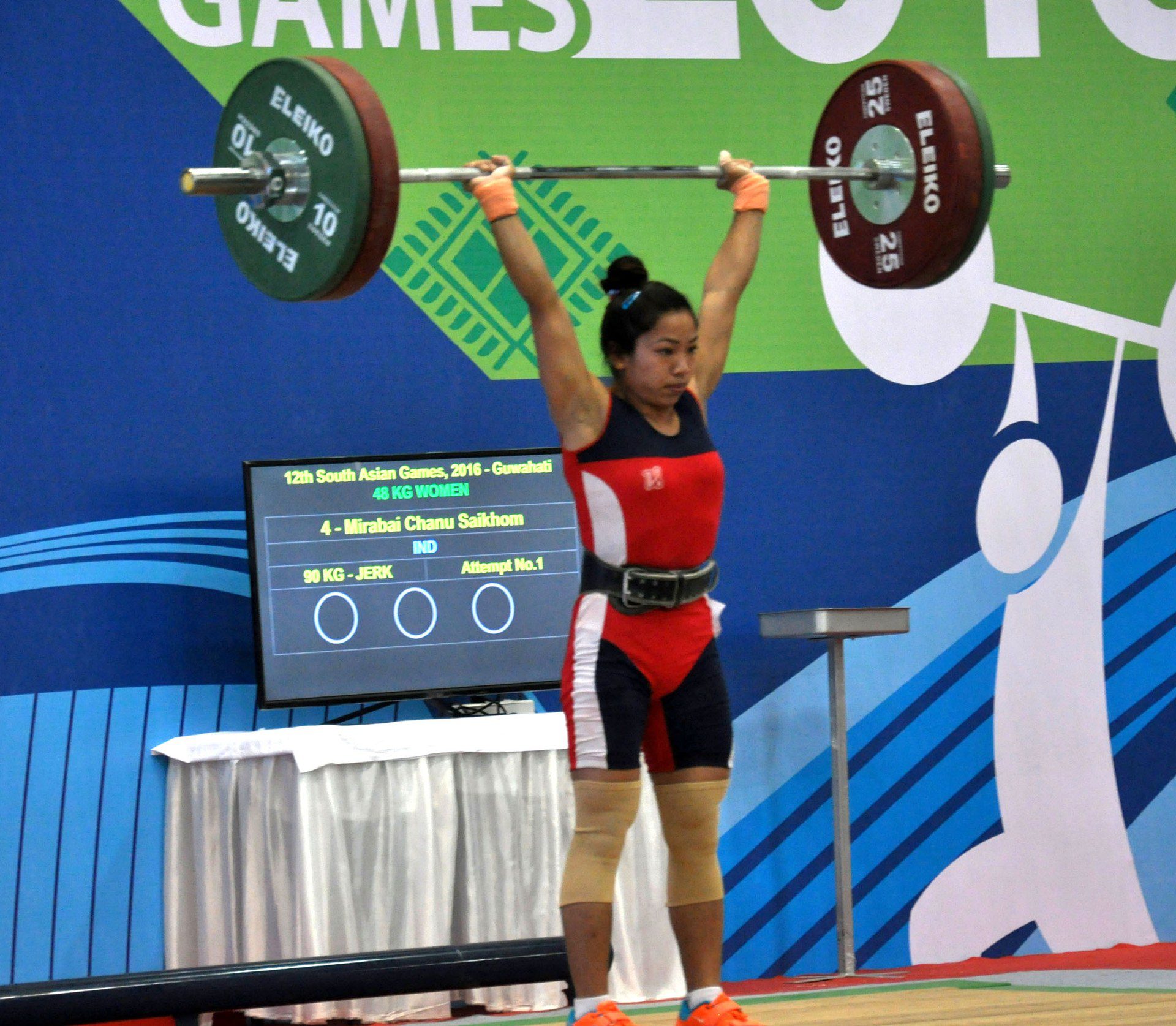
On 23 September 2026, the fifth day of the Aichi-Nagoya Asian Games, Saikhom Mirabai Chanu won a silver medal in the women’s 49 kg weightlifting event with a total of 198 kg — 87 kg in the snatch and 111 kg in the clean and jerk. Gold went to Ri Song-gum of the Democratic People’s Republic of Korea, who lifted a world-record total of 215 kg, closing with a 121 kg clean and jerk, and completed a hat-trick of Asian Games titles. The result is reported by The Indian Express of 24 September 2026 and by ESPN.
The medal matters for a reason that has nothing to do with its colour. It was the one major medal Mirabai Chanu did not have. She had an Olympic silver, a World Championship gold and Commonwealth Games golds; the Asian Games podium had escaped her across three campaigns. The Indian Express described it as “the only medal that had eluded her all these years”. It was also India’s first Asian Games weightlifting medal since Karnam Malleswari’s silver at Bangkok in 1998 — a gap of 28 years — a point made by both The Indian Express and ESPN.
The lift
Chanu, 32, was the oldest of the seven lifters in the field. Gold was never realistically available against a fully fit Ri Song-gum, the reigning world champion and two-time defending Asian Games champion, whose 215 kg total was a world record. The contest for Chanu was therefore against the podium, and against her own record of near-misses at this particular Games.
That record is worth knowing precisely, because it is the spine of the story. She first competed at the Asian Games in 2014. In 2018 a back injury kept her out. At Hangzhou she finished fourth. At the Paris Olympics she again finished fourth, missing bronze by a single kilogram. “I asked myself, what happened? What is happening to me in every Asian Games?” she told The Indian Express in Nagoya. Her own assessment of the event’s difficulty is the kind of quotable line an examiner likes: because weightlifting is deepest in Asia, she said, “medals in Asian Games are equal to medals in Olympics”.
Background & Framework
The Asian Games are the continent’s premier multi-sport event and the second largest in the world after the Olympics. The first edition was held in New Delhi in March 1951, with 11 participating countries, under the Asian Games Federation. That body was dissolved in New Delhi on 16 November 1982 and succeeded by the Olympic Council of Asia (OCA), which has organised the Games since and today has 45 National Olympic Committees as members. India has hosted twice — 1951 and 1982, both in New Delhi. The Games run on a four-year cycle, which is why the 19th edition, awarded to Hangzhou for 2022, was actually held from 23 September to 8 October 2023 after a COVID-19 postponement while keeping its original “2022” branding. The current edition is being held in Aichi-Nagoya, Japan, from 19 September to 4 October 2026. At Hangzhou, India recorded its best-ever haul: 107 medals (28 gold, 38 silver, 41 bronze) for fourth place, the first time India crossed 100 medals at the event, from a contingent of 655 athletes.
The career the medal completes
Chanu, who is from Manipur, has been the most consistent presence in Indian weightlifting for more than a decade. Her major medals, as set out in The Indian Express’s own tabulation, are: an Olympic silver at Tokyo in 2021 (49 kg); World Championship medals in 2017 (gold, 48 kg), 2022 (silver, 49 kg) and 2025 (silver, 48 kg); Commonwealth Games medals in 2014 (silver, 48 kg), 2018 (gold, 48 kg), 2022 (gold, 49 kg) and 2026 (gold, 48 kg); and now the Asian Games silver of 2026 (49 kg). The 2017 world title was won at Anaheim in the 48 kg class. She received the Rajiv Gandhi Khel Ratna — India’s highest sporting honour, since renamed the Major Dhyan Chand Khel Ratna Award — in 2018, presented by President Ram Nath Kovind, and the Padma Shri, the fourth-highest civilian award, the same year.
The career has not been a straight line. At Rio in 2016 she failed to register a single valid lift in the competition — the worst outcome available to a weightlifter. Five years later she won Olympic silver at Tokyo. She trained for this Games with her long-time coach Vijay Sharma at a gym in Ghaziabad, managing the recurring problem of holding her body weight inside the 49 kg limit while recovering from injury. That is the shape of the story a CLAT passage would use: not triumph, but persistence across failure.
The CLAT Angle
Sports questions in CLAT’s General Knowledge & Current Affairs section reward exactness, not enthusiasm. The examinable units here are: the athlete’s name and event, the category (49 kg), the total (198 kg), the host city and country, the gold medallist and her country, and the previous Indian weightlifting medallist at the Asian Games. A passage will typically narrate the achievement and then ask a question whose answer is one of these data points, or a linked static fact — where the first Asian Games were held, which body organises them now, why the “2022” Games were held in 2023. Note also the institutional vocabulary: Indian Olympic Association, Olympic Council of Asia, Khelo India, TOPS, NADA and WADA. The safest revision habit is to write the medal line as a single sentence — athlete, event, category, medal, total, Games, city, year — and memorise that sentence rather than the newspaper prose around it.
India on Day 5
According to The Indian Express’s Day 5 capsule, India’s haul on 23 September was one silver and four bronze. The women’s skeet team of Raiza Dhillon, Maheshwari Chauhan and Parinaaz Dhaliwal took bronze, as did the men’s skeet team of Anantjeet Singh Naruka, Bhavtegh Singh Gill and Mairaj Ahmed Khan. The Indian men’s badminton team finished with bronze after a 1–3 semi-final defeat to China. And Jay Meena became the first Indian to win an Asian Games medal in soft tennis, taking bronze. On the medal table printed by the same newspaper as of that day, China led with 48 golds, Japan was second and India stood at 1 gold, 5 silver and 6 bronze. A medal tally is a moving snapshot, so quote it only with its date attached.
The system behind a medal
India’s Olympic and Asian Games contingents are entered by the Indian Olympic Association (IOA), the National Olympic Committee recognised by the International Olympic Committee and a member of the OCA. Funding and preparation run through the Ministry of Youth Affairs and Sports: Khelo India for grassroots and junior development, and the Target Olympic Podium Scheme (TOPS) for elite athletes, with a parallel Target Asian Games support stream — the only assistance Jay Meena said he had received before his soft-tennis bronze.
The governance layer changed materially in 2025. The National Sports Governance Act, 2025 was passed by the Lok Sabha on 11 August 2025 and the Rajya Sabha on 12 August 2025, and received the President’s assent on 18 August 2025. It creates a statutory National Sports Board empowered to recognise, suspend or cancel recognition of national sports bodies, and aligns Indian sports administration with the Olympic Charter. Alongside it, the National Anti-Doping (Amendment) Act, 2025 strengthened the statutory basis of the National Anti-Doping Agency (NADA) by giving the World Anti-Doping Agency (WADA) Code’s anti-doping rule violations clearer legal force in India. That is directly relevant to this sport: doping offences and suspensions have repeatedly damaged Indian weightlifting, as The Indian Express notes in its report, which is precisely why an unbroken, clean career of Chanu’s length carries weight beyond its medals.
Key Facts
- Athlete: Saikhom Mirabai Chanu, weightlifter, from Manipur.
- Result: Silver, women’s 49 kg, Aichi-Nagoya Asian Games, 23 September 2026.
- Total: 198 kg — 87 kg snatch, 111 kg clean and jerk.
- Gold: Ri Song-gum (DPR Korea), world-record total of 215 kg, including a 121 kg clean and jerk; her third straight Asian Games title.
- Significance: Her first Asian Games medal, in her third campaign, and India’s first Asian Games weightlifting medal since Karnam Malleswari’s silver at Bangkok 1998.
- Games: Aichi-Nagoya, Japan, 19 September to 4 October 2026, organised under the Olympic Council of Asia.
- Her other major medals: Olympic silver, Tokyo 2021 (49 kg); World Championship gold 2017 (48 kg, Anaheim), silver 2022 and 2025; Commonwealth Games gold 2018, 2022 and 2026, silver 2014.
- Honours: Rajiv Gandhi Khel Ratna, 2018; Padma Shri, 2018.
- Coach: Vijay Sharma; she trains at Ghaziabad.
- India on Day 5: 1 silver and 4 bronze; Jay Meena won India’s first-ever Asian Games medal in soft tennis.
- Static GK: First Asian Games, New Delhi 1951; Asian Games Federation replaced by the OCA on 16 November 1982; India’s best haul, 107 medals at Hangzhou.
- Governance: National Sports Governance Act, 2025 (assent 18 August 2025) and the National Sports Board; NADA and the WADA Code.
What comes next
The category itself is about to move. The Indian Express reports that the 49 kg class is disappearing from the Olympic programme, and that the lightest women’s weight class at Los Angeles will be 53 kg. Chanu told the paper that the plan is to add muscle rather than simply body weight: “We don’t have to gain weight to compete in 53. We have to get the muscle ready first.” She has begun working with a nutritionist on the transition.
Two observations are worth carrying into an essay. First, a sport that depends on a single athlete for visibility is structurally fragile; the deeper question raised by this medal is what happens to Indian weightlifting when Chanu stops, and whether the pipeline has produced anyone with comparable longevity. She has begun coaching younger lifters at her coach’s academy, which is an answer of a kind. Second, the medal is a reminder that in elite sport the interesting variable is rarely talent — it is the capacity to return to the platform after Rio, after Hangzhou, after Paris. That is the analytical point a well-written answer makes, and the reason a sports item belongs in a current-affairs note at all.
Memory Hook / Mnemonic
Fix the numbers with “49 – 87 – 111 – 198”: the category, the snatch, the clean and jerk, the total. For the gap, remember “Malleswari ’98, Mirabai ’26 — 28 years between Indian weightlifting medals at the Asiad.” For her collection, use “O-W-C-A” — Olympic, World, Commonwealth, Asian Games — the set she completed at Nagoya. And for the Games themselves: “Delhi ’51 started it, Delhi ’82 made the OCA.”
Practice Quiz — 10 CLAT-Style Questions
Click an option to reveal the answer and explanation.