
CURRENT AFFAIRS | 24 SEPTEMBER 2026
On 22 September 2026 the Indian Air Force announced the second edition of its multinational air exercise TARANG SHAKTI, to be conducted from 26 September to 12 October 2026 at Air Force Station Jodhpur and adjoining air bases in Rajasthan. According to the announcement carried by Akashvani News (newsonair.gov.in), the Government of India’s own news service, eight Friendly Foreign Countries — Australia, Bangladesh, France, Germany, Greece, Sri Lanka, the United Arab Emirates and the United States — will participate with air assets, while 32 nations will attend as observers. The details were given by Air Marshal Ashutosh Dixit, Vice Chief of the Air Staff, at a press conference in New Delhi.
Two things about the framing matter for an exam answer. First, this is an announcement, not a report of an event: as of the date of this note the exercise has not begun, so no sorties or outcomes exist. Second, the figures worth memorising — eight participants, 32 observers, the dates, the venue — are the official ones, not the larger round numbers (“40 nations”) in some write-ups, which fold participants and observers together.
What the Indian Air Force said
The Vice Chief described the exercise as an opportunity to expose every participant to the planning and execution of multinational joint combat operations in a realistic contemporary battlespace. The stated mission set includes counter-air operations, air defence, combat reconnaissance, airlift and air-to-air refuelling — the full spectrum of what a modern air force does, not merely fighter-versus-fighter engagements. The IAF also positioned it as a shop window for India’s aerospace and defence industry.
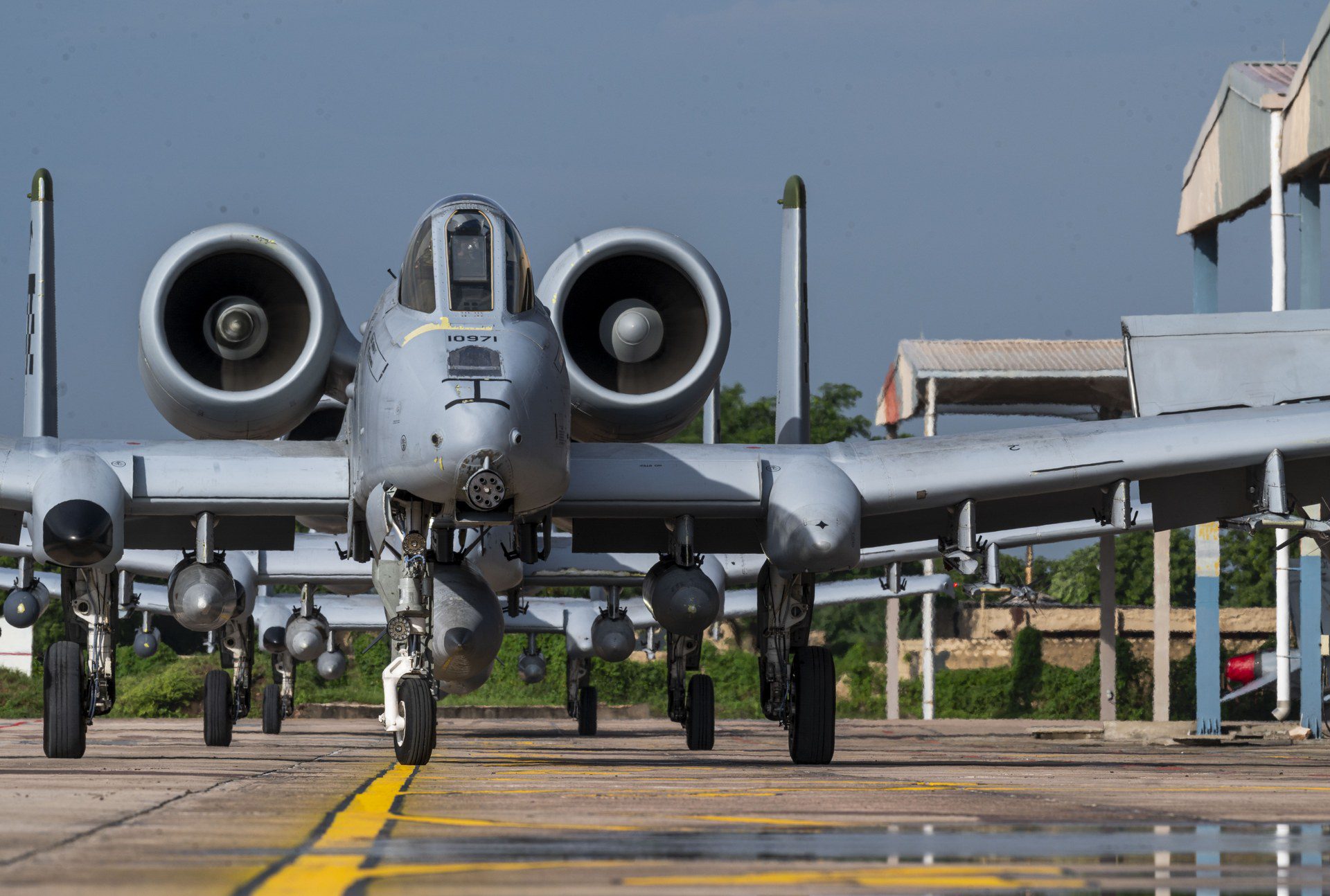
Press reporting ahead of the exercise has focused on the aircraft expected at Jodhpur: the United States Air Force’s F-35 Lightning II, French Rafale fighters and UAE F-16s alongside the IAF’s own Su-30 MKI, Rafale and indigenous LCA Tejas. Several outlets call this the first time the F-35 will operate from Indian soil. That needs care: the type has previously been displayed in India at the Aero India exhibitions in Bengaluru, so the accurate claim is that this would be the first time the fifth-generation American stealth fighter takes part in a military exercise hosted in India. Reported aircraft numbers vary widely and are not in the official announcement, so leave them out.
Background & Framework
Defence is squarely a Union subject. Under the Seventh Schedule, List I (Union List) Entry 1 covers the defence of India and every part of it, including preparation for defence and acts conducive to the prosecution of war; Entry 2 covers the naval, military and air forces and any other armed forces of the Union; Entry 2A covers the deployment of any armed force of the Union in a State in aid of the civil power. A State legislature has no competence over any of this, and Article 246 is the provision that distributes legislative power across the three Lists. Article 53(1) vests the executive power of the Union in the President; Article 53(2) provides that the supreme command of the Defence Forces of the Union shall be vested in the President, its exercise to be regulated by law — hence the description Supreme Commander, while operational direction runs through the elected political executive. On the administrative side, the office of Chief of Defence Staff (CDS) was created with effect from 1 January 2020, with General Bipin Rawat as the first incumbent, and a new Department of Military Affairs was carved out within the Ministry of Defence, headed by the CDS as its Secretary — the institutional answer to decades of criticism about single-service silos.
Participant, observer, Friendly Foreign Country
These three terms are not interchangeable, and a question can be built on the difference alone. A participant brings its own aircraft, aircrew and ground support and flies missions inside the exercise scenario. An observer sends officers to watch, attend briefings and take notes without deploying assets — a lower-commitment form of engagement that builds familiarity before a country commits squadrons. That is why 32 nations can attend Tarang Shakti 2026 while only eight fly in it.
Friendly Foreign Country (FFC) is the Indian armed forces’ standard expression for a state with which India maintains cooperative defence relations — training exchanges, joint exercises, base visits, defence sales. It is a designation of practice, not a treaty category: India has no military alliance with any of the eight participants. That is the point of the model — India exercises with France, the United States, the UAE, Australia and its immediate neighbours at once without becoming anyone’s treaty ally, the operational expression of strategic autonomy and multi-alignment.
The CLAT Angle
Expect this in two places. In General Knowledge & Current Affairs, a passage on India’s defence diplomacy can be followed by direct questions: which edition is this, where is it held, how many FFCs participate, how many observe, which aircraft is making its Indian exercise debut, which base hosts it. Pair each exercise with its partner — that is the single most common trap. In Legal Reasoning and Polity, the richer question is about where power sits: a principle stating that the supreme command of the Defence Forces vests in the President under Article 53(2) can be tested against facts in which a State government objects to an exercise on its territory, or a State law purports to regulate military flying. The answer turns on the Union List, not on who owns the land. Learn the vocabulary too: interoperability, counter-air, Friendly Foreign Country, multi-alignment.
India’s exercise architecture
Tarang Shakti sits at the top of a layered structure, and the pairings are worth committing to memory. Garuda is the long-running India–France bilateral air exercise, first held in 2003. Cope India is the India–United States bilateral, hosted in India, the first edition conducted at Air Force Station Gwalior in 2004. Desert Flag is a multinational exercise hosted by the UAE, in which the IAF is one of many participating air forces. Pitch Black is the large multinational exercise hosted by Australia. Red Flag is the demanding multinational exercise hosted by the United States. Against those, Vayu Shakti and Gagan Shakti are national IAF exercises with no foreign participation — Vayu Shakti being the periodic firepower demonstration at the Pokhran Firing Range in Jaisalmer, Rajasthan. The most recent edition, Vayu Shakti–2026, was witnessed by President Droupadi Murmu on 27 February 2026, with Raksha Mantri Rajnath Singh and Chief of the Air Staff Air Chief Marshal AP Singh present, according to the PIB release of that date.
The distinction examiners exploit is simple: in Garuda, Cope India, Desert Flag, Pitch Black and Red Flag, India is a bilateral partner or a guest. In Tarang Shakti, India is the host — a recent capability, and the reason the exercise is read as a diplomatic event and not merely a military one.
The first edition, and why hosting matters
The inaugural Tarang Shakti 2024 was conducted in two phases: the first at Air Force Station Sulur in Tamil Nadu in August 2024, and the second at Jodhpur in Rajasthan, which ran into September. At the Distinguished Visitors’ Day of the Jodhpur phase on 12 September 2024, Raksha Mantri Rajnath Singh said, in a PIB release, that the exercise would “strengthen cooperation, coordination and trust with friendly countries”, and that when an exercise of such complexity takes place, personnel with different work cultures, air combat experiences and war-fighting principles learn from one another. He expressly linked the exercise to Aatmanirbhar Bharat, noting India’s shift from being only an importer of arms to a country that exports defence equipment.
That is the strategic logic. Hosting requires an air force to supply the ranges, airspace, fuel, air-traffic management, maintenance and exercise-control staff for a fortnight of intensive flying by foreign squadrons — a demonstration of capacity that participation abroad cannot substitute for. Jodhpur is chosen because western Rajasthan offers vast, uncongested airspace over the Thar Desert with weapons ranges close by. Interoperability — the ability of different forces to communicate, refuel, plan and fly together on compatible procedures — is the declared objective, and once built it is durable: in a coalition operation or a humanitarian emergency these air forces can work together at short notice.
Key Facts
- Exercise: TARANG SHAKTI 2026 — the second edition of the IAF’s multinational air exercise.
- Dates: 26 September to 12 October 2026; announced on 22 September 2026.
- Venue: Air Force Station Jodhpur, Rajasthan, and adjoining air bases.
- Participants: 8 Friendly Foreign Countries with air assets — Australia, Bangladesh, France, Germany, Greece, Sri Lanka, UAE, USA.
- Observers: 32 nations attending without deploying assets.
- Announced by: Air Marshal Ashutosh Dixit, Vice Chief of the Air Staff, who took charge as the 51st VCAS on 1 July 2026.
- Mission sets: counter-air, air defence, combat reconnaissance, airlift, air-to-air refuelling.
- First edition: Tarang Shakti 2024, in two phases — Sulur (Tamil Nadu) in August, Jodhpur (Rajasthan) into September.
- Constitutional hooks: Article 53(2) — supreme command of the Defence Forces vests in the President; Union List Entries 1, 2 and 2A.
- Institutional hooks: Chief of Defence Staff (effective 1 January 2020; first CDS General Bipin Rawat) and the Department of Military Affairs in the Ministry of Defence.
- Related national exercise: Vayu Shakti–2026 at Pokhran Firing Range, Jaisalmer, witnessed by President Droupadi Murmu on 27 February 2026.
- Status on the date of this note: announced only — the exercise had not commenced.
Reading it as an argument
A multinational exercise addresses several audiences at once. To participating air forces, it says India can host, plan and control a complex multinational air campaign. To India’s defence industry, it is a demonstration platform in front of thirty-odd foreign delegations. To the neighbourhood — Bangladesh and Sri Lanka are on the participant list — it says capacity-building partnerships sit alongside exercises with major powers. And domestically it is evidence for the Aatmanirbhar Bharat claim, because the indigenous Tejas flying beside a Rafale is an argument about self-reliance that needs no adjectives.
The honest counter-point, and a good essay paragraph, is that an exercise proves interoperability in a rehearsed, permissive setting. It does not prove combat capability, sustainment under attack, or industrial depth. Treat it as what it is — a planned cooperative demonstration — and reserve judgment on outcomes until they exist.
Memory Hook / Mnemonic
For the eight participants, use “A BFG GSUU” — Australia, Bangladesh, France, Germany, Greece, Sri Lanka, UAE, USA. For the count, remember “8 fly, 32 watch”. For the pairings, chant “Garuda goes to France, Cope India comes from America, Desert Flag lives in the UAE, Pitch Black is Australian, Red Flag is American — and Vayu Shakti is ours alone.” And for the constitutional line: “53(2) — the President commands, the Union List legislates.”
Practice Quiz — 10 CLAT-Style Questions
Click an option to reveal the answer and explanation.