

CURRENT AFFAIRS | 22 SEPTEMBER 2026
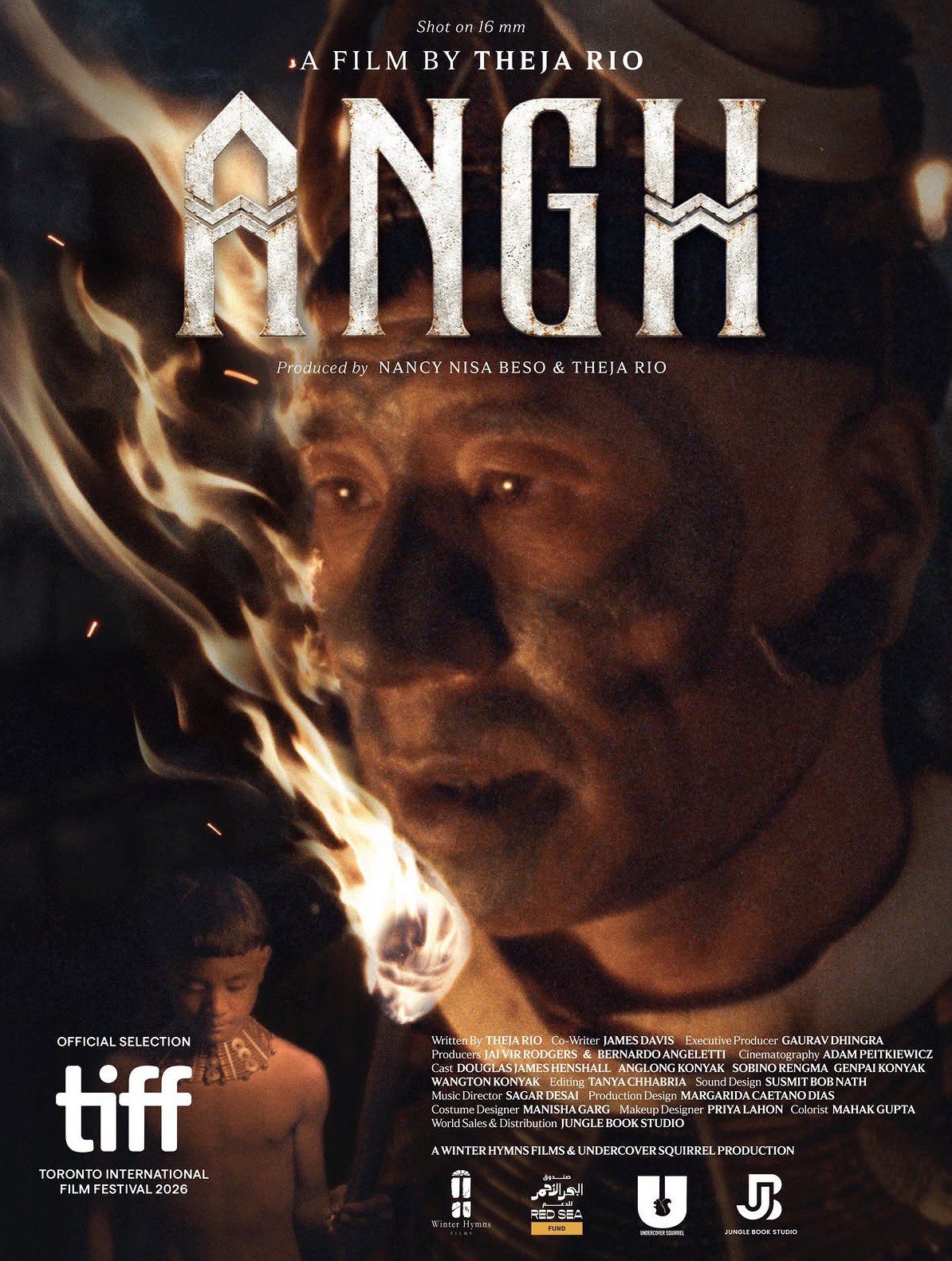
Angh, the debut feature of Kohima-based filmmaker Theja Rio, has won the Platform Prize at the 2026 Toronto International Film Festival (TIFF). The award was announced on 20 September 2026, as the festival’s 51st edition (10–20 September) came to a close, and was reported by The Indian Express (Alaka Sahani, Mumbai, 21 September) and other national outlets. The win matters beyond the festival circuit: under a rule adopted by the Academy of Motion Picture Arts and Sciences earlier this year, the Platform Prize is one of six festival awards that make a non-English-language film eligible to compete in the Best International Feature Film category at the Oscars 2027 — without being its country’s official submission.
That last point is what makes the story unusual. India’s official entry for the 2027 Oscars, chosen by the Film Federation of India (FFI), is the Marathi film Gondhal, directed by Santosh Davakhar. As The Indian Express noted, Angh’s win came soon after the FFI had passed it over. Because of the new rule, India could have two films in the international feature race in the same year — one sent by the national selection body, one that qualified on the strength of a festival jury’s verdict.
The film and the filmmaker
Set in Nagaland in the 1960s, Angh follows an ageing Konyak village chief and his son, who are among the last people holding on to their ancestral faith and way of life as their world changes around them, including with the arrival of a Christian missionary. The film is in the Konyak language, was shot on 16mm film, and had its world premiere at TIFF on 15 September 2026. It was produced by Nancy Nisa Beso and Theja Rio, and its cast includes Anghlong Konyak, Sobino Rengma, Genpai Konyak, Wangton Konyak and the Scottish actor Douglas Henshall. Its cinematographer, Adam Pietkiewicz, separately received an artisan award at TIFF’s tribute awards.
Speaking to The Indian Express, Rio said the film was made “with a lot of love for the place I come from, for my people and for our culture”. At its heart, he said, is a relationship between a father and a son, but it is also about letting go, about one’s relationship with home and about the transient nature of life — emotions he described as universal. Rio said the themes and nuances of the film are inherent in what Naga people have experienced over the past century.
Theja Rio was born in Kohima and studied at the National Film and Television School (NFTS) in the United Kingdom; several of his film-school contemporaries are collaborators on the feature. He first wrote Angh as a short film, which travelled to international festivals in 2021, including the Clermont-Ferrand International Short Film Festival in France, where it was recognised by the jury. That reception, he told the paper, gave him the confidence to expand the story into a feature. Angh was the only Indian film among the 12 titles in this year’s Platform competition.
What the Platform Prize is
TIFF, founded in 1976, is one of the world’s largest public film festivals and a key launch pad for the North American awards season. Its Platform programme was introduced in 2015 as a juried competition for directors with a distinctive vision — the festival’s own answer to the concern that ambitious films were passing through Toronto without the attention they deserved. The first Platform Prize went to Alan Zweig’s documentary Hurt (2015); the 2023 prize went to Dear Jassi, directed by Tarsem Singh Dhandwar. From 2026 the competition was expanded to up to 12 films and the jury to five members.
This year’s five-member jury was headed by the Argentine director Pablo Trapero, and included Amma Asante, Sylvia Chang, Luc Déry and Albert Lee. In its citation, quoted by The Indian Express, the jury gave the prize to Angh for its “refreshing perspective, strength of filmmaking, and deeply resonant portrait of a world”, praising the filmmaker’s “vision, audacity and courage”. An honourable mention went to Brace Your Heart by Amanda Kernell.
Background & Framework
What “direct pathway” means. On 1 May 2026 the Academy announced rule changes for the 99th Academy Awards, scheduled for 14 March 2027. Traditionally, a film could enter the international feature category only if it was the single official submission of a country, chosen by a national selection body. Under the new rule, reported by Screen International, a non-English-language film can also qualify by winning one of six festival prizes: the Palme d’Or (Cannes), the Golden Lion (Venice), the Golden Bear (Berlin), the World Cinema Grand Jury Prize (Sundance), the Best Film Award (Busan) and the Platform Award (Toronto). Country submissions continue alongside this route, and a nomination under the category is credited to the film rather than to the country, with the statuette bearing the director’s name.
What it does not mean. Qualification is not a nomination. The film still has to satisfy the Academy’s other conditions, including its release-window requirement, and then compete with every other qualifying film for a place on the shortlist and the final five.
The category. Known as Best Foreign Language Film until it was renamed Best International Feature Film in 2019, it has produced three Indian nominations: Mother India, Salaam Bombay! and Lagaan. Earlier Marathi official entries include Shwaas, Harishchandrachi Factory and Court.
Nagaland, the Konyak and the world the film depicts
Nagaland became India’s 16th state on 1 December 1963, which means the decade in which Angh is set is also the decade of the state’s formation. The Konyak are one of the major Naga peoples, concentrated largely in the Mon district of the state, with a rich tradition of village chieftainship, oral history, craft and ritual. The film’s subject — a family’s relationship with ancestral belief at a time of religious and social change — reflects a transformation that historians of the region have long written about, and which Rio frames through an intimate family story rather than a spectacle.
Nagaland’s cultural life is best known nationally through the Hornbill Festival, held every year from 1 to 10 December at the Kisama Heritage Village near Kohima, which brings together the state’s many communities. A fiction feature in the Konyak language winning a top prize at a major international festival adds a different kind of visibility: it places the region’s stories in the language of its own people, told by one of its own filmmakers, before a global audience.
The CLAT Angle
Direct GK: Who directed Angh? Did it win the TIFF Platform Prize or the People’s Choice Award? Which festival prizes now qualify a film for the international feature category? What is India’s official entry for the 2027 Oscars? When was TIFF founded, and when was its Platform programme introduced?
Legal reasoning: The story is an excellent hook for Article 371A, inserted by the Constitution (Thirteenth Amendment) Act, 1962, which provides that no Act of Parliament in respect of the religious or social practices of the Nagas, Naga customary law and procedure, civil and criminal justice involving decisions according to Naga customary law, and the ownership and transfer of land and its resources shall apply to Nagaland unless its Legislative Assembly so decides by resolution. Pair it with Article 29(1), which protects the right of any section of citizens having a distinct language, script or culture to conserve it, and with Article 19(1)(a) on freedom of speech and expression, which covers cinema, subject to certification under the Cinematograph Act, 1952.
Critical reasoning: A passage might argue that the new Academy rule weakens the role of national selection bodies. Ask yourself: does a second route replace the first, or only supplement it? The rule text says country submissions remain — an assumption to spot.
Analysis: a second door into the Oscars
The Academy’s reform is widely read as a response to a long-standing problem. The one-film-per-country system gave national committees — sometimes state-linked, sometimes industry bodies — the sole power to decide which film represents a country. Filmmakers whose work was out of step with their national selectors, or whose countries were in political turmoil, had no way in. By recognising the verdicts of six festival juries, the Academy has created a second, non-national door. Commentators have noted that the move also acknowledges how geopolitics has, in the past, made it difficult for some filmmakers to obtain official sanction.
For India, the practical consequence is striking. The FFI selects from dozens of films in many languages each year, and debates over its choices are an annual ritual. Angh shows that a film from a smaller language community, made by a first-time director, can now reach the Academy’s starting line without passing through that national filter. Whether that encourages Indian filmmakers to prioritise the top festivals, and whether national bodies respond by widening their own selection, are questions worth watching.
India’s own honours system offers a useful comparison. The National Film Awards, instituted in 1954, recognise the best films in each Indian language, and the Dadasaheb Phalke Award is the country’s highest honour in cinema. Both are awarded by the State; the Academy’s new route, by contrast, is triggered by independent festival juries abroad.
Key Facts
- Film: Angh, debut feature of Kohima-born director Theja Rio; in the Konyak language, shot on 16mm.
- Award: Platform Prize, 51st Toronto International Film Festival (10–20 September 2026), announced 20 September.
- Competition: only Indian film among 12 in the Platform section; world premiere 15 September 2026.
- Jury: five members, headed by Pablo Trapero; honourable mention to Brace Your Heart.
- Setting: 1960s Nagaland; a Konyak chief and his son holding on to ancestral faith.
- Oscar route: Academy rule of 1 May 2026 lets non-English films winning six festival prizes qualify for Best International Feature.
- The six: Cannes, Venice, Berlin, Sundance (World Cinema Grand Jury), Busan and Toronto (Platform).
- Ceremony: 99th Academy Awards, 14 March 2027.
- India’s official entry: Marathi film Gondhal, chosen by the Film Federation of India.
- TIFF: founded 1976; Platform section introduced 2015.
- Constitution: Article 371A (13th Amendment, 1962) protects Naga customary law and practices.
Memory Hook / Mnemonic
“Six doors: Cannes Can, Venice Very, Berlin Bravely, Sundance Surely, Busan Boldly, Toronto Truly” — the six festival prizes that now open the Oscar door. For the film: “ANGH = A Naga Genius Heads to Hollywood” — Konyak language, 1960s setting, TIFF Platform (born 2015) at a festival born in 1976. India’s official door: Gondhal (Marathi).
Practice Quiz — 10 CLAT-Style Questions
Click an option to reveal the answer and explanation.