CURRENT AFFAIRS | 22 SEPTEMBER 2026
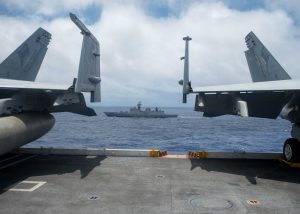
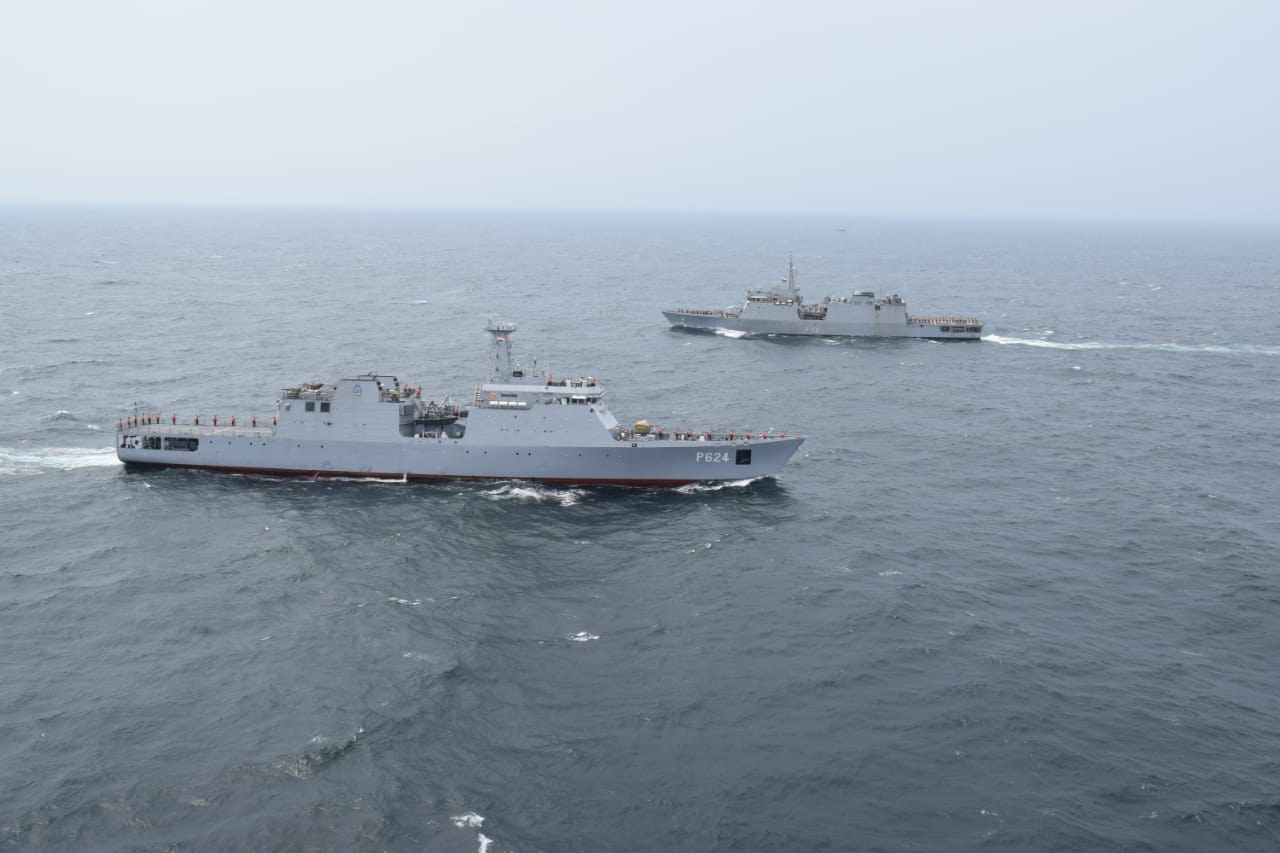
The navies of India and Sri Lanka have held the 13th edition of their annual bilateral maritime exercise, SLINEX-26, at Visakhapatnam from 17 to 21 September 2026. According to the release issued by the Press Information Bureau (Ministry of Defence) on 20 September 2026 (Release ID 2312662), the Indian Navy fielded INS Kavaratti, an indigenous anti-submarine warfare (ASW) corvette, and INS Jyoti, a fleet tanker, while the Sri Lanka Navy was represented by SLNS Sindurala. The exercise was hosted by the Indian Navy’s Eastern Naval Command, headquartered at Visakhapatnam.
The release describes an exercise in two parts. The Harbour Phase opened with a ceremony and reception on board INS Kavaratti and included professional interactions, cross-deck visits, sharing of best practices, yoga, sports and cultural activities. The Sea Phase that followed focused on coordinated activities at sea aimed at operational synergy and interoperability. The Ministry framed the exercise as part of India’s MAHASAGAR vision and its commitment to a “secure, stable and inclusive maritime environment” in the Indian Ocean Region.
A bilateral naval drill may look routine, but SLINEX sits at the intersection of three things CLAT’s General Knowledge section keeps returning to: India’s neighbourhood policy, the security architecture of the Indian Ocean, and the growth of indigenous defence manufacturing.
What SLINEX is, and how it has grown
SLINEX — short for Sri Lanka–India Naval Exercise — was conceptualised in 2005, according to the Ministry of Defence. Over two decades it has matured from a basic exchange between two neighbouring navies into what the Ministry calls “an important forum for fostering maritime cooperation, interoperability and mutual understanding”. The 2026 iteration is the 13th — memorise the edition number rather than calculating it from the founding year.
The structure of a Harbour Phase followed by a Sea Phase is standard for most of India’s bilateral naval exercises. The harbour component builds familiarity — officers visit each other’s ships, compare procedures and build personal links. The sea component tests whether two navies can actually operate together: manoeuvring in formation, communicating on common procedures and coordinating tasks. Interoperability, the key word in the release, simply means that forces of different countries can work together using compatible procedures and communications. For small navies operating alongside a much larger neighbour, it is the practical foundation for joint search-and-rescue, disaster response and maritime domain awareness.
The ships: an indigenous corvette and an Indian-built Sri Lankan vessel
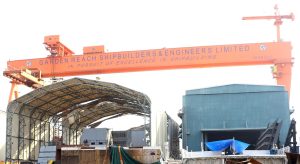
INS Kavaratti is the fourth and last of the Kamorta-class anti-submarine warfare corvettes built under Project 28 by Garden Reach Shipbuilders and Engineers (GRSE), Kolkata. It was commissioned on 22 October 2020 at Visakhapatnam, with a very high share of indigenous content, and it carries a carbon-fibre composite superstructure that lowers top weight and improves stealth. The ship is named after Kavaratti, the capital of the Union Territory of Lakshadweep. An ASW corvette is designed to detect and track submarines — a capability of rising importance as more submarines, including those of extra-regional powers, operate in the Indian Ocean.
INS Jyoti is a fleet tanker, a support ship that replenishes fuel and stores to warships at sea. Its presence signals that the exercise was about sustaining operations at sea, not only about combat drills.
SLNS Sindurala has a special link with India. It is an advanced offshore patrol vessel built in India by Goa Shipyard Limited, derived from the Indian Navy’s Saryu-class design, and was commissioned into the Sri Lanka Navy in 2018; its sister ship is SLNS Sayurala. A Sri Lankan warship built in an Indian shipyard exercising alongside Indian warships is itself a small illustration of defence-industrial diplomacy: India is not only a security partner but also a supplier of platforms to its neighbours.
Background & Framework
SAGAR to MAHASAGAR. In 2015 Prime Minister Narendra Modi articulated SAGAR — Security and Growth for All in the Region, India’s framework for maritime cooperation in the Indian Ocean. In March 2025, during a visit to Mauritius, he announced its expansion into MAHASAGAR — Mutual and Holistic Advancement for Security and Growth Across Regions, widening the idea from the Indian Ocean to partnership with the wider Global South. Both are policy visions, not treaties.
Constitutional basis. Defence and foreign affairs are Union subjects. Entry 1 of List I (Union List) in the Seventh Schedule covers the defence of India, and entries in the same list cover foreign affairs and entering into treaties and agreements with foreign countries. Article 253 empowers Parliament to make laws implementing international agreements. Article 51, a Directive Principle, asks the State to promote international peace and security and maintain just and honourable relations between nations. The President is the Supreme Commander of the armed forces under Article 53(2), though the command is exercised on the advice of the Council of Ministers.
Law of the sea. The UN Convention on the Law of the Sea (UNCLOS), 1982, to which both India and Sri Lanka are parties, sets a territorial sea of up to 12 nautical miles and an Exclusive Economic Zone of up to 200 nautical miles. India and Sri Lanka settled their maritime boundary in the Palk Strait and adjoining waters through the 1974 and 1976 agreements; the 1974 agreement placed the islet of Katchatheevu on the Sri Lankan side of the line.
Why Sri Lanka matters to India’s maritime strategy
Sri Lanka sits astride the busy east–west sea lanes of the northern Indian Ocean, a short distance from India’s southern coast across the Palk Strait and the Gulf of Mannar. Whoever has influence in its ports has a vantage point over shipping that carries much of the world’s energy trade. Over the past decade India has watched the growth of external involvement in Sri Lankan infrastructure — most visibly the Hambantota port, which Sri Lanka leased to a Chinese company in 2017 — and has responded by deepening its own economic, humanitarian and security engagement with Colombo.
Exercises like SLINEX are one of the lowest-cost, highest-trust tools in that engagement. They build habits of cooperation between officers, generate shared procedures that are useful in a crisis, and make the Indian Navy a familiar partner. The same logic runs through India’s wider regional architecture: India and Sri Lanka are both members of the Colombo Security Conclave, a regional grouping on maritime and broader security cooperation whose secretariat is in Colombo, and the two armies hold their own bilateral exercise, Mitra Shakti.
The same week: a missile-vessel keel in Kochi
SLINEX was not the only naval news of the week. A separate PIB (Ministry of Defence) release dated 19 September 2026 (Release ID 2312326) reported the keel laying of the first Next Generation Missile Vessel (NGMV) for the Indian Navy at Cochin Shipyard Limited (CSL), Kochi, on 18 September. The ceremony was attended by Vice Admiral Sanjay Sadhu, Controller of Warship Production and Acquisition. According to the release, the contract with CSL was concluded in March 2023, and the vessels will carry state-of-the-art weapons and sensors with major equipment sourced indigenously, in line with Aatmanirbhar Bharat and Make in India.
Aspirants should know the shipbuilding vocabulary. Steel cutting marks the start of fabrication; keel laying is the formal start of assembly on the building berth; launching is when the hull first enters the water; and commissioning is when the ship formally joins the fleet and hoists the naval ensign. Only after commissioning is a vessel prefixed INS. A question that asks “which stage comes first” is an easy mark for those who remember the sequence.
The CLAT Angle
Direct GK questions on the SLINEX-26 naval exercise are likely to cover its partners (India–Sri Lanka), venue (Visakhapatnam), edition (13th), dates (17–21 September 2026), participating ships (INS Kavaratti, INS Jyoti, SLNS Sindurala) and the policy vision cited (MAHASAGAR). A classic pairing question matches exercises to partners — SLINEX with Sri Lanka’s navy, Mitra Shakti with Sri Lanka’s army.
Passage-based reasoning could use this story to test inference: if the Harbour Phase builds familiarity and the Sea Phase tests coordination, which phase would an argument about “interoperability” rely on? Or a passage might contrast symbolic diplomacy with capability-building and ask which claim the author would most likely accept.
Legal angle: expect questions on the Union List entries for defence and treaties, Article 253, Article 51, Article 53(2) and the UNCLOS zones. The Katchatheevu agreement is a good example of how maritime boundaries are fixed by international agreement.
Analysis: small drills, strategic signals
SLINEX is modest in scale — two Indian ships and one Sri Lankan ship — and the PIB release does not claim more. Its significance lies in continuity. An exercise that has survived changes of government in both countries, and Sri Lanka’s severe economic crisis, tells observers that the maritime relationship has an institutional base that does not depend on any one political moment. Framing it within MAHASAGAR also shows how New Delhi now presents routine naval activity: as part of a wider offer of partnership to the Global South rather than as an isolated bilateral event.
The pairing of SLINEX with the NGMV keel laying in the same week is a useful way to remember the two pillars of India’s maritime policy. One is outward engagement — exercises, port calls and capacity-building with neighbours. The other is indigenous capability — ships designed and built in Indian yards, such as Kamorta-class corvettes from Kolkata, missile vessels from Kochi, and patrol vessels from Goa that end up in partner navies. Each reinforces the other: a navy that builds its own ships can also build for its friends.
Key Facts
- Exercise: SLINEX-26, 13th edition of the Sri Lanka–India bilateral maritime exercise.
- Venue and dates: Visakhapatnam, 17–21 September 2026; hosted by the Eastern Naval Command.
- Source: PIB (Ministry of Defence) release of 20 September 2026, Release ID 2312662.
- Indian ships: INS Kavaratti (ASW corvette) and INS Jyoti (fleet tanker).
- Sri Lankan ship: SLNS Sindurala, an offshore patrol vessel built by Goa Shipyard and commissioned in 2018.
- Phases: Harbour Phase (ceremony, cross-deck visits, yoga, sports) and Sea Phase (interoperability).
- Origin: SLINEX was conceptualised in 2005.
- Policy frame: MAHASAGAR, announced in Mauritius in March 2025, extending SAGAR (2015).
- INS Kavaratti: Kamorta class, Project 28, built by GRSE Kolkata, commissioned 22 October 2020.
- Same week: keel of the first Next Generation Missile Vessel laid at Cochin Shipyard on 18 September 2026 (PIB, 19 September).
- Army counterpart: India and Sri Lanka also hold the army exercise Mitra Shakti.
Memory Hook / Mnemonic
“SLINEX 13 at VIZAG: K-J-S” — Kavaratti (hunts submarines), Jyoti (fuels the fleet), Sindurala (Sri Lankan, but Goa-built). Born in 2005, sailing under MAHASAGAR (Mauritius, 2025) — the big brother of SAGAR (2015). Shipbuilding order: “Cut, Keel, Launch, Commission” — only the last earns the INS prefix.
Practice Quiz — 10 CLAT-Style Questions
Click an option to reveal the answer and explanation.